
Shake It Off
At a Glance
- Time: 30-45 seconds
- Prep: None
- Group: Whole class (individual participation)
- Setting: Any (works in-person or online, seated or standing)
- Subjects: Universal
- Energy: High
Purpose
Release physical tension, stress, and nervous energy through vigorous shaking movements. Use this before tests, after stressful moments, or when you sense anxiety in the room. It's quick, silly, and remarkably effective at resetting emotional states.
How It Works
Step-by-step instructions:
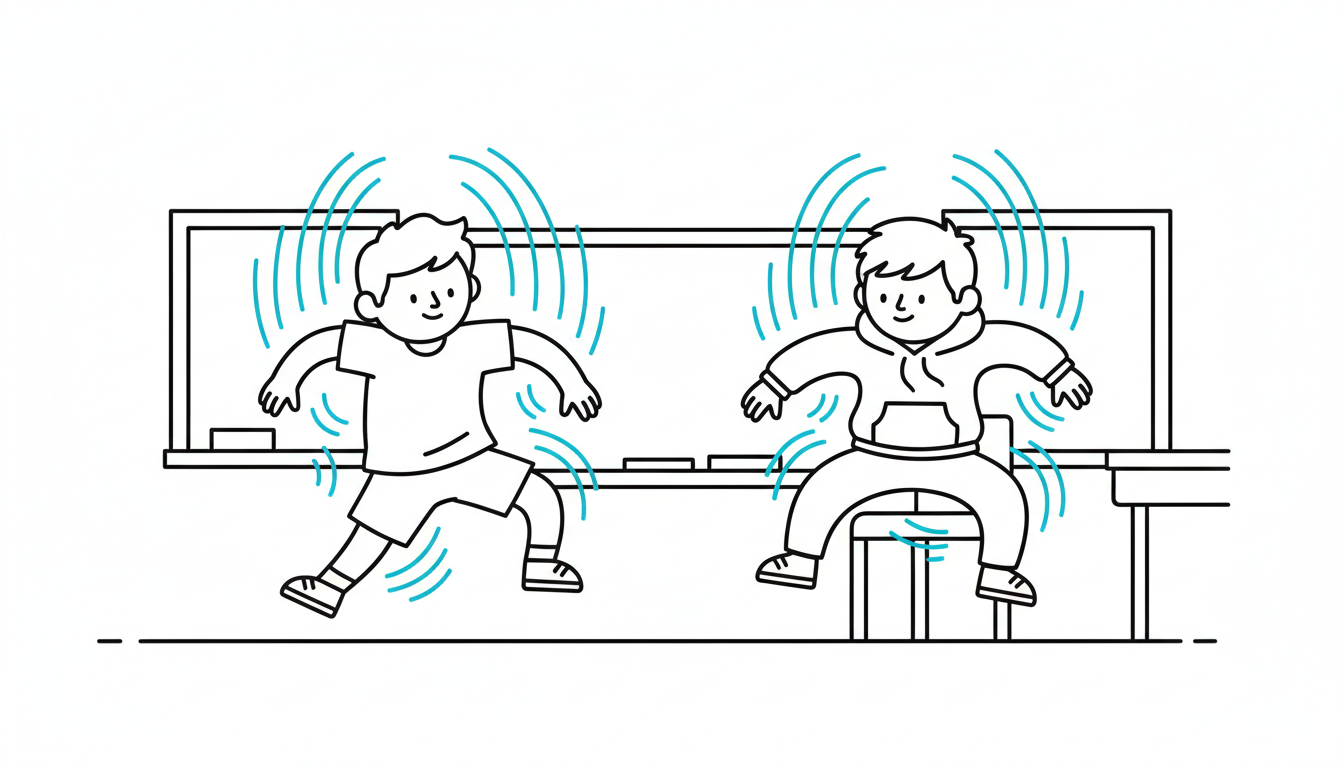
- ANNOUNCE (5 seconds) - "Stand up! We're going to shake it off—literally. Shake your whole body like a wet dog for 15 seconds."
- DEMONSTRATE (5 seconds) - Show exaggerated shaking—arms, shoulders, legs, head (safely)
- SHAKE (15 seconds) - Everyone shakes vigorously together
- FINISH (5 seconds) - "And stop! Take a deep breath. Notice how different you feel?"
What to Say
Opening: "I can feel tension in the room. Stand up. We're going to shake it off. Literally. Pretend you just jumped in a pool and you're a wet dog trying to get dry. Shake your arms, your legs, your shoulders—your whole body. Ready? 15 seconds. Go!"
During: "Shake! Shake harder! Get your arms! Your legs! Your shoulders! Keep going!"
Closing: "And...stop. Take a deep breath in. Breathe out. Feel that? You just physically released stress chemicals from your body. Now we can focus. Sit down."
Why It Works
Vigorous shaking activates the parasympathetic nervous system, which counteracts the stress response. Physical movement releases muscle tension where stress is stored (shoulders, neck, jaw). The silly nature of the activity also triggers laughter, which releases endorphins and reduces cortisol (stress hormone). This is a somatic practice—using the body to regulate emotions. Additionally, the shaking literally increases blood flow, waking up the brain.
Research Citation: Somatic experiencing and trauma-release exercises show that physical shaking helps discharge stored stress and reset the nervous system (Levine, 2010).
Teacher Tip
Do it WITH them, fully committed. If you half-heartedly wiggle while they shake vigorously, it undermines the activity. Model full-body shaking. Your willingness to look silly gives them permission to let go.
Variations
For Different Subjects
- Before Tests: "Let's shake off test anxiety before we begin."
- After Difficult Content: "That was heavy material. Let's shake it off and reset."
- During Presentations: "Nervous about presenting? Everyone stand. Let's shake off those nerves."
- Universal Transition: "We're switching topics. Shake off the old topic, make room for the new."
For Different Settings
- Large Class (30+): Perfect for this. The more people shaking, the more permission everyone has to fully commit.
- Small Class (5-15): Works great. Can be even sillier and more connected in small groups.
- Seated Version: Can shake upper body only—arms, shoulders, head (gently)—if standing isn't possible.
- Online: Works excellently! Everyone shakes on camera. Often more liberating online because students are in their own spaces.
For Different Ages
- Elementary (K-5): LOVE this. Make animal sounds while shaking: "Shake like a wet dog! Woof woof!"
- Middle/High School (6-12): Keep it quick and frame it seriously: "This is a stress-release technique athletes use. Let's try it."
- College/Adult: Explain the neuroscience first. "This activates your parasympathetic nervous system to calm stress. 15 seconds." Adults will do it if they understand why.
Online Adaptation
Tools Needed: Zoom, Teams, any video platform
Setup: Students turn cameras on and stand where visible (optional but encouraged).
Instructions:
- "Stand up if you can. We're shaking off stress for 15 seconds."
- "Shake your whole body—arms, shoulders, everything. Ready? Go!"
- Count down: "15...14...13..." or just shake with them.
- "Stop! Deep breath. Better?"
Pro Tip: This works GREAT online because students are in private spaces. They often commit more fully at home than in a classroom. Encourage cameras on but don't require it.
Troubleshooting
Challenge: Students are self-conscious. Solution: Go first. Shake enthusiastically for 5 seconds while they watch. Then say, "See? Ridiculous. Now you do it. We're all going to look silly together—that's the point."
Challenge: Someone says "This is stupid." Solution: "Fair. Try it anyway for 15 seconds. If it doesn't help, you never have to do it again. But I bet it will." (It will.)
Challenge: Physical limitations—some students can't shake their whole body. Solution: Offer modifications: "Shake whatever you can—arms, hands, shoulders. Even just shaking your hands helps."
Extension Ideas
- Deepen: Follow with a brief mindfulness moment: "Close your eyes. Notice how your body feels now compared to 30 seconds ago. That's the power of physical reset."
- Connect: Link to content: "We just discharged physical tension. That's what lightning does—it discharges electrical tension in the atmosphere."
- Follow-up: "Feeling stressed while studying tonight? Stop and shake it off for 15 seconds. It works at home too."
Related Activities: Lightning Round, Statue Freeze, Silent Scream