
Quick Write
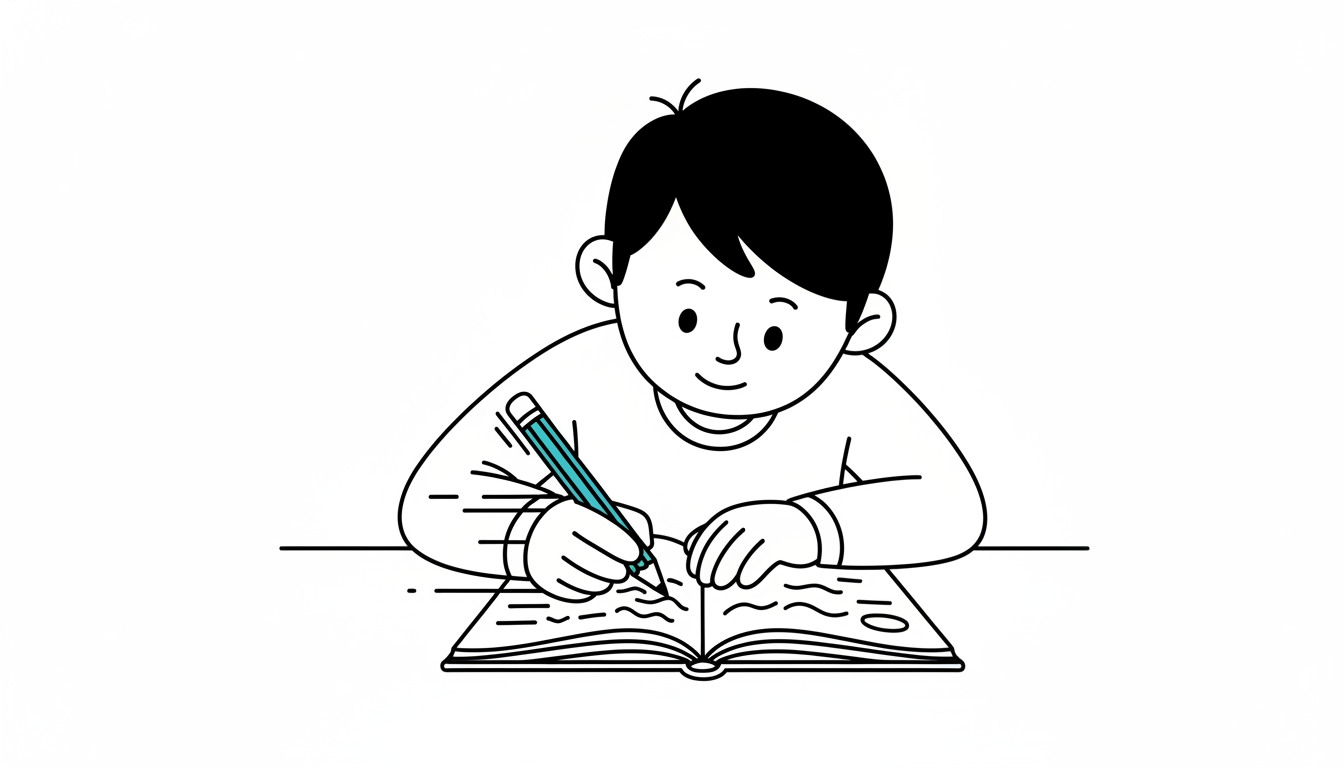
At a Glance
- Time: 2-3 minutes
- Prep: None
- Group: Individual
- Setting: Any
- Subjects: Universal
- Energy: Low
Purpose
Activate prior knowledge through rapid, unfiltered writing. Students write continuously for 2-3 minutes about what they already know or think about a topic. This surfacing of knowledge makes it available for new learning to attach to. The act of writing also engages multiple cognitive pathways (recall, language production, motor skills).
How It Works
- POSE PROMPT (15 seconds) - Give a topic or question
- WRITE (2-3 minutes) - Students write continuously without stopping; grammar/spelling don't matter
- OPTIONAL SHARE (30-60 seconds) - A few volunteers read aloud or share key ideas
- TRANSITION - "Keep your quick write. We'll see how your thinking evolves."
What to Say
"We're about to start learning about [topic]. But first, I want you to write for 2 minutes straight about what you already know, think, or have heard about this topic. Don't worry about grammar, spelling, or complete sentences. Just write. Get everything out of your head and onto the paper. If you get stuck, write 'I don't know what else' and keep your pencil moving. Ready? Go!"
(After 2 minutes) "Pencils down. Who wants to share one thing they wrote?"
Example Prompts:
- "What do you already know about fractions?"
- "Write everything you know about the water cycle."
- "What have you heard about Shakespeare?"
- "What do you think causes earthquakes?"
Why It Works
Writing activates retrieval—students must pull information from long-term memory into working memory. The continuous, timed format prevents overthinking and perfectionism. Students access not just facts, but also associations, experiences, and half-remembered information. This messy retrieval is valuable; it reveals the true state of prior knowledge. The writing also serves as an external working memory—students can refer back to it during instruction. Finally, the written artifact provides a "before" snapshot that can be compared to learning later.
Research Citation: Writing to learn improves comprehension and retention by engaging active cognitive processing (Bangert-Drowns et al., 2004).
Teacher Tip
Emphasize: "Don't stop writing!" If students freeze, tell them to write "I don't know what else to say" repeatedly until another idea comes. Continuous writing prevents self-editing, which blocks access to prior knowledge.
Variations
Prompt Types
Open Recall: "Write everything you know about [topic]." Focused Question: "How does [process] work? Write your current understanding." Personal Connection: "Have you ever experienced [phenomenon]? Describe it." Prediction: "What do you think we'll learn about [topic]? What questions do you have?"
Content Examples
- Science: "Write about what you know about gravity and why things fall."
- Math: "Explain how to multiply fractions. Write out the steps as you understand them."
- Literature: "What do you know about symbolism in literature? Give examples."
- History: "Write about the causes of the Civil War based on what you remember."
- Health: "Write about what makes a healthy diet."
Response Variations
Traditional: Pen and paper continuous writing Digital: Type in a Google Doc or Word document Sticky Notes: Write on sticky notes; post on board Voice Recording: Speak continuously for 2 minutes (for students who struggle with writing)
For Different Settings
- Large Class: All students write simultaneously; share optional
- Small Class: Everyone writes, then reads aloud
- Online: Write in chat, Google Doc, or Padlet
- Quiet Classroom: Perfect for settling energy before instruction
For Different Ages
- Elementary (K-5): 60-90 seconds; draw + write; provide sentence stems
- Middle/High School (6-12): 2-3 minutes; full independent writing
- College/Adult: 3-5 minutes; more sophisticated analysis
Online Adaptation
Excellent for Online:
- Students type in a shared Google Doc or private doc
- Use Padlet for anonymous posts
- Or simply write on paper (camera off) then share verbally
- Works well in virtual settings
Troubleshooting
Challenge: Students stop writing after 30 seconds. Solution: Circulate and prompt: "Keep writing! If you're stuck, write your question or write 'I don't know.'"
Challenge: Students say "I don't know anything about this." Solution: Reframe: "Write: 'What does this word make me think of? Where have I heard it?'" Or: "Write about what you DON'T know—what questions do you have?"
Challenge: Students worry about spelling/grammar. Solution: Emphasize: "No one is grading this. This is just for you to get ideas out. Spelling doesn't matter. Just write!"
Challenge: Some students fill a page; others write one sentence. Solution: That's okay! The goal is activation, not quantity. Even one sentence is valuable.
Extension Ideas
- Share in Pairs: After writing, students read their quick writes to a partner
- Highlight Key Ideas: Students reread and highlight the most important point
- Before/After: At lesson's end, students rewrite for 2 minutes. Compare before and after.
- Gallery Walk: Post quick writes around room; students read each other's
- Exit Ticket: Return to the quick write at lesson's end; students add what they learned in a different color
Related Activities: Think-Pair-Share, KWL Chart, Free Association