
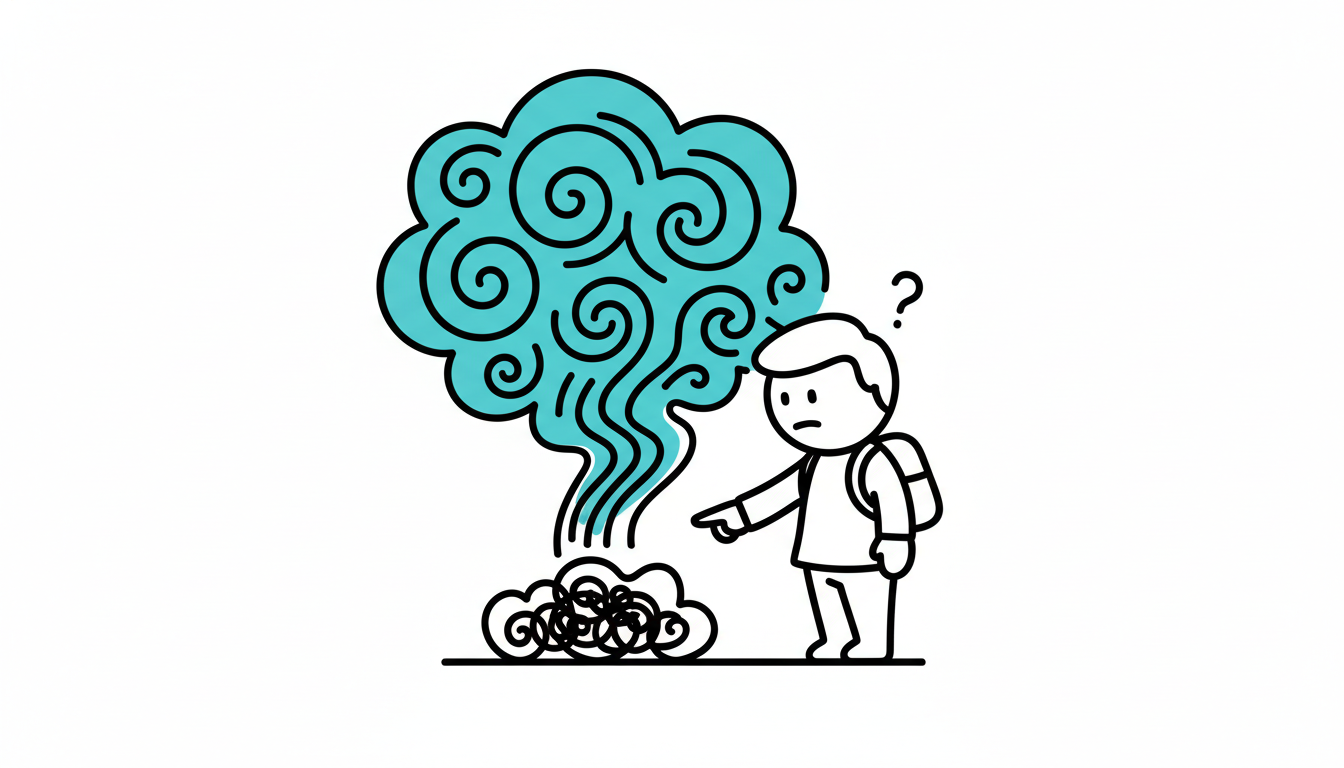
Muddiest Point
At a Glance
- Time: 2-3 minutes
- Prep: None (or index cards/exit slip template)
- Group: Individual writing then optional discussion
- Setting: Any classroom
- Subjects: Universal
- Energy: Low
Purpose
Make confusion visible and actionable by explicitly inviting students to identify and articulate what remains unclear after instruction, normalizing the experience of partial understanding while providing teachers with precise diagnostic data about which concepts need re-teaching, which explanations failed to land, and where instructional clarification is most urgently needed.
How It Works
- Pose the question (15 sec) - "What was the muddiest point in today's lesson? What's still unclear or confusing to you?"
- Individual writing (90-120 sec) - Students write on paper, index card, or digital form describing what confused them
- Collection (30 sec) - Students submit responses (anonymously is ideal)
- Teacher review (after class) - Teacher reads responses, identifies patterns
- Follow-up (next class, 2-3 min) - Teacher addresses most common muddy points with clarification
What to Say
Opening: "Before you go, I need to know what's still muddy for you. Think about today's lesson. What was the muddiest point—the foggiest, most confusing part? What didn't click yet? Write it down. Be honest. This isn't graded. It HELPS me teach you better."
During: "Be specific. Don't just write 'everything' or 'I don't get it.' What EXACTLY confused you? Was it a specific step in the process? A term I used? The connection between two ideas? The more specific you are, the more I can help."
After collection: "Thank you for your honesty. I'll read these tonight. Tomorrow we'll clear up the muddiest points together. Confusion isn't failure—it's just a signal that you need more clarification."
Next day: "I read your muddy points. A lot of you were confused about [X]. Let me tackle that right now..."
Why It Works
The Muddiest Point technique (Angelo & Cross, 1993) is one of the most widely used Classroom Assessment Techniques (CATs) because it's fast, simple, and powerfully diagnostic. Students often can't articulate what they don't understand until explicitly prompted—they know something feels unclear but haven't pinpointed WHAT. Naming the muddy point is itself a metacognitive act: students must monitor their comprehension and identify gaps. For teachers, aggregated responses reveal precisely where instruction wasn't effective, enabling targeted re-teaching rather than generic review.
Research Citation: Classroom Assessment Techniques (Angelo & Cross, 1993)
Teacher Tip
Make responses anonymous (collect on blank index cards or via anonymous digital form). Students are far more honest about confusion when they don't fear judgment. Also, actually ACT on the data—if you collect muddy points but never address them, students will stop taking the activity seriously.
Variations
For Different Subjects
- Math/Science: "What step in today's problem-solving process was muddiest for you?"
- Humanities: "What aspect of today's text or discussion was most confusing?"
- Universal: "What concept or skill from today do you feel least confident about?"
For Different Settings
- Large Class (30+): Use anonymous digital form (Google Form, Poll Everywhere) for efficient collection and pattern analysis
- Small Group (5-15): Can share muddy points aloud, then troubleshoot as a class immediately
For Different Ages
- Elementary (K-5): Use emoji scale: "Show me: = clear, = a little muddy, = very muddy" then ask those with muddy faces to name what's confusing
- Middle/High School (6-12): Standard written muddy point on exit slip or digital form
- College/Adult: Can extend to "Muddiest + Clearest" pair: What was most AND least clear?
Online Adaptation
Tools Needed: Google Form, Padlet, or chat function with anonymous submission
Setup: Prepare form with prompt: "What was the muddiest point in today's lesson?"
Instructions:
- Share form link in chat 5 minutes before class ends
- Students submit anonymously while still in Zoom room
- Teacher quickly scans submissions during breakout work or after class
- Next session, begin with: "Based on your muddy points yesterday, let's clarify..."
- Address top 2-3 most common confusions
Pro Tip: Use word cloud tool for muddy points—visual representation shows which concepts appeared most frequently as confusing.
Troubleshooting
Challenge: Students write "nothing" or "everything"—not helpful specificity Solution: Provide sentence stem: "I was confused when you said/did ___ because ___." Or offer categories to choose from: "Were you confused about vocabulary, a process, a connection, or an application?"
Challenge: Students submit muddy points but they're actually about DIFFERENT lessons or topics not covered today Solution: Clarify scope: "Focus on TODAY'S lesson specifically. What from the past 50 minutes was muddiest?"
Challenge: Every student names a DIFFERENT muddy point; no clear pattern Solution: This is valuable diagnostic data! It means confusion is widespread but diverse. Consider whether pacing was too fast or content too dense. Might need broader review, not targeted clarification.
Extension Ideas
- Deepen: "Muddy Point + Clearest Point"—students identify both what was most confusing AND most clear, giving teachers insight into what worked well too
- Connect: Pair with peer tutoring: students whose "clearest point" matches another student's "muddiest point" pair up for brief re-teaching
- Follow-up: Week later, revisit the muddy point: "Last Monday you said X was muddy. Is it clear now? What helped clarify it?"
Related Activities: Exit Tickets, Difficulty Ranking, Traffic Light Self-Assessment