
Team-Building Trivia
At a Glance
- Time: 5-10 minutes
- Prep: Minimal - prepare 8-12 trivia questions
- Group: Small teams (3-5 students)
- Setting: Any classroom
- Subjects: Universal - review in any discipline
- Energy: High
Purpose
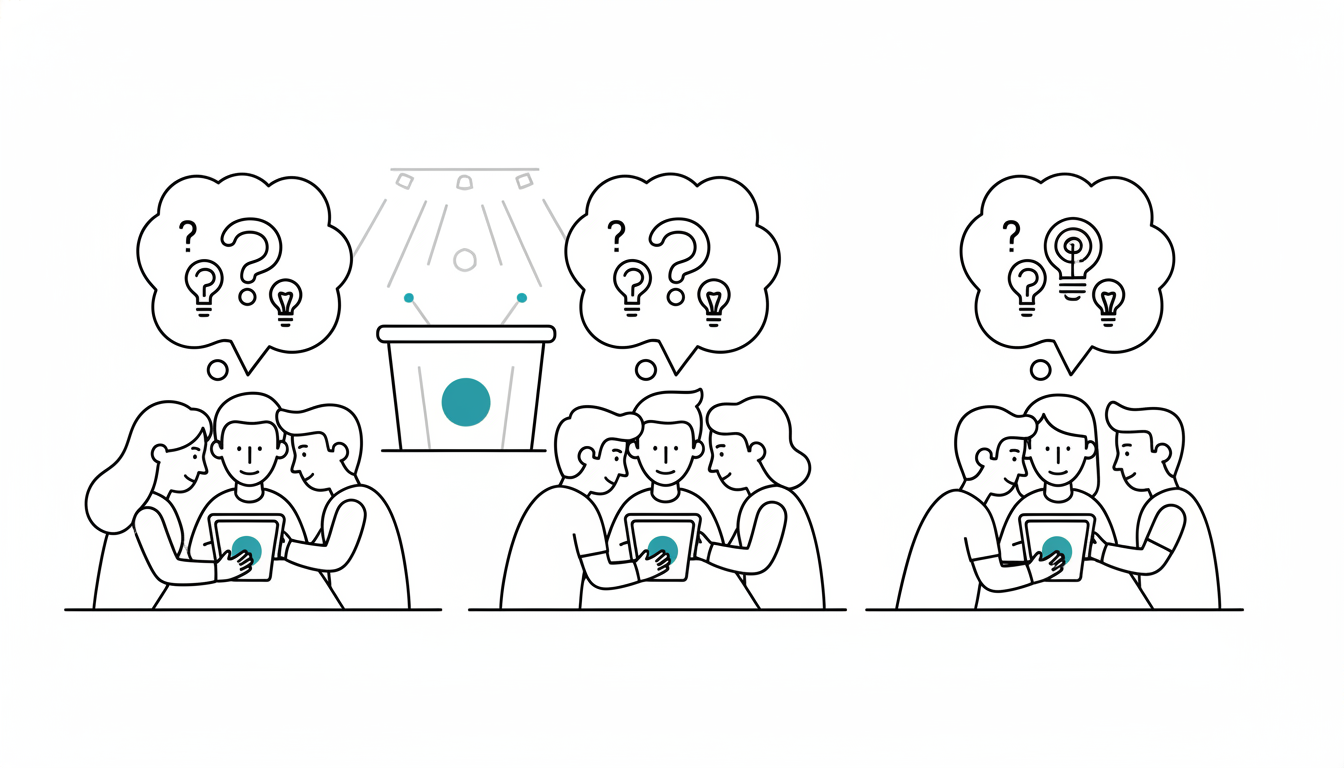
Team-Building Trivia transforms content review into a collaborative game where teams must confer and agree on answers before submitting. The competitive element motivates engagement, while the team requirement prevents one person from dominating. Optional physical element (like shooting paper into a basket for bonus points) adds kinesthetic fun.
How It Works
Step-by-step instructions:
-
FORM TEAMS (30 seconds) - Create teams of 3-5 students.
-
EXPLAIN RULES (1 minute) - Pose trivia questions. Teams confer and must agree on ONE answer. All team members must participate in the decision.
-
QUESTION 1 (30 seconds per question) - Ask question. Teams discuss quietly and agree on answer.
-
REVEAL ANSWERS (30 seconds) - Teams hold up answers simultaneously (on whiteboards or paper).
-
CHECK & SCORE (15 seconds) - Reveal correct answer. Correct teams earn 1 point.
-
OPTIONAL: TRASH-KET-BALL BONUS (15 seconds) - Correct teams can send one member to throw crumpled paper into a basket for bonus point.
-
REPEAT - Continue through all questions.
-
DECLARE WINNER (30 seconds) - Celebrate the winning team!
What to Say
Setup: "Form teams of four. We're doing Team Trivia. I'll ask questions about what we've learned. Your team must discuss and agree on ONE answer—everyone participates. When I say 'reveal,' hold up your answer. Correct answers earn a point."
Question: "Question 1: [ASK QUESTION]. Teams, confer. You have 30 seconds."
Reveal: "Teams, hold up your answers on three. One, two, three—show!"
Bonus: "Correct teams can send one person to shoot this paper ball into the basket from the line. Make it, earn a bonus point."
Between Questions: "Current scores: Team A has 3, Team B has 4, Team C has 3. Next question..."
Why It Works
Team Trivia combines retrieval practice (one of the most effective study strategies) with social learning and game-based motivation. The team requirement ensures discussion and peer teaching during the conferring phase.
Teacher Tip
Don't make questions too difficult. The goal is energy and review, not stumping students. Aim for 60-70% success rate across teams. If most teams get it wrong, briefly teach the correct answer before moving on.
Variations
For Different Subjects
- Any Subject: Mix question types—definitions, applications, calculations, examples.
For Different Settings
- Large Class: More teams, same process.
- Online: Use polling tools or breakout rooms.
Online Adaptation
Tools: Zoom polls or Kahoot Process: Teams discuss in breakout rooms before submitting answers
Troubleshooting
Challenge: One student dominates team decisions. Solution: Require rotation—different team member speaks for the team each round.
Extension Ideas
- Deepen: Teams create their own trivia questions for other teams to answer.
Related Activities: Buzz Groups, Think-Pair-Share