
Real-World Connections
At a Glance
- Time: 5-7 minutes
- Prep: None
- Group: Pairs or small groups (3-4)
- Setting: Any classroom
- Subjects: Universal - any concept
- Energy: Medium
Purpose
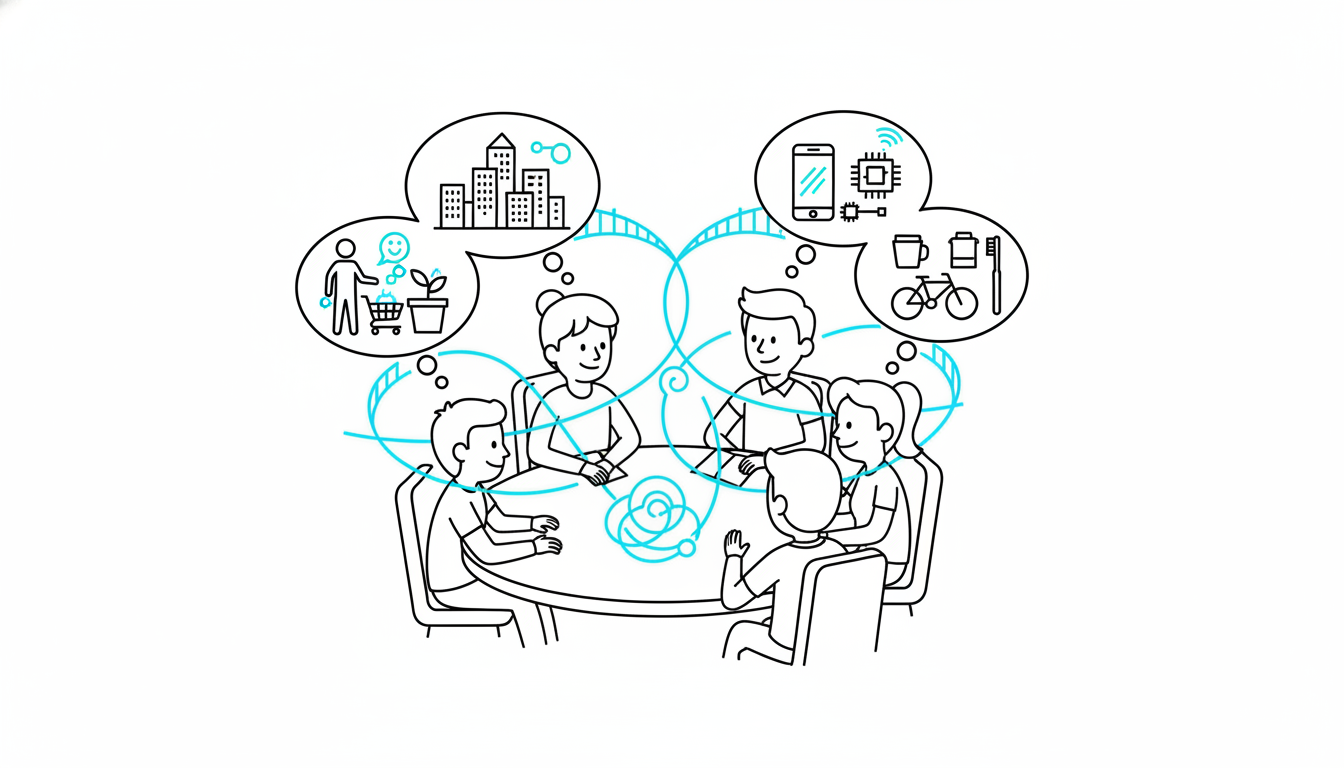
Real-World Connections challenges students to identify where course concepts appear in everyday life, careers, news, or personal experience. Groups brainstorm concrete examples, then share the most interesting ones. This activity increases motivation by making abstract content relevant and memorable.
How It Works
Step-by-step instructions:
-
PRESENT CONCEPT (30 seconds) - State the academic concept just taught.
-
FORM GROUPS (15 seconds) - Pairs or small groups.
-
BRAINSTORM REAL-WORLD EXAMPLES (3-4 minutes) - Where do you see this concept in action? In what careers? In what news stories? In what everyday situations?
-
SELECT BEST EXAMPLE (1 minute) - Groups choose their most interesting or surprising connection.
-
SHARE OUT (2-3 minutes) - Groups share their best example with the class.
-
OPTIONAL: CREATE A CLASS LIST - Record all examples for future reference.
What to Say
Setup: "We just learned about [CONCEPT]. Now let's make it relevant. In pairs, brainstorm: Where do you see this concept in real life? Think about: jobs, news, daily activities, technology, sports, entertainment. You have 3 minutes. Find as many examples as you can."
Selection: "Now choose your best example—the most interesting, surprising, or useful connection."
Sharing: "Let's hear from groups. Give us your best real-world connection."
Closing: "Notice how many places this concept appears. What seemed abstract is actually everywhere once you know to look for it."
Why It Works
Real-World Connections tap into relevance, one of the strongest motivators for learning. When students see how course material applies beyond the classroom, they invest more cognitive energy in understanding it deeply.
Teacher Tip
Keep a running list of all the real-world examples students generate throughout the year. This becomes a valuable resource for future classes and helps you see course material through students' eyes.
Variations
For Different Subjects
- Science: Where do you see [scientific principle] in technology, nature, health, sports?
- Math: What careers use [math concept] daily?
- History: What current events mirror [historical pattern]?
- Literature: What real people or situations embody [theme/character type]?
For Different Settings
- Online: Breakout rooms for brainstorming, then share via chat or verbally.
Online Adaptation
Tools: Breakout rooms + shared Padlet or doc Process: Groups add examples to shared space
Troubleshooting
Challenge: Students can't think of any examples. Solution: Give category prompts: "Think about healthcare. Think about engineering. Think about your phone. Think about cooking."
Extension Ideas
- Deepen: Have students research one real-world application more deeply and present findings.
- Follow-up: For homework, students find a news article demonstrating the concept and bring it to class.
Related Activities: Movie Application, What If Scenarios