
Think-Pair-Share
At a Glance
- Time: 2-3 minutes
- Prep: None
- Group: Pairs
- Setting: Any
- Subjects: Universal
- Energy: Low
Purpose
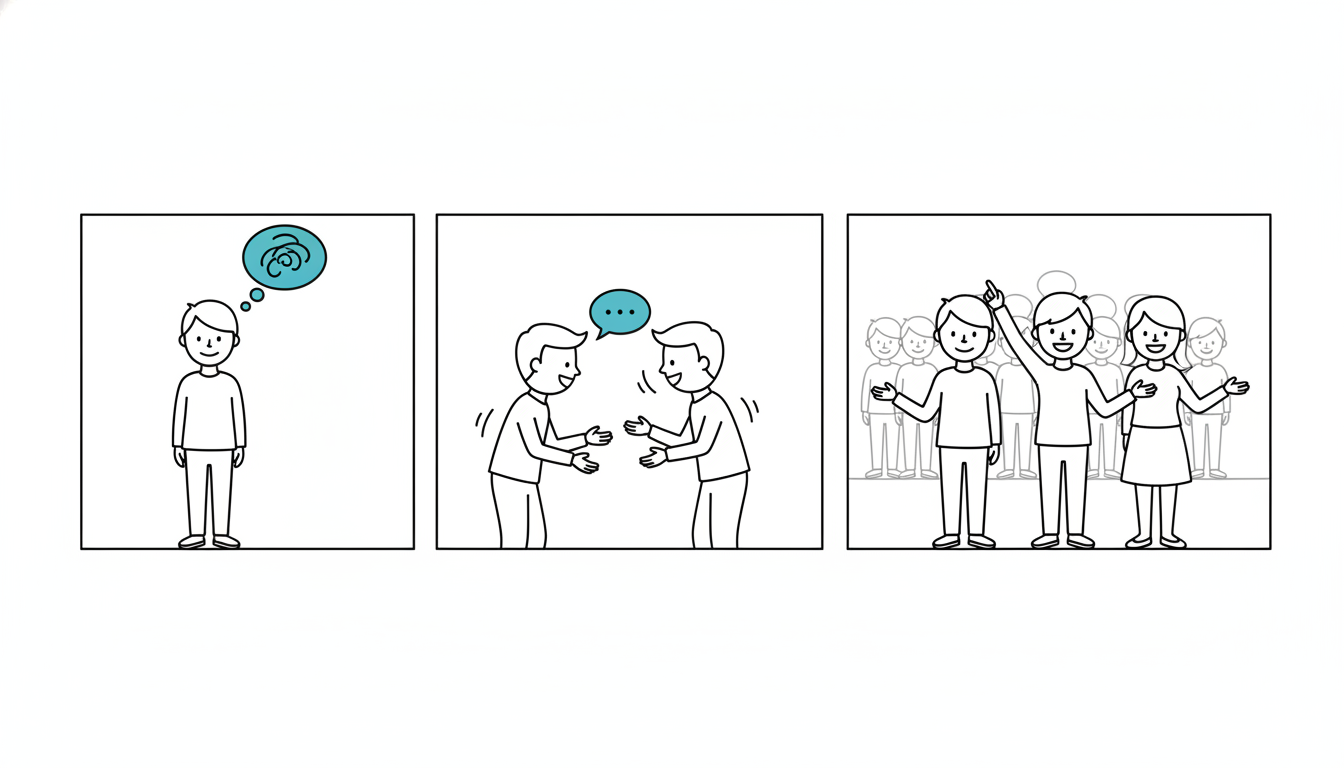
Activate prior knowledge by giving students time to recall, then discuss what they know. This classic structure scaffolds thinking: first individual reflection (think), then peer discussion (pair), then optional whole-class sharing (share). It's simple, effective, and works for any content area.
How It Works
- POSE QUESTION (10 seconds) - Ask a question about the upcoming topic
- THINK (30-60 seconds) - Students silently recall what they know
- PAIR (60-90 seconds) - Students turn to a partner and share their thinking
- SHARE (optional, 30-60 seconds) - A few pairs share with the whole class
What to Say
"We're about to learn about [topic]. But first, let's activate what you already know. Here's my question: [pose question about the topic]. Take 30 seconds to think individually. Don't talk yet—just think about what you already know."
(After 30 seconds) "Now turn to a partner. Share what you thought of. You have 90 seconds. Go!"
(After 90 seconds, optional) "Let's hear from a few pairs. What did you recall?"
Example for Photosynthesis: "We're starting our unit on photosynthesis. Think: What do you already know about how plants make food? 30 seconds of silent thinking... Now pair up and share!"
Why It Works
The "Think" phase gives processing time, which is especially important for introverted students or English learners. The "Pair" phase allows low-stakes rehearsal—students test their ideas with one peer before potentially sharing with the whole class. This reduces anxiety and increases participation equity. The "Share" phase amplifies good thinking across the room. The structure activates schema, reveals misconceptions, and primes students to connect new information to existing knowledge.
Research Citation: Think-Pair-Share increases participation, depth of thinking, and retention (Lyman, 1981; Kagan, 1994).
Teacher Tip
Don't skip the "Think" phase! It's tempting to go straight to "Pair," but individual processing time is critical. Those 30 seconds allow all students—not just the fastest thinkers—to generate ideas before discussion.
Variations
Question Types
Recall: "What do you already know about [topic]?" Prediction: "Based on what you know, what do you think we'll learn about?" Connection: "How might this topic connect to [something we've already studied]?" Experience: "Have you ever experienced [related situation]? What happened?"
Content Examples
- Science: "What do you know about gravity? Why do objects fall?"
- Math: "What do you remember about fractions? How do you add them?"
- Literature: "What do you know about Shakespeare? What have you heard?"
- History: "What do you already know about World War II?"
- Language Learning: "What Spanish words do you already know?"
For Different Settings
- Large Class: All pairs discuss simultaneously; call on 2-3 to share
- Small Class: Everyone shares after pairing
- Online: Breakout rooms for "Pair"; return to main room for "Share"
- No Space: Students turn in seats to pair with neighbor
For Different Ages
- Elementary (K-5): Shorter think time (15-20 seconds); provide sentence stems
- Middle/High School (6-12): Standard timing works well
- College/Adult: Can extend think and pair time for complex topics
Time Variations
- Quick (1.5 min): 20s think, 60s pair, no whole-class share
- Standard (2-3 min): 30s think, 90s pair, 30s share
- Extended (4-5 min): 60s think, 2min pair, 90s share with multiple pairs reporting
Online Adaptation
Excellent for Online:
- Think: Students mute and think (use timer visual)
- Pair: Breakout rooms for 90 seconds
- Share: Return to main room; call on students
- Works seamlessly in virtual classrooms
Troubleshooting
Challenge: Students start talking during "Think" time. Solution: "Remember, this is silent thinking time. No talking yet!" Model by thinking silently yourself.
Challenge: Pairs finish quickly and disengage. Solution: Provide extension: "If you finish, discuss: What questions do you still have about this topic?"
Challenge: One partner dominates; other doesn't talk. Solution: "Partner A talks first for 30 seconds. Then Partner B. Make sure both people share!"
Challenge: Students say "I don't know anything about this." Solution: Reframe: "Think about what the word [topic] makes you think of. Or where you've heard this term before."
Extension Ideas
- Record Thinking: Students jot down notes during "Think" phase
- Multiple Rounds: Repeat with a different question or after brief teaching
- Think-Pair-Square: After pairing, two pairs join to share (groups of 4)
- Gallery Share: Pairs write their ideas on chart paper for class to view
- Compare Before/After: Use Think-Pair-Share before and after the lesson; discuss what changed
Related Activities: Turn and Talk, Quick Write, Brainstorm Web