
Birthday Lineup
At a Glance
- Time: 3-5 minutes
- Prep: None
- Group: Whole class
- Setting: Space to move (hallway, open area)
- Subjects: Universal
- Energy: Medium
Purpose
Build community and practice nonverbal communication while organizing as a team. Use this during the first weeks of class, before collaborative projects, or when you want to energize and connect students. The activity requires cooperation, problem-solving, and awareness of others—all essential skills for a collaborative classroom.
How It Works
- EXPLAIN (30 seconds) - "Line up in order of your birthdays—January 1st at this end, December 31st at that end. But here's the challenge: you can't speak!"
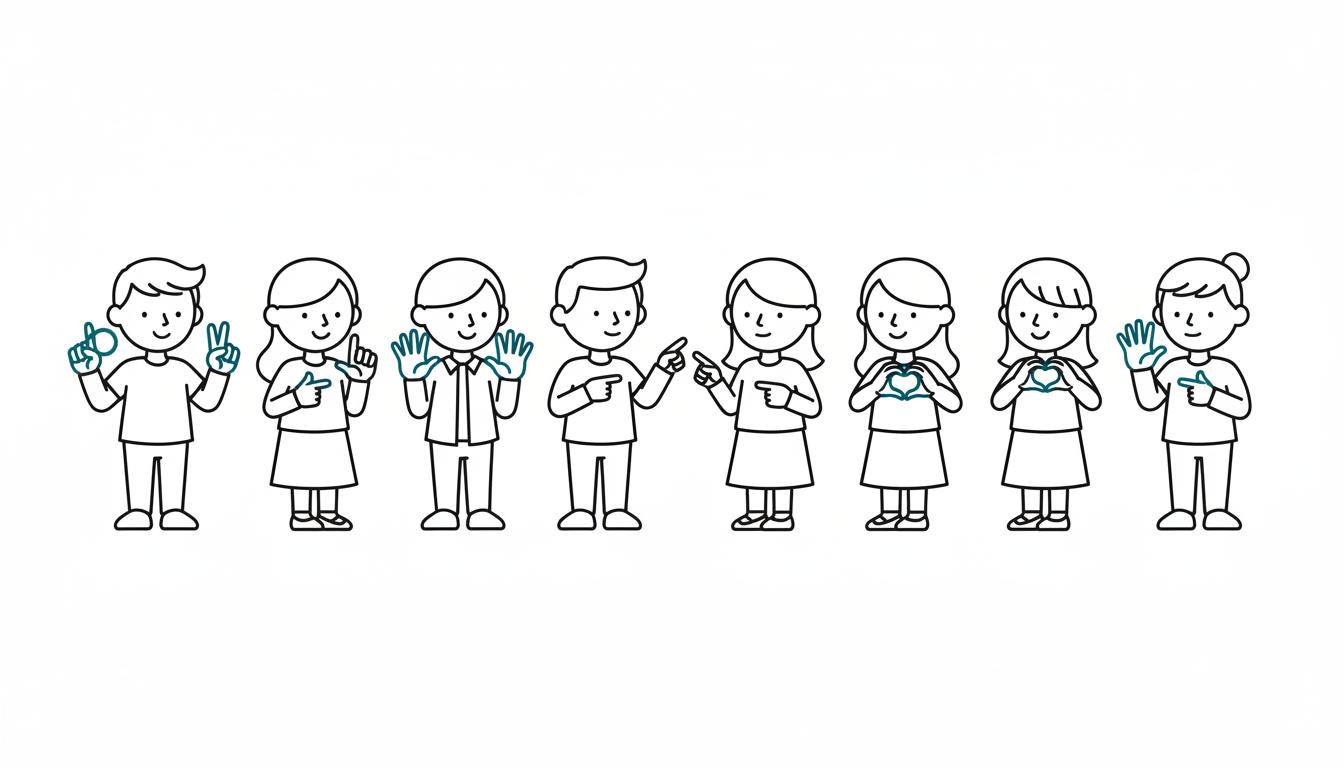
- STRATEGIZE (30 seconds) - Students use hand signals, gestures, and pantomime to communicate birth months and dates
- LINE UP (2-3 minutes) - Students organize themselves in chronological order without speaking
- CHECK (60 seconds) - Go down the line: each person calls out their birthday to verify the order
- CELEBRATE: Acknowledge successful teamwork and communication
What to Say
"Stand up and spread out. Your challenge: line up in order of your birthdays from January 1st (point to one end of room) to December 31st (point to other end). So if your birthday is in January, you'll be over here. December birthdays over there. Everyone else in between.
Here's the twist: You can't talk. No speaking! You can use hand signals, gestures, write in the air, point, pantomime—but no words. You have 3 minutes. Ready? Go!"
(After students line up) "Let's check! Starting from this end, call out your birthday—just month and day. January 5th... January 12th... February 3rd..." (Continue through line)
"Great teamwork! You communicated without words and organized yourselves. That's impressive collaboration!"
Why It Works
The nonverbal constraint forces creative problem-solving and attentive listening (watching). Students must work together toward a shared goal, which builds team cohesion. The movement component energizes the brain. Calling out birthdays at the end allows everyone to learn about classmates, strengthening community. The activity explicitly demonstrates that communication is more than just words—a valuable metacognitive insight.
Research Citation: Collaborative challenges that require coordination improve group dynamics and trust (Deutsch, 1949).
Teacher Tip
Time the activity! Challenge students: "Let's see if you can beat your time next time." Competition against themselves (not each other) increases engagement. Also, participate by helping point to the ends or joining the lineup yourself.
Variations
For Different Subjects
- Alphabetical Order: Line up alphabetically by first name, last name, or middle name (still no talking)
- By Numbers: Line up by house number, phone number last 2 digits, or number of siblings
- By Height: Line up shortest to tallest (easy visual check)
- Content Order: Line up chronologically based on historical events you're studying, or by the order of steps in a process
For Different Settings
- Large Class: Use hallway or outdoor space
- Small Class: Can do in classroom by rearranging desks temporarily
- Online: Not ideal for this activity—try a different icebreaker
- Limited Space: Do it seated: students pass a ball in birthday order
For Different Ages
- Elementary (K-5): They may need to speak. Remove the "no talking" rule, or make it "whisper only"
- Middle/High School (6-12): Love the challenge of nonverbal. Strict no-talking rule works well.
- College/Adult: Works excellently. Can add complexity: "Line up by birthday AND birth year" (age reveal)
Challenge Variations
- Easy: Allow talking
- Medium: No talking (hand signals okay)
- Hard: No talking AND no hand signals—only facial expressions
- Expert: Blindfolded! (Requires exceptional trust and space safety)
Online Adaptation
Not Ideal for Online:
- The physical lineup is the core of the activity
- Alternative Online Icebreaker: Use chat to type birthdays, then arrange names in a shared doc
Troubleshooting
Challenge: Students immediately start talking. Solution: "Remember, no talking! That includes whispers. Only gestures!" Playfully shush talkers or have them restart.
Challenge: Students struggle to communicate months/dates nonverbally. Solution: After 30 seconds, give hints: "Hold up fingers for the month number. January = 1 finger, February = 2 fingers..."
Challenge: Line is totally mixed up when you check. Solution: Celebrate the effort! "That was tricky! Let's try once more, now that you know some strategies." Debrief: "What made it hard? What could you do differently?"
Challenge: Student is uncomfortable sharing birthday (personal reasons). Solution: Allow them to make up a birthday for the game, or opt out and be a "helper" who observes and coaches (but without speaking).
Extension Ideas
- Debrief Communication: "What strategies did you use to communicate without words? When might you need to do that in real life?"
- Connect to Content: "We just practiced sequencing and ordering—skills we use in [timeline creation / story structure / scientific processes / mathematical ordering]."
- Create Birthday Calendar: Post everyone's birthday on a class calendar so you can celebrate throughout the year
- Metacognitive Reflection: "Was it harder or easier than you expected? Why?"
- Repeat with Different Criteria: Try alphabetical order next time—compare how much faster students get
Related Activities: Silent Scream, Speed Sort, Commonalities and Differences