
One Word Storm
At a Glance
- Time: 15-30 seconds
- Prep: None
- Group: Whole class (individual participation)
- Setting: Any (works in-person or online)
- Subjects: Universal
- Energy: Medium-High
Purpose
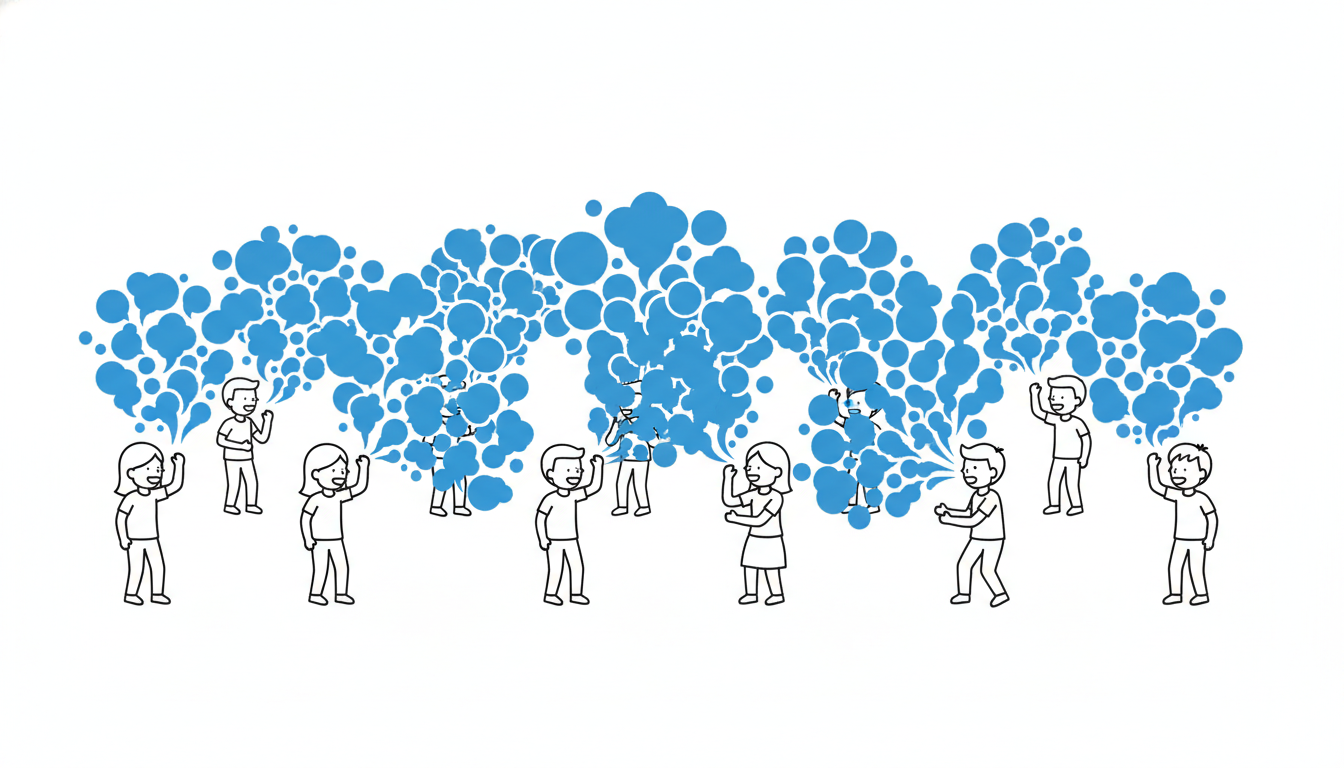
Instantly activate prior knowledge and create energetic engagement by having everyone simultaneously shout one word related to the topic. Use this at the very beginning of class to immediately establish that today's session will be participatory and to prime student thinking about the subject.
How It Works
Step-by-step instructions:
- ANNOUNCE (5 seconds) - "When I count to three, everyone shout out ONE word related to [topic]. Ready?"
- COUNT (3 seconds) - "One, two, three!"
- STORM (3 seconds) - Students all shout simultaneously
- ACKNOWLEDGE (10 seconds) - "I heard [repeat 3-5 words you caught]. Great! Those are all connected to today's topic."
- TRANSITION (5 seconds) - "Let's explore those ideas."
What to Say
Opening: "Before we start, I want to hear what's already in your heads about climate change. When I say 'go,' everyone shout out ONE word—just one—that you associate with climate change. All at once. Don't worry about being right or wrong. Ready? One, two, three, GO!"
After the storm: "Perfect! I heard 'warming,' 'ice caps,' 'carbon,' 'polar bears,' and 'renewable energy.' All of those connect to what we're discussing today. Let's dig in."
Closing: "Great energy! Now let's channel that into focused discussion."
Why It Works
The simultaneous shouting creates immediate engagement—every student must think of a word and say it, ensuring 100% active participation. The lack of "right or wrong" (all words are accepted) lowers stakes and reduces anxiety about contributing. The act of retrieving a word related to the topic activates relevant prior knowledge and primes the brain's semantic networks, making subsequent learning easier. The energy and slight chaos signal that this class is participatory, not passive. It's a pattern interrupt that grabs attention instantly.
Research Citation: Activating prior knowledge before instruction significantly improves comprehension and retention (Marzano, 2004).
Teacher Tip
The first time you do this, students may hesitate. Say, "I'm serious—everyone shout at the same time! Don't be polite and wait your turn. STORM means everyone at once!" Model it by shouting a word yourself during the countdown. After the first time, they'll love it and expect it.
Variations
For Different Subjects
- Any Subject: "One word related to [photosynthesis / World War II / fractions / Shakespeare / democracy]"
- Review Session: "One word from yesterday's lesson!"
- Emotion Check: "One word describing how you feel about today's quiz!"
- Opening Question: "One word answer to: What do all living things need?"
For Different Settings
- Large Class (30+): Perfect for this! The more voices, the more energy.
- Small Class (5-15): Still works. The storm may be quieter but still effective.
- Online: Use "everyone unmute and shout" or "type your word in chat all at once." Both work!
- Quiet Requirement: "Silent Storm"—everyone writes their word on paper simultaneously, then holds it up.
For Different Ages
- Elementary (K-5): LOVE this. May need to practice "all at once" concept first.
- Middle/High School (6-12): Enjoy the brief permission to be loud. Works great.
- College/Adult: Explain it first: "This activates your prior knowledge quickly. When I count to three, everyone say one word." Adults participate willingly if they know the purpose.
Online Adaptation
Tools Needed: Zoom, Teams, any video platform with chat function
Option 1: Verbal Storm
- "Everyone unmute! On three, shout one word. One, two, three!"
- Brief chaos as everyone speaks.
- "I heard [words]. Great!"
Option 2: Chat Storm
- "When I say 'go,' type one word in the chat. All at once! GO!"
- Words flood the chat.
- Scroll through: "I see 'adaptation,' 'survival,' 'mutation'—perfect!"
Pro Tip: Chat storm is actually easier to capture and reference later. You can scroll back to see all the words. Screenshot the chat for documentation.
Troubleshooting
Challenge: Students are too quiet or don't all participate. Solution: Reset and try again. "That was too polite! We need MORE volume and 100% participation. Again! One, two, three, GO!" Model extra loudness yourself.
Challenge: Students shout phrases or sentences, not single words. Solution: Interrupt and clarify: "Just ONE word! Not a sentence. One word only. Let's try again."
Challenge: It feels chaotic and you can't understand anything. Solution: That's actually okay! The point is energy and activation. Acknowledge: "I couldn't catch every word, but I heard the energy. That tells me you're thinking about this topic. Let's use that energy."
Extension Ideas
- Deepen: After the storm, ask students to Think-Pair-Share: "Turn to your neighbor. Why did you choose that word?"
- Connect: Create a word cloud (manually or digitally) from the words you heard. Display it throughout the lesson.
- Follow-up: End the lesson with another One Word Storm: "One word describing what you learned today!" Compare the before and after storms.
Related Activities: Rapid Fire, Energy Check, Speed Sort