
Paperclip Challenge
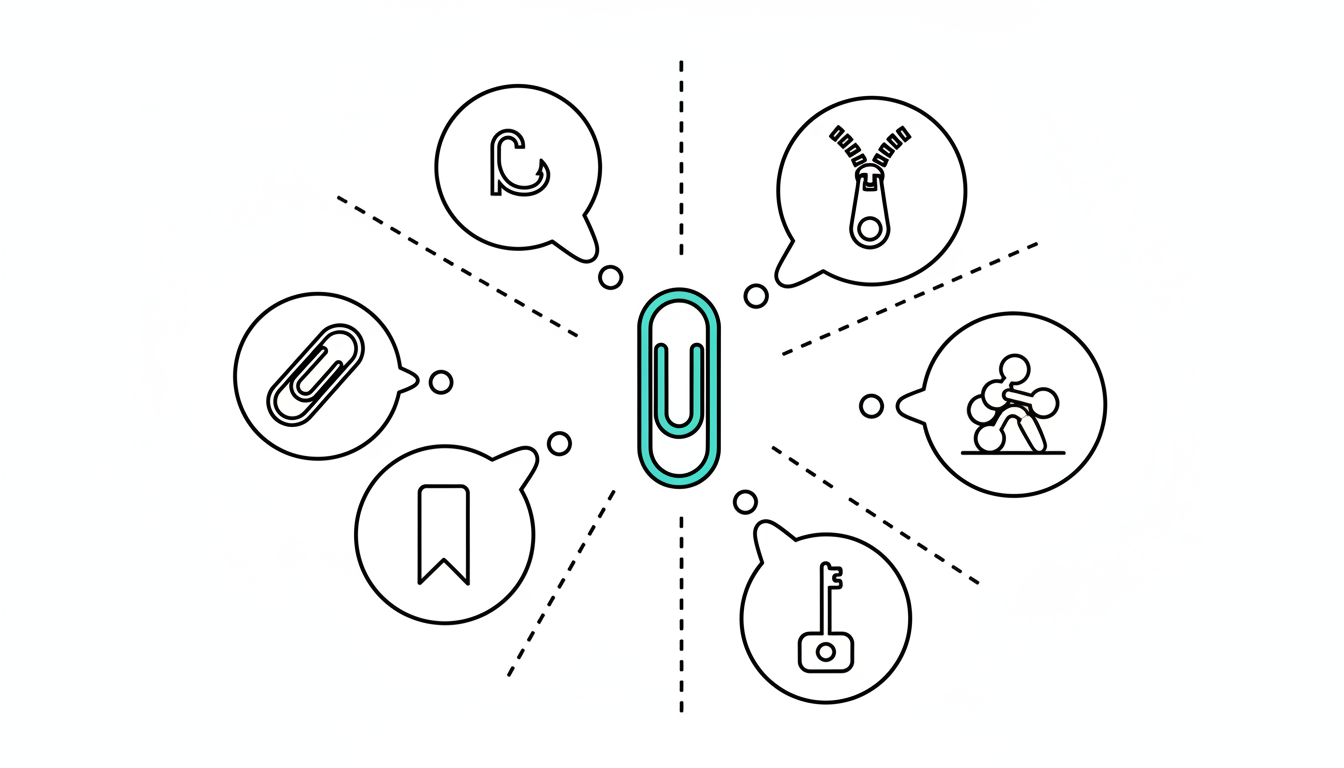
At a Glance
- Time: 2-3 minutes
- Prep: None
- Group: Individual or pairs
- Setting: Any classroom
- Subjects: Universal
- Energy: Medium
Purpose
Rapidly generate creative ideas by listing as many alternative uses for a common object as possible in a short time, building cognitive flexibility and creative confidence. Use this as a classic warm-up for creative thinking, an energizer, or an introduction to divergent thinking concepts.
How It Works
Step-by-step instructions:
-
Set the challenge (15 seconds) - "List as many uses for a paperclip as you can in 60 seconds. Normal use (holding paper) doesn't count. Go beyond the obvious!"
-
Brainstorm rapidly (60-90 seconds) - Students write down as many alternative uses as they can generate. Emphasize quantity over quality—no self-censoring, write everything down, wild ideas welcome
-
Compare and celebrate (30-45 seconds) - Quick share: Who got the most ideas? What was the most creative? Most practical? Most absurd? Celebrate variety and originality
What to Say
Opening: "60-second challenge: List as many uses for a paperclip as possible. Using it to hold papers doesn't count—that's its normal job. Everything else is fair game. Practical, creative, silly, weird—write them ALL down. Ready? Go!"
During: "Don't stop to evaluate—just keep writing... If you hit a wall, change your thinking: What if it was giant? Tiny? Made of different material?... Keep going! Quantity matters..."
Closing: "Time! Count your uses. Who got 10? 15? 20? Let's hear some favorites: [Students share.] Toothpick, fishing hook, lock pick, makeshift zipper pull, bookmark, mini sculpture... Notice how many possibilities exist for something so simple? This is divergent thinking—seeing beyond the obvious use to discover hidden potential. That's innovation."
Why It Works
The Paperclip Challenge is a classic divergent thinking exercise that quickly demonstrates creative potential everyone possesses. The time pressure prevents overthinking and self-censorship, accessing more spontaneous, creative idea generation. The concrete object (paperclip) provides a specific focus that paradoxically enhances rather than limits creativity. Seeing others generate many diverse ideas builds creative confidence: "If they can think of 20 uses, so can I." The activity proves that creativity is a skill that can be practiced and improved, not an innate talent some have and others don't.
Research Connection: The Alternative Uses Test (Guilford, 1967) is a validated measure of divergent thinking and creative potential. Regular practice with divergent thinking exercises improves creative problem-solving abilities.
Teacher Tip
After the initial challenge, do a quick second round: "Now you have 30 seconds to add 5 MORE ideas—but they must be uses that would work in zero gravity (or underwater, or for someone the size of an ant)." Adding a constraint often sparks a new wave of creativity when students think they've exhausted possibilities.
Variations
For Different Subjects
- Any Subject: Adapt the object—"Alternative uses for a ruler, beaker, textbook, chalk, calculator"
- Science: "Alternative uses for [scientific equipment]—beaker, test tube, magnet"
- Math: "Alternative uses for a protractor, compass, graph paper"
- Language Arts: "Alternative uses for a book besides reading it"
For Different Settings
- Large Class (30+): Individual challenge, then pair-share to add to each other's lists
- Small Group (5-15): Round-robin sharing after individual brainstorming—each person shares one unique use
For Different Ages
- Elementary (K-5): Use 90 seconds; allow drawing ideas if writing is slow; celebrate any ideas enthusiastically
- Middle/High School (6-12): Standard 60-second format
- College/Adult: Add evaluation dimension: "After generating, categorize your uses by feasibility and creativity"
Online Adaptation
Tools Needed: Chat or shared document
Setup: Timer visible on screen
Instructions:
- Display paperclip image and challenge on screen
- Start visible countdown timer (use online countdown timer website)
- Students type uses rapidly in chat or shared doc
- When time ends, scroll through to count and celebrate variety
- Poll: "How many uses did you generate? 0-5, 6-10, 11-15, 16+"
Pro Tip: Use a collaborative doc where everyone types simultaneously—the collective list grows before their eyes, creating momentum
Troubleshooting
Challenge: Students run out of ideas after 5-6 obvious ones Solution: "Change your thinking: What if the paperclip was huge? What if you had 1000 of them? What if it was the only tool you had? What problem could it solve?"
Challenge: Students judge their ideas as "stupid" and don't write them down Solution: "There are no stupid ideas in brainstorming—only ideas. Your 'stupid' idea might spark someone else's brilliant one. Write EVERYTHING down, especially the weird ones!"
Extension Ideas
- Deepen: After generating uses, categorize them: "Sort your ideas into practical, creative, and impossible. Which category has the most? Why?"
- Connect: "Many innovations came from seeing new uses for existing things: bubble wrap was originally intended as wallpaper! Sometimes the 'alternative' use becomes the main use"
- Follow-up: "Pick your most creative paperclip use and sketch or describe how it would work in detail"
Related Activities: Divergent Thinking Prompts, Mashup Ideation, SCAMPER