
Perspective Flip
At a Glance
- Time: 2-3 minutes
- Prep: None
- Group: Individual then pairs
- Setting: Any classroom
- Subjects: Universal
- Energy: Medium
Purpose
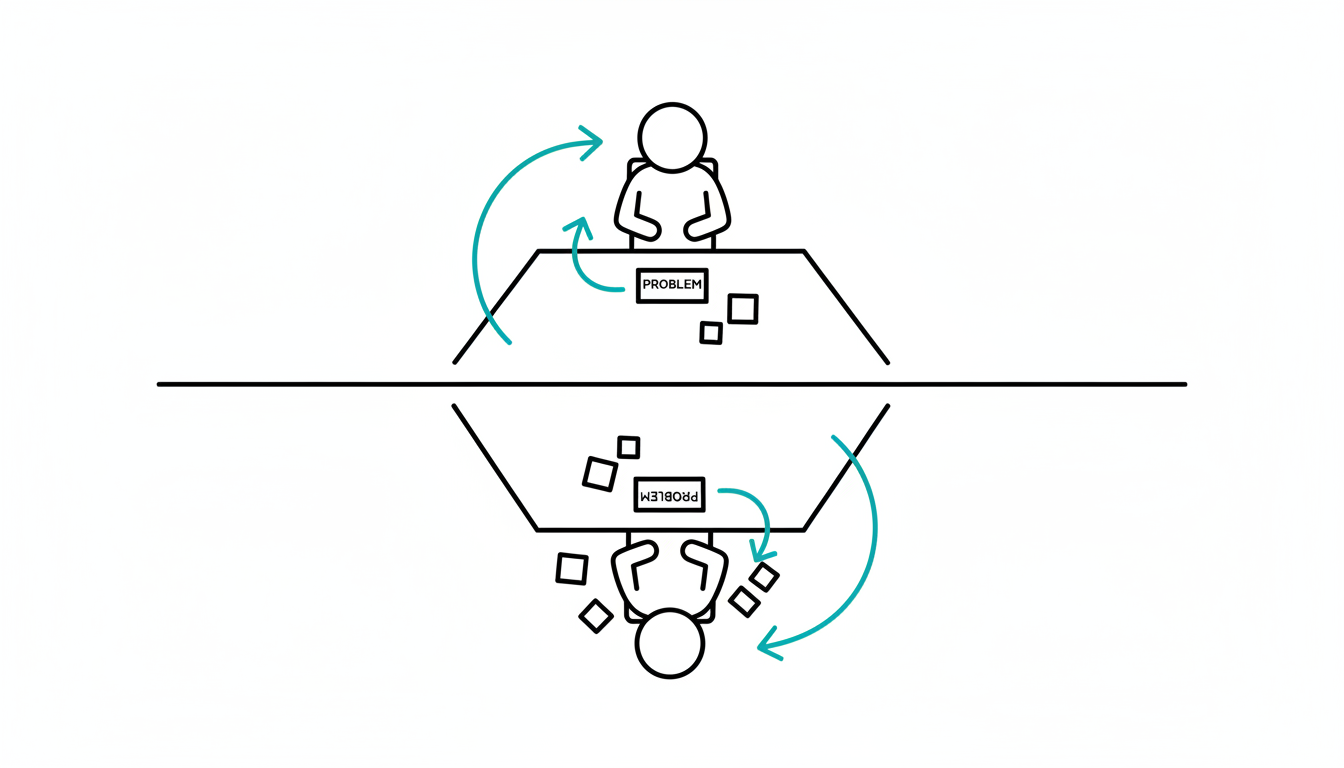
Perspective Flip activates critical thinking and empathy by asking students to consider familiar topics from unconventional viewpoints, surfacing assumptions and deepening understanding.
How It Works
Step-by-step instructions:
- PRESENT PERSPECTIVE (30 seconds) - Announce unusual perspective on today's topic
- THINK AND WRITE (1.5 minutes) - Students jot ideas from that perspective
- PAIR SHARE (1 minute) - Partners compare perspectives and surprising insights
What to Say
Opening: "Before we study [the American Revolution], I want you to think about it from the perspective of a British soldier. What might they have thought was happening? Write 2-3 ideas."
During: "Push yourself to really inhabit this perspective. What would matter to someone in this position?"
Closing: "Share one surprising idea with your partner. How does this perspective change how we think about [topic]?"
Why It Works
Perspective-taking activates theory of mind and metacognition, requiring students to momentarily suspend their default viewpoint. This cognitive flexibility strengthens critical analysis and reduces rigid thinking patterns.
Research Citation: Galinsky & Moskowitz, 2000 (Perspective-taking research)
Teacher Tip
Choose perspectives that genuinely challenge common narratives rather than reinforcing them. The productive discomfort creates deeper engagement.
Variations
For Different Subjects
- Math/Science: "From the perspective of the water molecule..." or "As the calculator sees it..."
- Humanities: Alternative historical perspectives, marginalized voices, opposing viewpoints
- Universal: "From your future self's perspective, why is today's lesson important?"
For Different Settings
- Large Class (30+): Assign different perspectives to different sections of room
- Small Group (5-15): Each person takes different perspective; compare insights
For Different Ages
- Elementary (K-5): Use character perspectives from stories or animals' viewpoints
- Middle/High School (6-12): Standard format with social or historical perspectives
- College/Adult: Complex ethical or professional perspectives requiring nuanced analysis
Online Adaptation
Tools Needed: Breakout rooms, shared doc or Padlet
Setup: Create prompt with perspective assignment
Instructions:
- Assign perspective in chat
- Students write in shared doc (1.5 min)
- Breakout rooms to share (1 min)
Pro Tip: Use poll to vote on which perspective was most surprising after sharing.
Troubleshooting
Challenge: Students default to their own views Solution: "I notice you're writing what you think. Now write what [character/person] would think."
Challenge: Perspective feels too difficult or unfamiliar Solution: Provide 1-2 starter phrases: "From this view, the problem would be..."
Extension Ideas
- Deepen: "Now take the opposite perspective. How do these views conflict?"
- Connect: Return to these perspectives throughout lesson when relevant
- Follow-up: Exit ticket: "Which perspective from today surprised you most? Why?"
Related Activities: Opinion Continuum, What If Scenarios, Empathy Mapping