
Dance Break
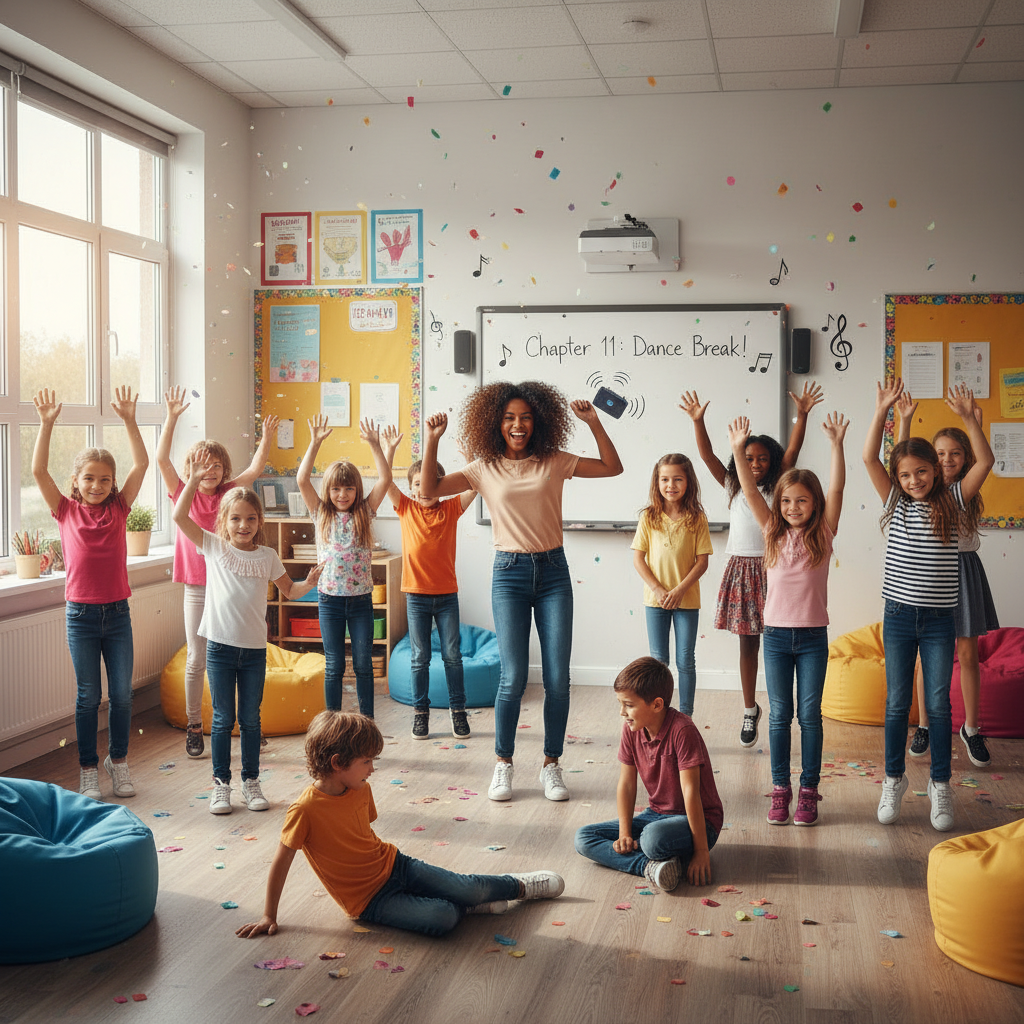
At a Glance
- Time: 1-2 minutes
- Prep: Minimal (speaker and upbeat music)
- Group: Whole class (individual movement)
- Setting: Any classroom with space to stand and move
- Subjects: Universal
- Energy: High (energizing)
Purpose
Boost energy, mood, and engagement through brief spontaneous dancing to upbeat music, leveraging movement and music to trigger dopamine release and positive emotion, combating mid-lesson fatigue while creating joyful moments that strengthen classroom community and make learning feel less rigid and more human.
How It Works
- Announce break (5 sec) - "Stand up. Dance break. 90 seconds. Go!"
- Play upbeat music (60-90 sec) - Turn on high-energy song; students dance freely in their space
- End music (immediate) - Stop song abruptly
- Return to seats (5-10 sec) - "Sit down. Energy recharged. Back to work."
Music Selection:
- Upbeat, high-tempo instrumental or age-appropriate pop
- 60-90 seconds duration (or fade out at desired time)
- Clean lyrics if vocals included
- Familiar songs increase participation
What to Say
Opening: "Stand up. We've been sitting too long and energy is dragging. Dance break—90 seconds. Move your body however feels good. No judgment, just movement. Here we go!"
During: [Let music play. Say nothing. Model dancing yourself if comfortable, or simply observe and smile.]
Closing: "Sit down. How do we feel now compared to two minutes ago? More awake? Let's use that energy for [next task]."
Why It Works
Physical movement increases heart rate and blood flow to the brain, improving alertness and cognitive function (Hillman et al., 2008). Dancing specifically combines movement with music, triggering dopamine release—the brain's reward chemical—which elevates mood and motivation. Dancing is also inherently joyful and social; even individual dancing in a group context creates shared positive emotion. Brief dance breaks interrupt prolonged sitting, reducing fatigue and restlessness. The spontaneity and playfulness signal to students that learning doesn't have to be somber—joy and rigor coexist.
Research Citation: Physical activity and brain function (Hillman et al., 2008)
Teacher Tip
You don't have to dance yourself if you're uncomfortable, but showing even minimal movement (head nodding, swaying) gives students permission to participate without self-consciousness. The teacher's willingness to be playful dramatically increases student buy-in. If you stand stone-faced while demanding they dance, they'll resist.
Variations
Different Dance Styles
- Free dance: Students move however they want
- Guided moves: Teacher calls out moves ("Jump! Spin! Shimmy!")
- Follow the leader: Teacher or student demonstrates, others copy
- Freeze dance: Stop music randomly; students freeze in position
Different Music Genres
- Pop: Familiar, high-energy (age-appropriate)
- Electronic/EDM: Fast-paced, rhythmic
- Classic rock: Timeless, upbeat
- World music: Cultural exploration through dance
- Disco/funk: Groovy, fun
Different Ages
- Elementary (K-5): Highly structured or totally free; kids love dancing—lean into silliness
- Middle/High School (6-12): Keep it brief and optional participation ("You can sway, you don't have to go wild")
- College/Adult: Frame as "movement break" if "dance break" feels juvenile; still effective
Online Adaptation
Tools Needed: Audio sharing capability
Setup: Enable audio sharing on video platform
Instructions:
- "Stand up, step back from your screen if you have space"
- Play music with screen-shared audio or encourage students to play on their end
- Students dance at home (cameras optional—on or off both work)
- Stop music: "Sit back down, let's continue"
Pro Tip: Use YouTube video with screen share—students see dancing visuals + hear music, which can reduce self-consciousness ("We're all doing this together").
Troubleshooting
Challenge: Students refuse to participate, feel embarrassed or claim it's "stupid" Solution: Make participation non-negotiable but low-bar: "You don't have to dance hard, but you DO have to stand and move your body for 90 seconds. Sway, bounce, shuffle—just move." Lower barrier without removing expectation.
Challenge: Dance break turns chaotic; students bump into each other, knock things over Solution: Set boundaries before starting: "Dance in your own space—no touching desks, chairs, or people. If I see unsafe movement, music stops and we sit down immediately." Follow through if needed.
Challenge: Dance breaks lose novelty; students become apathetic over time Solution: Use sparingly (not daily). Reserve dance breaks for strategic moments: post-assessment energy slump, Friday afternoons, before/after challenging content. Scarcity maintains impact.
Extension Ideas
- Deepen: "Dance style challenge"—introduce different dance styles weekly (salsa, hip-hop, line dancing); students learn cultural context
- Connect: Student DJ—rotate who chooses dance break song each week (pre-approved playlist)
- Follow-up: "Dance-off"—occasional friendly competition where students show signature move; class votes on favorites (builds community)
Related Activities: Shake It Off, Stretch Break, Music Transition