
Inside-Outside Circle
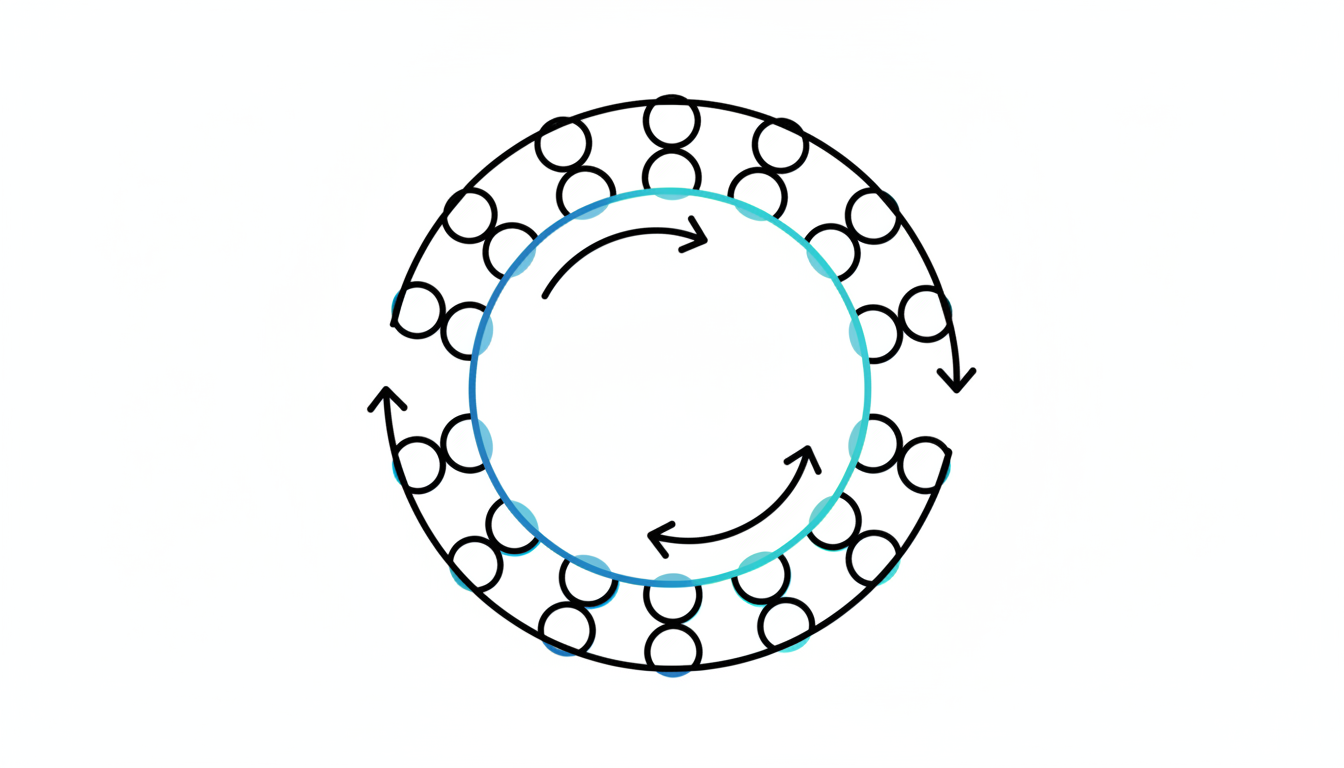
At a Glance
- Time: 8-12 minutes
- Prep: None
- Group: Pairs (constantly rotating)
- Setting: Requires open space for circles
- Subjects: Universal - review and discussion
- Energy: Very High
Purpose
Inside-Outside Circle (another name for Concentric Circles) creates rapid partner rotations where the inside circle stays stationary and the outside circle rotates. This structure is perfect for review, practicing skills with multiple partners, or having the same conversation multiple times with refinement each round. The constant movement keeps energy high.
How It Works
Step-by-step instructions:
-
FORM TWO CIRCLES (1 minute) - Half the class forms an inner circle facing outward. Other half forms outer circle facing inward, creating pairs.
-
FIRST DISCUSSION (1-2 minutes) - Pose a prompt. Partners discuss.
-
ROTATE (10 seconds) - Outer circle rotates one person to the right (clockwise). Inner circle stays still.
-
NEW DISCUSSION (1-2 minutes) - Same or new prompt with new partner.
-
REPEAT - Continue for 5-7 rotations.
-
DEBRIEF (1-2 minutes) - Reflect on what was learned through multiple conversations.
What to Say
Setup: "Count off 1-2. Ones, form a circle facing outward. Twos, form a circle around them facing inward. You should be facing a partner."
First Prompt: "Here's your first discussion: [PROMPT]. Inner circle, you speak first for 45 seconds. Then outer circle responds for 45 seconds. Begin."
Rotate: "Stop. Outer circle, step to your right one person. Inner circle, stay put. Everyone has a new partner."
Subsequent Rounds: "Same question, new partner. Outer circle speaks first this time. Begin."
Why It Works
The rotation exposes students to multiple perspectives on the same topic while practicing articulation through repetition. Each conversation refines their thinking.
Teacher Tip
By round 3 or 4, students' explanations become clearer and more sophisticated because they've practiced multiple times. This is distributed practice in action.
Variations
For Different Subjects
- Review: Each rotation covers a different concept.
- Skill Practice: Same skill, different partner gives feedback each time.
For Different Settings
- Online: Breakout rooms manually reassigned. Less elegant than in-person but functional.
Online Adaptation
Tools: Zoom breakout rooms
Process: Manually reassign one "circle" of students to create new pairs
Troubleshooting
Challenge: Circles get misaligned after several rotations. Solution: Pause and reset the circles.
Extension Ideas
- Deepen: Final rotation: "How has your thinking evolved from your first conversation?"
Related Activities: Concentric Circles, Speed Networking