
Speed Networking
At a Glance
- Time: 8-12 minutes
- Prep: None
- Group: Pairs (constantly rotating)
- Setting: Requires space for two lines facing each other
- Subjects: Universal - works for any topic
- Energy: Very High
Purpose
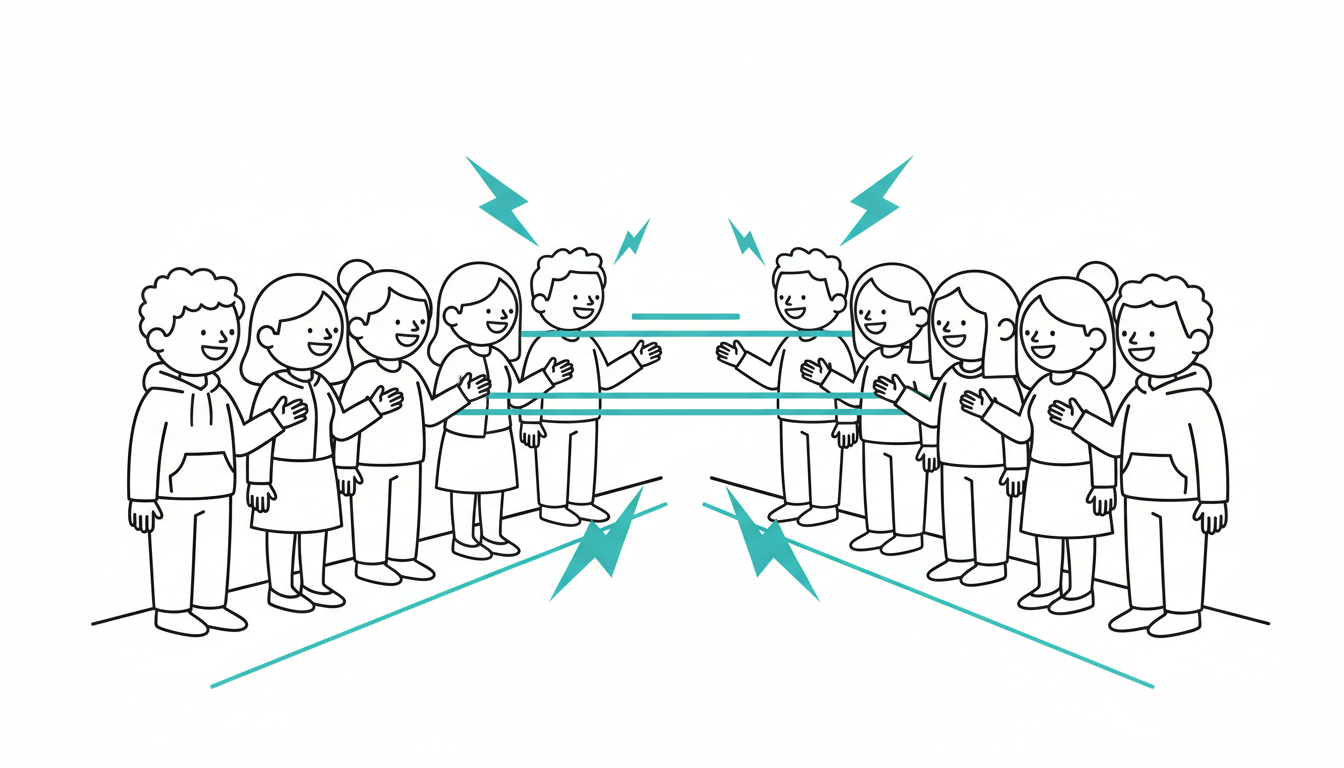
Speed Networking (similar to Concentric Circles but in lines) creates rapid-fire conversations where students meet many peers in quick succession. Each pairing gets 60-90 seconds to discuss a prompt before rotating to a new partner. Use this for review, sharing perspectives, or building classroom community through multiple short interactions.
How It Works
Step-by-step instructions:
-
FORM TWO LINES (30 seconds) - Half the class forms Line A facing the room. Other half forms Line B facing Line A. Each person faces a partner.
-
POSE PROMPT (10 seconds) - Give a discussion question or topic.
-
DISCUSS (60-90 seconds) - Partners discuss the prompt.
-
ROTATE (10 seconds) - One line stays put, the other shifts down one person. Everyone has a new partner.
-
NEW PROMPT (10 seconds) - Give the same or a new prompt.
-
REPEAT - Continue for 5-8 rotations.
-
DEBRIEF (1-2 minutes) - Reflect on what was learned through multiple conversations.
What to Say
Setup: "Count off 1-2. Ones, form a line along this wall facing inward. Twos, form a line facing the ones. You should each be looking at a partner."
First Prompt: "Prompt: [QUESTION]. You each have 30 seconds to share your thoughts. Line A, you start. Go."
Rotation: "Stop. Line B, shift to your right one person. Line A stays put. Everyone has a new partner. New prompt: [QUESTION]. Line B starts this time. Go."
Continue: "Rotate again—Line B shift right."
Why It Works
Speed Networking creates energy, ensures everyone speaks to multiple people, and provides distributed practice with concepts through repeated articulation to different audiences.
Teacher Tip
Use a visible/audible timer and enforce strict time limits. The speed creates positive pressure that keeps energy high and prevents overthinking.
Variations
For Different Subjects
- Review: Each rotation covers a different concept from the unit.
- Perspective-Building: Each rotation explores the same issue from a different stakeholder's view.
For Different Settings
- Online: Breakout rooms manually reassigned after each 90-second round.
Online Adaptation
Tools: Zoom breakout rooms Process: Manually reassign pairs every 90 seconds
Troubleshooting
Challenge: Lines get misaligned after multiple rotations. Solution: Pause and re-form the lines. Or have rotating line move two people instead of one.
Extension Ideas
- Deepen: Final rotation asks: "What's the most interesting idea you heard from any of your previous partners?"
Related Activities: Concentric Circles, Pair-Share-Repeat