
Word Association Chain
At a Glance
- Time: 2-3 minutes
- Prep: None
- Group: Whole class
- Setting: Any
- Subjects: Universal (excellent for Language Arts)
- Energy: Medium
Purpose
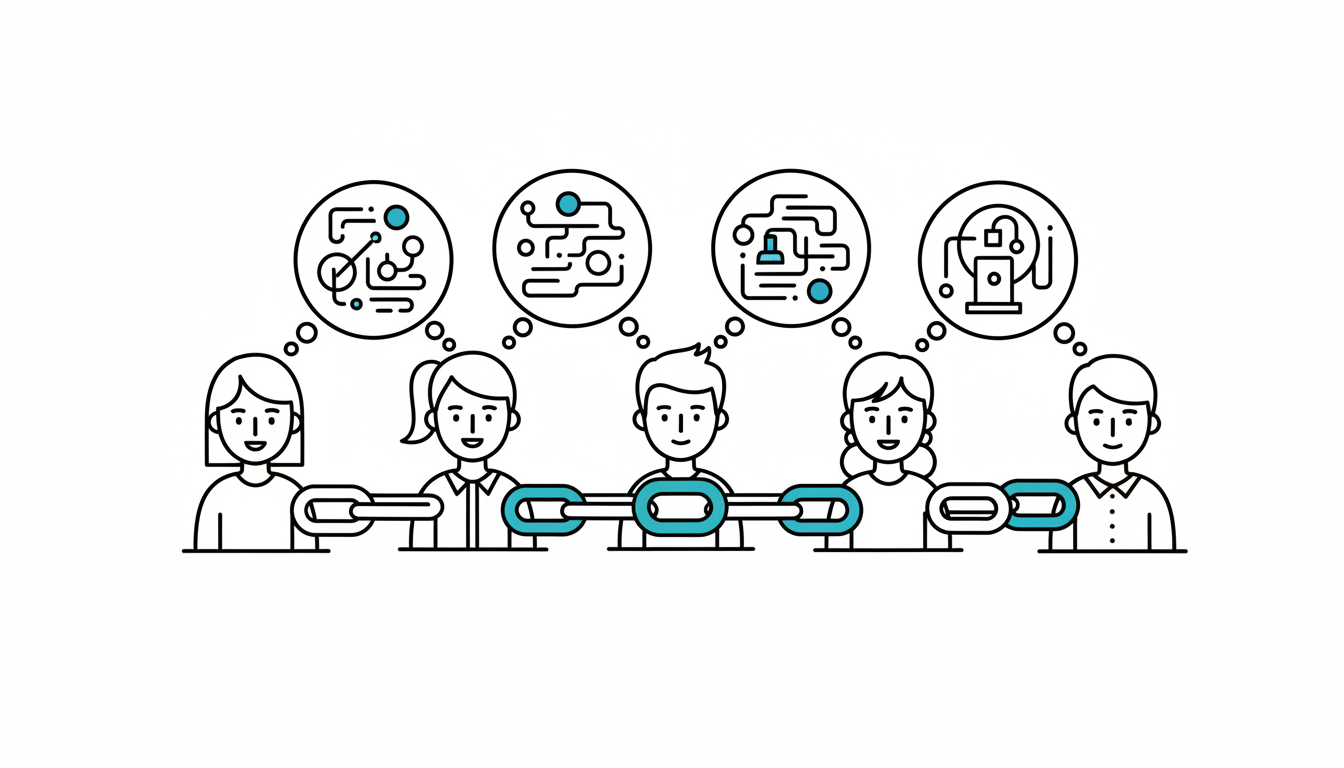
Activate vocabulary, creative thinking, and quick mental connections. Use this at the start of class, during transitions, or to energize students. Students practice semantic relationships, associative thinking, and verbal fluency. The rapid pace keeps energy high and attention focused. The chain format creates a collaborative challenge—everyone contributes to keeping it going.
How It Works
- START (5 seconds) - Teacher says a starting word
- ASSOCIATE (2-3 minutes) - Students take turns saying words that connect to the previous word
- KEEP IT MOVING - Each student has 3 seconds to respond
- CHALLENGE (optional) - Student must explain the connection if it's unclear
- REFLECT (optional, 30 seconds) - Discuss the path the chain took
What to Say
"We're going to build a word association chain. I'll say a word. The first person says a word that connects to mine. The next person says a word that connects to THAT word—not mine, but the one right before. We'll go fast! You have 3 seconds max. If you can't think of one, say 'pass' and we move to the next person. Ready?"
"I'll start: OCEAN."
Student 1: "Waves!" Student 2: "Surfing!" Student 3: "Beach!" Student 4: "Sand!" Student 5: "Castle!" Student 6: "King!" Student 7: "Crown!"
"Great! Notice how we went from ocean all the way to crown? That's how our brains make connections. Let's do it again with a different starting word: BOOK."
Why It Works
Word association activates semantic networks in the brain, which strengthens vocabulary and conceptual connections. The rapid pace demands attention and quick thinking, which increases alertness. Students hear how others make different associations, which exposes them to diverse thinking patterns. The collaborative nature builds community. The activity explicitly demonstrates how concepts interconnect—a valuable lesson for making connections across content areas.
Research Citation: Semantic association activities improve vocabulary depth and retrieval fluency (Nation, 2001).
Teacher Tip
Keep the pace brisk! Don't allow long pauses—if someone hesitates beyond 3 seconds, move on. The energy comes from momentum. Also, if a connection is unclear, ask: "How does that connect?" This builds metacognitive awareness of their thinking.
Variations
Starting Words by Purpose
Open-Ended (Any Direction):
- Sun, Music, Happiness, Change, Technology
Content-Specific Starting Words:
- Science: Energy, Cell, Ecosystem, Atom, Evolution
- Math: Number, Equation, Shape, Pattern, Infinity
- Literature: Character, Conflict, Theme, Symbol, Metaphor
- History: Revolution, Power, Democracy, War, Trade
- Geography: Climate, Population, Border, Resource, Migration
Challenge Variations
- Themed Chain: "All words must relate to [topic]" (e.g., water cycle, American Revolution)
- Alliteration Chain: Each word must start with the same letter
- Rhyme Chain: Each word must rhyme with or partially rhyme with the previous
- Opposite Chain: Each word must be an opposite or contrast to the previous
- Synonym Chain: Each word must be a synonym or closely related meaning
For Different Settings
- Large Class: Popcorn style (call on volunteers) or go in order
- Small Class: Go around circle; everyone gets multiple turns
- Online: Go in gallery order or call on students by name
- Written Version: Pass a paper; each person writes a word
For Different Ages
- Elementary (K-5): Allow longer thinking time (5-10 seconds); simpler words
- Middle/High School (6-12): Keep it fast; expect sophisticated vocabulary
- College/Adult: Academic or discipline-specific vocabulary
Online Adaptation
Excellent for Online:
- Call on students by name or go in alphabetical order
- Students unmute to say their word
- Or type in chat (slightly slower but works)
- Works well virtually with clear turn-taking
Troubleshooting
Challenge: Student can't think of a word; awkward silence. Solution: "Pass! Next person." Keep it moving. Or allow the class to help: "Can someone give them a suggestion?"
Challenge: Connection is totally unclear or random. Solution: "How does that connect? Help us see your thinking!" If they can't explain, allow it anyway or ask for a different word.
Challenge: Students repeat words already said. Solution: "Ooh, we already said that! Try a different word."
Challenge: Chain breaks down; energy drops. Solution: "Let's start fresh with a new word!" Reset and keep energy high.
Challenge: Inappropriate word choices. Solution: "Keep it school-appropriate. Try again with a different word."
Extension Ideas
- Trace the Chain: At the end, list all the words in order. "Look how far we traveled from [first word] to [last word]!"
- Explain Connections: Go back through the chain: "How did we get from ocean to crown? What were the steps?"
- Content Connection: "We just practiced making connections. In today's lesson, we'll connect [concepts]."
- Reverse Engineer: Give the first and last word; students create a chain connecting them
- Writing Prompt: "Write a story that includes all the words from our chain."
- Visual Map: Draw the chain as a concept map showing connections
Related Activities: Riddle Me This, Category Game, Analogies