
Energy Check
At a Glance
- Time: 15-30 seconds
- Prep: None
- Group: Whole class
- Setting: Any
- Subjects: Universal
- Energy: Low
Purpose
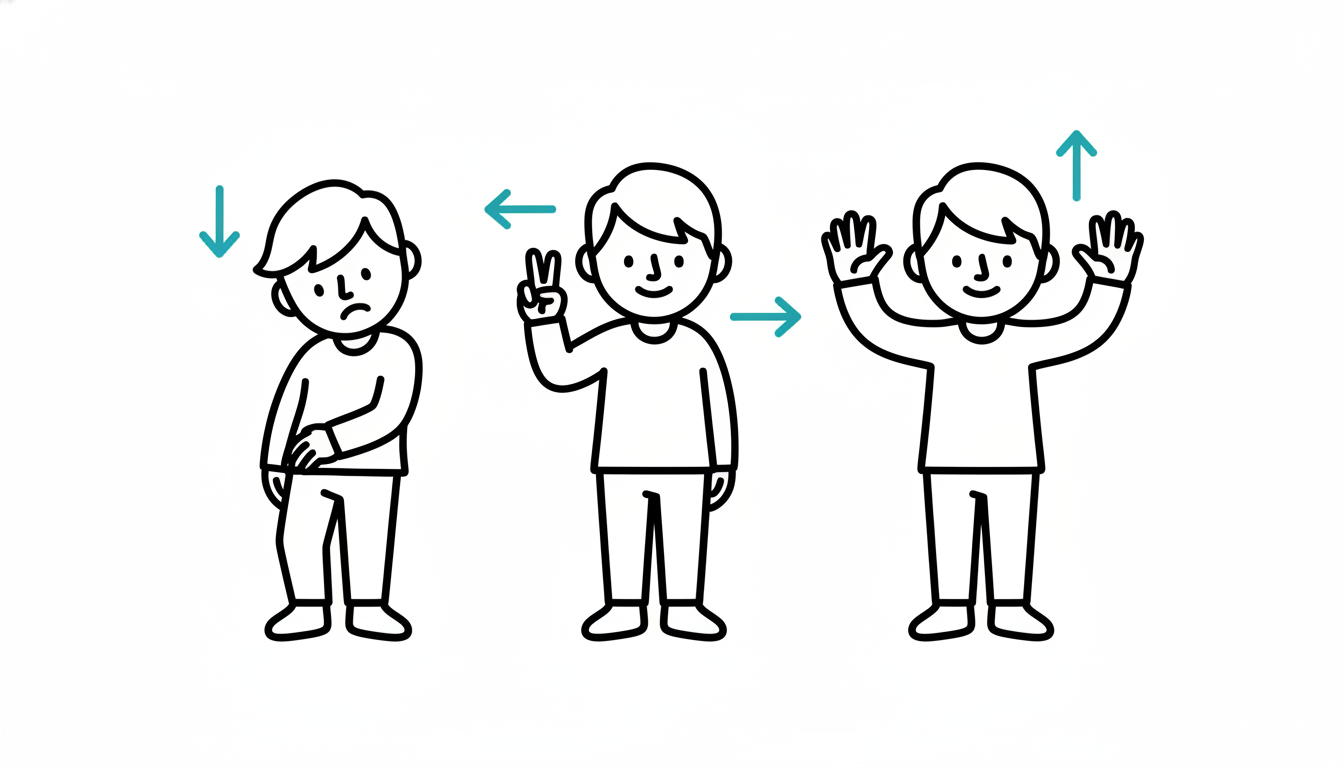
Quickly assess the room's energy level and students' self-awareness by having them rate their own energy on fingers (1-10). Use this to decide whether to energize, calm, or proceed as planned. It builds metacognitive awareness of personal state.
How It Works
- ANNOUNCE (5 seconds) - "Energy check! Rate your energy 1-10 using fingers. 1 = falling asleep, 10 = bouncing off walls."
- SIGNAL (5 seconds) - "Show me on three. One, two, three—show!"
- SCAN (10 seconds) - Teacher quickly observes the range
- RESPOND (10 seconds) - "I see lots of 3s and 4s. We need to wake up! Stand up, we're doing [energizer]."
What to Say
"Quick energy check. On a scale of 1-10, how's your energy right now? 1 = you're asleep, 5 = medium, 10 = you're wired. Show me with your fingers. Everyone at the same time. Ready? One, two, three, show!"
(After observing) "I see mostly 2s, 3s, and 4s. Low energy. Perfect—that tells me we need a quick energizer before diving into complex content. Stand up!"
Or: "Lots of 7s, 8s, 9s! High energy. Great! Let's channel that into focused work."
Why It Works
This activity builds self-awareness (metacognition) by asking students to assess their internal state. The teacher gains real-time data to adjust instruction responsively. If energy is low, add an energizer; if high, channel it; if just right, proceed. Students appreciate being asked about their state—it shows the teacher cares about their experience. The act of checking in also increases awareness of energy levels.
Research Citation: Metacognitive awareness of one's own state improves self-regulation and learning outcomes (Flavell, 1979).
Teacher Tip
Actually USE the data! If students report low energy and you ignore it and lecture anyway, they'll stop giving honest responses. Show them their input matters: "You said 3s and 4s, so we're doing jumping jacks before the lesson."
Variations
For Different Subjects
- Energy Level: "How's your energy?"
- Focus Level: "How focused are you? 1 = can't focus, 10 = laser-focused"
- Stress Level: "How stressed? 1 = calm, 10 = very stressed"
- Confidence Level: "How confident about today's topic? 1 = lost, 10 = expert"
- Understanding Level: "How well do you understand this? 1 = confused, 10 = totally get it"
For Different Settings
- Any Size: Works for all
- Online: Show fingers on camera or type number in chat
- Anonymous: "Close your eyes, show fingers so only I see"
- Ongoing: Do this 2-3 times per class to track energy shifts
For Different Ages
- Elementary (K-5): Simplify to 1-5 scale. Use visual: "1 = sleeping face, 5 = excited face"
- Middle/High School (6-12): Standard 1-10 works well
- College/Adult: Appreciate the metacognitive practice
Online Adaptation
Works Great Online:
- "Hold up fingers on camera" (visual poll)
- "Type your number in chat" (quick and easy to scan)
- "Use Zoom reactions if available" (limited scale but works)
Troubleshooting
Challenge: Everyone shows 5 (middle), even when clearly low energy. Solution: "Be honest! This helps me teach better. If you're honestly at 2, show 2. If you're at 9, show 9. There's no wrong answer."
Challenge: Some show 10 ironically even when they're obviously tired. Solution: "Real numbers only. This isn't a joke—I'm using your feedback to decide what we do next."
Challenge: Wide range makes it hard to decide next steps. Solution: Look at the median. "Most people are in the 3-5 range, so we're leaning low. Let's energize."
Extension Ideas
- Deepen: "You checked your energy. Now check your strategy: If your energy is low, what could YOU do about it? Stand up? Drink water? Take deep breaths?"
- Connect: "Athletes check their physical and mental state constantly. You just did what elite performers do."
- Follow-up: "Check your energy when you sit down to study tonight. If it's below 5, take a break or move around first."
Related Activities: Fist to Five, Emoji Response, Human Barometer