
Minute Papers
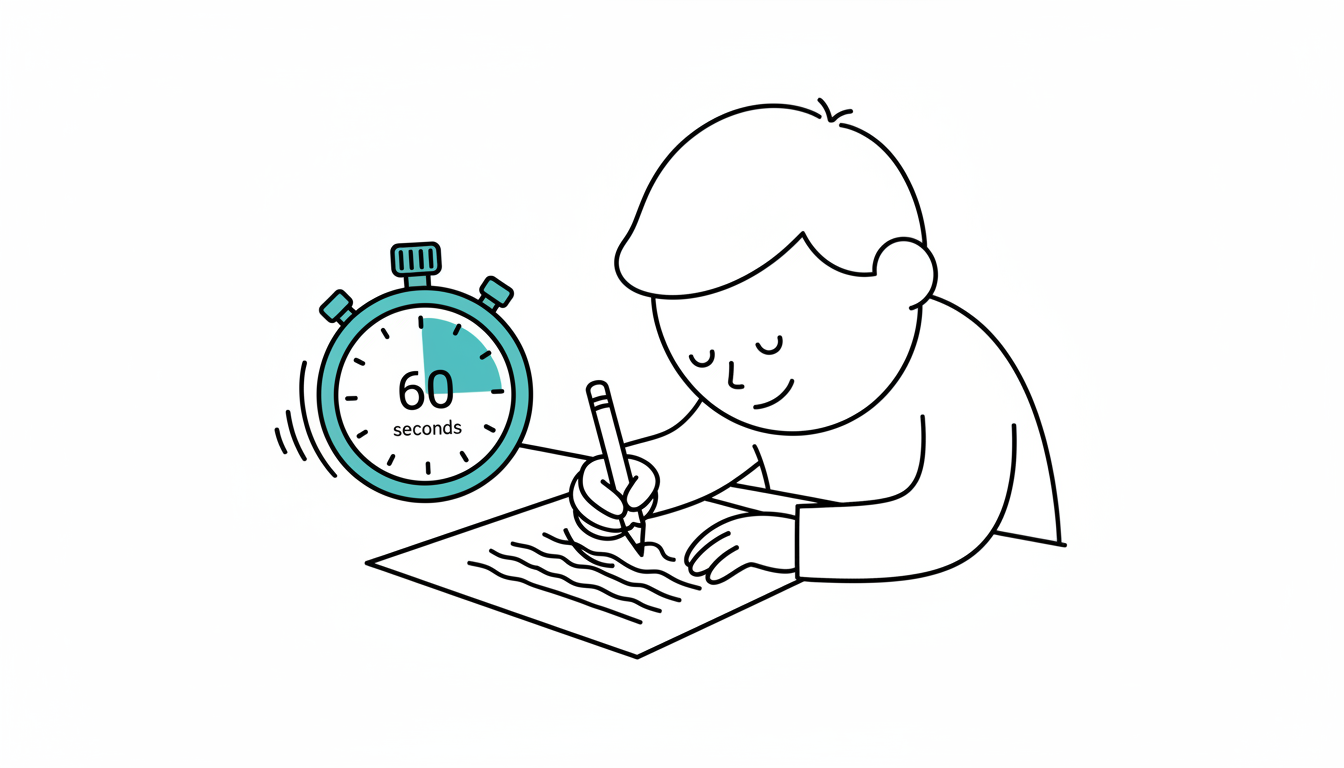
At a Glance
- Time: 1-3 minutes
- Prep: Minimal (prepare prompt)
- Group: Individual
- Setting: Any
- Subjects: Universal
- Energy: Low
Purpose
Prompt rapid synthesis and integration of new information through brief,focused writing that can occur at any point in the lesson to check understanding or encourage reflection.
How It Works
- Present prompt (15 sec) - "Write for 60 seconds: What's the most important thing you learned today?"
- Students write (1-2 min) - Rapid, unedited writing in response to prompt
- Optional share (1 min) - Few students read aloud or turn in for teacher review
What to Say
Opening: "Minute paper time! Write for exactly 60 seconds—no stopping, no editing: 'How does today's topic connect to what we learned last week?' Go!"
During: "Keep writing... Don't worry about perfect sentences... Capture your thinking!"
Closing: "Time! Who wants to share one connection they made? This helps everyone's thinking."
Why It Works
Brief writing forces students to synthesize and integrate new information in their own words, making implicit connections explicit. The time constraint prevents overthinking and reveals genuine understanding.
Research Connection: Writing-to-learn activities improve comprehension and retention (Bangert-Drowns et al., 2004).
Teacher Tip
Use mid-lesson, not just at the end. A minute paper 20 minutes into a complex lesson reveals confusion while you can still clarify—don't wait until class ends.
Variations
Prompts: Most important thing learned, biggest question, how topic connects to prior knowledge, real-world application • Timing: 30-sec quick-burst to 3-min deeper write • Ages: K-5: sentence starters; 6-12: open prompts; College: synthesis/critique prompts
Online
Students type in shared doc, chat, or Padlet. Set visible timer. Display aggregate themes after.
Troubleshooting
Students freeze: "Write anything—even 'I'm not sure' helps me know what to clarify"
Extension
Use responses to start next class: "Yesterday many wrote about X—let's build on that today."
Related: Exit Tickets, One Word Whip-Around