
Alphabet Brainstorm
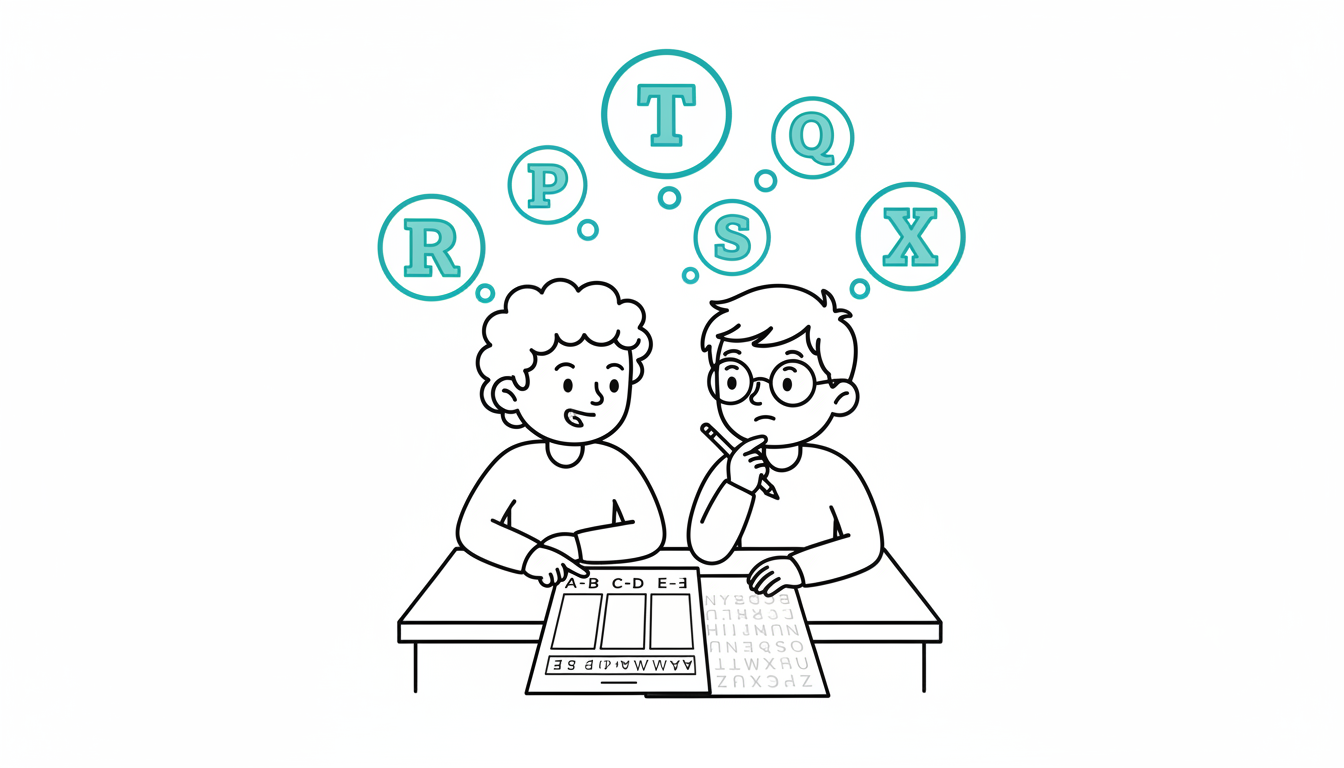
At a Glance
- Time: 3-4 minutes
- Prep: None
- Group: Pairs or small groups
- Setting: Any classroom
- Subjects: Universal
- Energy: Medium
Purpose
Alphabet Brainstorm activates vocabulary and conceptual knowledge by challenging students to generate topic-related words for each letter. It's a fast-paced, competitive way to surface what students already know.
How It Works
Step-by-step instructions:
- SET UP (30 seconds) - Students draw two columns: A-M and N-Z on paper
- BRAINSTORM (2.5 minutes) - Partners generate words related to topic for each letter
- SHARE (1 minute) - Quick popcorn sharing of interesting words found
What to Say
Opening: "You have 2.5 minutes. With your partner, write down one word related to [topic] for as many letters of the alphabet as possible. Ready? Go!"
During: "Don't get stuck on one letter—skip and come back. The goal is quantity!"
Closing: "Time! Who found a word for X? How about Q? Let's hear some of your most creative connections."
Why It Works
This activity creates multiple retrieval pathways by forcing students to search their memory using alphabetical cues. The game-like structure increases motivation while the partner format reduces anxiety about gaps in knowledge.
Research Citation: Tulving, 1974 (Cue-Dependent Retrieval)
Teacher Tip
Don't expect every letter to be filled—even 15-18 letters is excellent. The struggle to find words is where the learning happens.
Variations
For Different Subjects
- Math/Science: "Math terms A-Z" or "Parts of a cell A-Z"
- Humanities: "Civil War terms A-Z" or "Literary devices A-Z"
- Universal: "Everything we've learned this unit A-Z"
For Different Settings
- Large Class (30+): Make it competitive—which table gets the most letters?
- Small Group (5-15): Do it as whole class on board with one student per letter
For Different Ages
- Elementary (K-5): Focus on just 10 letters; allow pictures for hard letters
- Middle/High School (6-12): Full alphabet; bonus points for multiple words per letter
- College/Adult: Add requirement that words must connect to each other
Online Adaptation
Tools Needed: Breakout rooms, shared Google Doc
Setup: Create template with A-Z list
Instructions:
- Send students to breakout rooms with shared doc
- Set 3-minute timer
- Bring back and share in chat
Pro Tip: Use collaborative tools like Jamboard where each letter can be a sticky note.
Troubleshooting
Challenge: Students stuck on difficult letters like X, Z Solution: Announce "X can be anywhere in the word, not just the first letter!"
Challenge: Some pairs finish very quickly Solution: Challenge them: "Now find a second word for each letter"
Extension Ideas
- Deepen: Pick 5 words from the list and explain how they connect to today's topic
- Connect: Create a word web showing relationships between generated terms
- Follow-up: Add to the alphabet list after the lesson—how many new terms can you add?
Related Activities: Word Splash, Vocab Predictions, Free Association