
Concept Mapping
At a Glance
- Time: 5 minutes
- Prep: Minimal (paper or whiteboard for each student/group)
- Group: Individual, pairs, or small groups
- Setting: Any classroom
- Subjects: Universal (especially powerful for complex, interrelated content)
- Energy: Low-Medium
Purpose
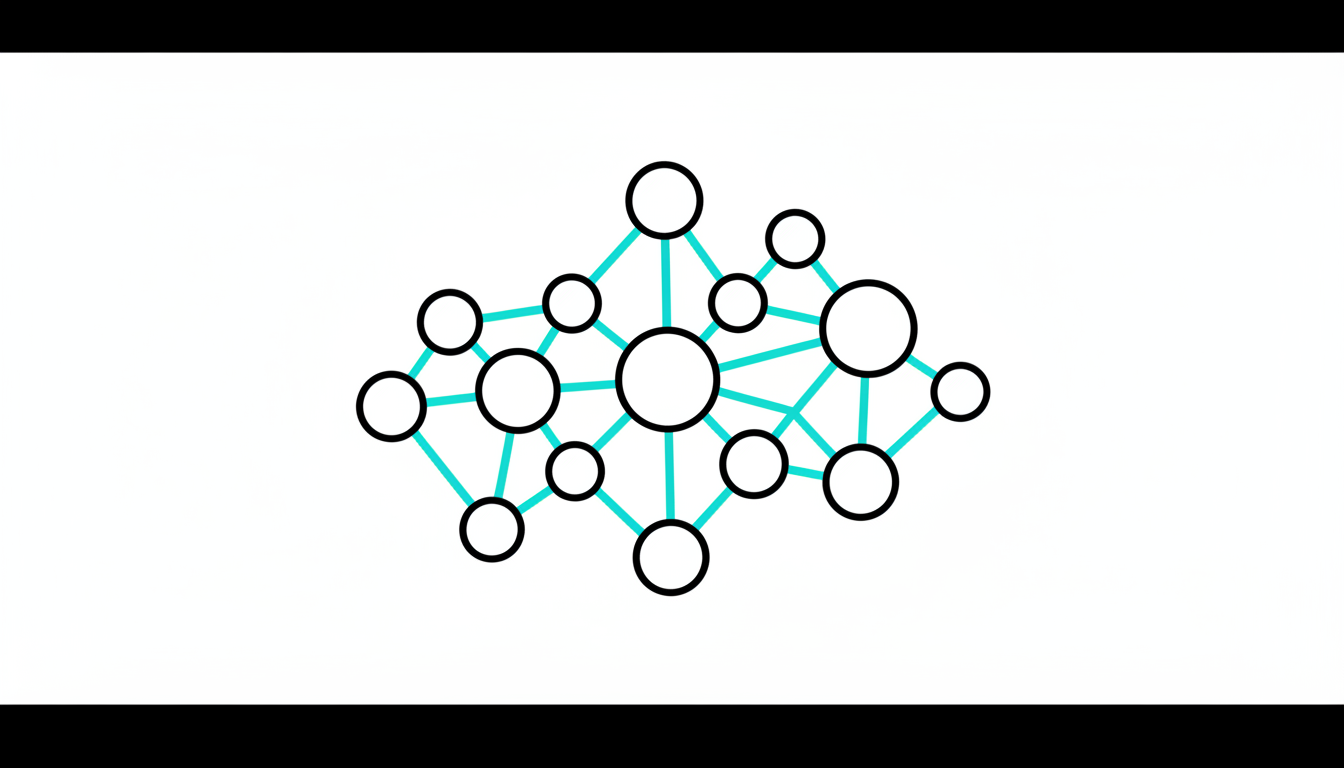
Make thinking visible by creating visual diagrams that show how key concepts relate to one another, moving beyond lists to reveal the structure of knowledge. Use this to synthesize learning after a unit, identify gaps in understanding, or help students see the "big picture" of how ideas connect.
How It Works
Step-by-step instructions:
-
Identify key concepts (1 minute) - Students list 5-8 main concepts from the current topic or unit. These become the "nodes" of the map
-
Map relationships (3 minutes) - Students arrange concepts spatially on paper, drawing lines to connect related ideas. On each connecting line, they write a brief phrase explaining the relationship: "causes," "is an example of," "contrasts with," "enables"
-
Share and compare (1 minute) - Partners compare maps. Did they connect the same ideas? Are there relationships one person saw that the other missed? What does this reveal about different ways of organizing the same information?
What to Say
Opening: "You've learned a lot about the water cycle this week. Now I want you to create a concept map—a visual diagram showing how the key ideas connect. Start by writing down 6-8 main concepts: evaporation, condensation, precipitation, and so on. Then draw lines between related concepts and label each line with how they're connected. For example, 'heat causes evaporation' or 'evaporation leads to condensation.' Go!"
During: "Don't just list—show relationships... How are these two connected?... What causes what?... Which concepts are examples of bigger ideas?... Label your lines—don't make me guess the connection!"
Closing: "Look at your neighbor's map. Do you have the same connections? Different ones? Both maps can be correct—they just reveal different ways of organizing information. The act of creating this map helped you see the structure of what you know."
Why It Works
Concept mapping externalizes mental schemas, making abstract relationships concrete and visible. The act of deciding what connects to what—and how—requires deeper processing than simply recalling isolated facts. Creating spatial and visual representations engages different cognitive pathways than verbal or written explanations, strengthening understanding. Comparing maps reveals that knowledge isn't a single fixed structure—it's a flexible network that individuals organize differently based on their understanding and emphasis.
Research Connection: Concept mapping improves meaningful learning and retention by helping students build integrated knowledge structures rather than isolated facts (Novak & Cañas, 2008). It's particularly effective for helping students identify gaps in their understanding.
Teacher Tip
Resist the urge to show students a "correct" concept map before they create their own. The cognitive work happens in the struggle to figure out relationships. If you provide a template, they'll copy it without thinking. Let them construct meaning first, then compare and refine.
Variations
For Different Subjects
- Math/Science: "Map the relationships between types of energy... How do these formulas connect?... Show how the scientific method steps relate"
- Humanities: "Map the causes and effects of this historical event... Connect the major themes in this novel... Visualize the argument structure of this essay"
- Universal: Any multi-concept topic where relationships matter more than isolated facts
For Different Settings
- Large Class (30+): Individual maps, then pair-share to compare and add missing connections
- Small Group (5-15): Create one large collaborative map on chart paper as a whole class, negotiating placement and connections together
For Different Ages
- Elementary (K-5): Provide the key concepts on cards; students arrange and draw connections. Use simpler language: "Which things go together? How?"
- Middle/High School (6-12): Standard format with self-identified concepts
- College/Adult: Add hierarchical structure: "Which concepts are fundamental? Which are sub-concepts? Show levels of abstraction"
Online Adaptation
Tools Needed: Digital whiteboard (Miro, Mural, Jamboard) or dedicated concept mapping tools (Coggle, MindMeister, Lucidchart)
Setup: Provide a blank canvas; share editing link with students
Instructions:
- Students create nodes (circles or boxes) for each key concept
- Draw connecting lines/arrows between related concepts
- Add text labels to each connection explaining the relationship
- Share screen to present map, or create in shared space for collaborative mapping
Pro Tip: Use color coding—one color for concepts, another for connections—to increase visual clarity
Troubleshooting
Challenge: Students create linear lists or hierarchies instead of networks of connections Solution: Say: "I see a straight line—but concepts rarely connect in just one path. What else connects to this concept? Can you find a relationship between two concepts that aren't next to each other?"
Challenge: Students leave connection lines unlabeled Solution: "Every line needs a label! The label tells me HOW these concepts relate. Is it cause-effect? Is one an example of the other? Part-whole? Contrast? Write it on the line."
Extension Ideas
- Deepen: After creating individual maps, combine in groups to create a "master map" that integrates everyone's understanding, negotiating disagreements about relationships
- Connect: Use maps diagnostically: "Where are the gaps in your map? Which concepts don't connect to anything? That might indicate you need to learn more about that area"
- Follow-up: Revisit maps after additional learning: "Add new concepts in a different color. Did your understanding of relationships change? What new connections can you make now?"
Related Activities: Argument Mapping, Spectrum Mapping, Connection Web