
Round Robin
At a Glance
- Time: 5-8 minutes
- Prep: None
- Group: Small groups (4-6 students)
- Setting: Any classroom
- Subjects: Universal - brainstorming
- Energy: Medium
Purpose
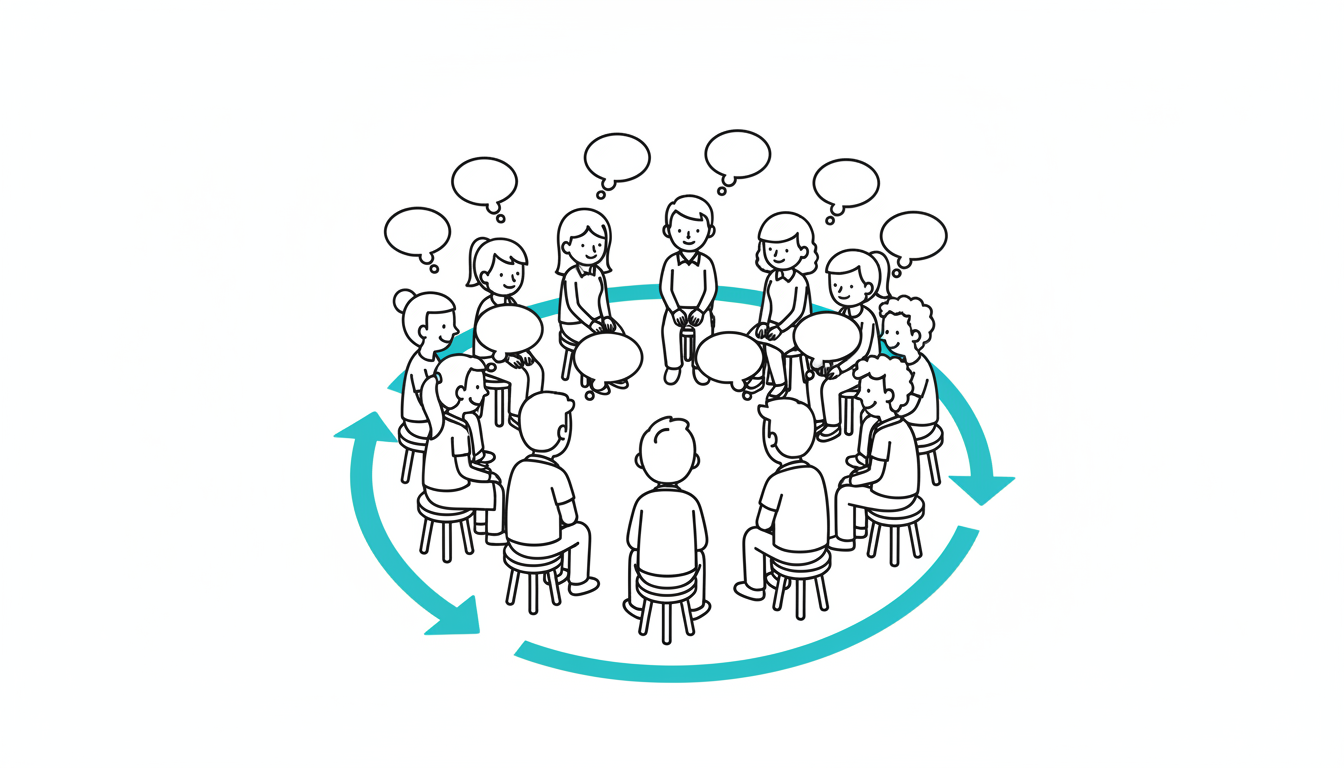
Round Robin is a structured brainstorming technique where group members take turns contributing one idea at a time in rotation. No one can skip a turn or dominate by sharing multiple ideas in a row. Use this when you want equitable participation, rapid idea generation, or to prevent one voice from overwhelming the group.
How It Works
Step-by-step instructions:
-
FORM CIRCLES (30 seconds) - Groups of 4-6 sit in circles.
-
POSE QUESTION (15 seconds) - Present a brainstorming prompt or problem.
-
ESTABLISH ROTATION (15 seconds) - Determine order (clockwise from youngest, alphabetically, etc.).
-
ROUND 1 (2-3 minutes) - Going in order, each person contributes ONE idea. The group continues rotating until time runs out or ideas are exhausted.
-
OPTIONAL: PASS RULE - If someone can't think of an idea, they can say "pass," and the turn moves to the next person. They get another chance when the rotation comes around again.
-
RECORD IDEAS (Throughout) - One person scribes, or everyone writes on shared paper.
-
REVIEW & PRIORITIZE (2 minutes) - Group reviews all ideas and selects top 2-3.
What to Say
Setup: "We're doing Round Robin brainstorming. Sit in a circle. We'll go clockwise. Each person shares ONE idea when it's your turn. No skipping the line, no sharing two ideas at once. This keeps it fair. If you can't think of an idea, say 'pass' and we'll come back to you. Question: [STATE PROMPT]. Youngest person starts. Go."
During: [Listen to ensure everyone takes turns. If someone tries to share a second idea out of turn, redirect: "Hold that thought—we'll come back around to you in a moment."]
After Brainstorming: "You've generated [NUMBER] ideas. Now as a group, discuss and circle your top 3 ideas."
Why It Works
Round Robin's structure enforces equity and prevents common groupwork problems:
Equal Airtime: Everyone contributes the same number of times.
Prevents Dominance: Verbose students can't monopolize. Quiet students must participate.
Rapid Generation: The rotation creates momentum and prevents overthinking.
Building on Ideas: Hearing others' contributions sparks new ideas during your turn.
Psychological Safety: Knowing everyone must contribute reduces the fear of being the only one speaking up.
Teacher Tip
If a group finishes early (ideas dry up), give them an extension challenge: "Go around again, but this time, each person must BUILD ON someone else's previous idea instead of contributing something new."
Variations
For Different Subjects
- Any Subject: Causes, effects, examples, solutions, evidence, connections, applications.
For Different Settings
- Online: Breakout rooms. Establish order by first name alphabetically.
Online Adaptation
Tools: Breakout rooms + shared doc
Process: Same rotation verbally or typing in doc
Troubleshooting
Challenge: Someone consistently says "pass." Solution: After two passes, give them a low-stakes prompt: "Name anything—even a wild idea counts."
Extension Ideas
- Deepen: After generating ideas, do a second Round Robin where each person explains WHY one idea is particularly strong.
Related Activities: Buzz Groups, Snowball Groups