
Breathing Break
At a Glance
- Time: 1-2 minutes
- Prep: None
- Group: Whole class (individual practice)
- Setting: Any classroom (seated or standing)
- Subjects: Universal
- Energy: Low (calming)
Purpose
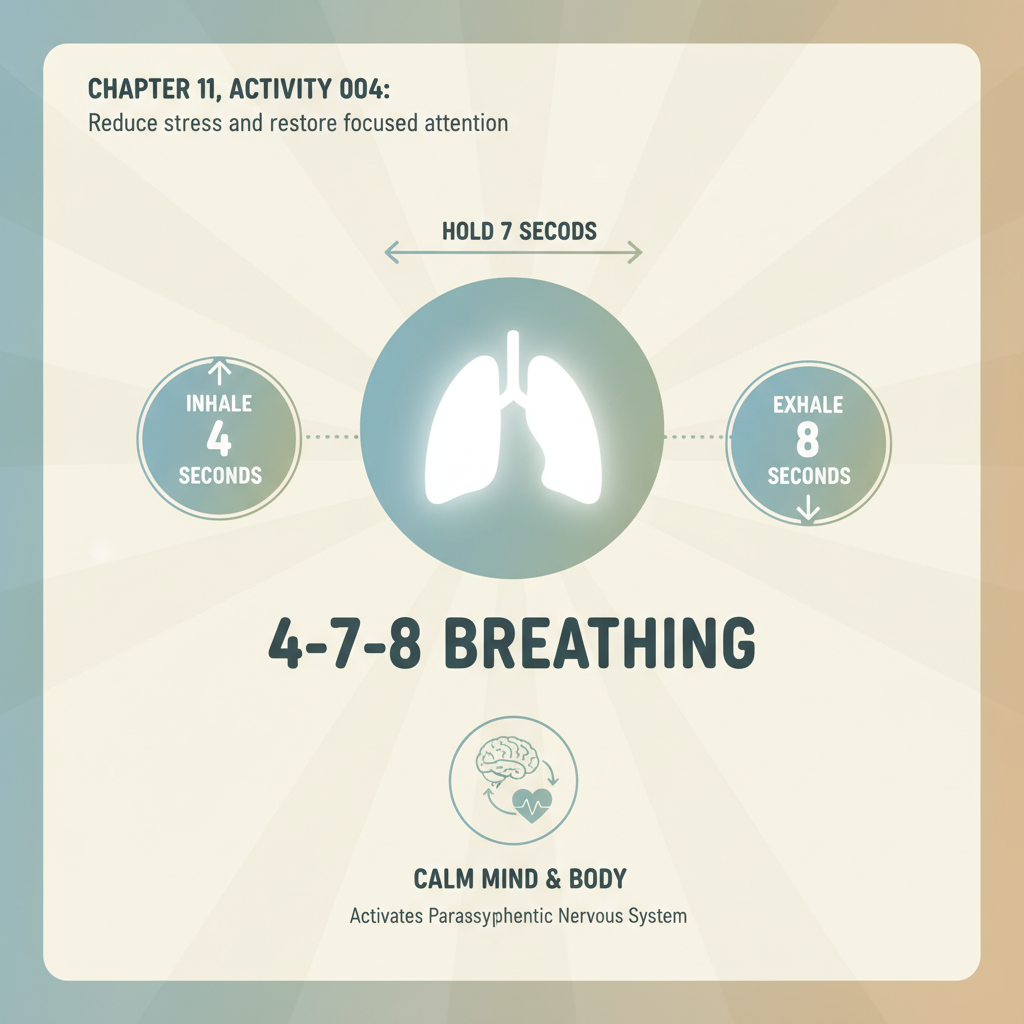
Reduce stress, calm anxiety, and restore focused attention by guiding students through intentional breathing exercises that activate the parasympathetic nervous system, slowing heart rate and clearing mental clutter while teaching self-regulation skills students can use independently whenever they feel overwhelmed, anxious, or unable to concentrate.
How It Works
- Set up (10 sec) - "Close your eyes or look down. We're going to breathe together for one minute."
- Guide breathing (60-90 sec) - Lead students through structured breathing pattern:
- 4-7-8 Breathing: Inhale for 4 counts, hold for 7, exhale for 8 (repeat 3-4 times)
- OR Box Breathing: Inhale 4, hold 4, exhale 4, hold 4 (repeat 3-4 times)
- Return (10 sec) - "Open your eyes. Notice how you feel. Back to work."
What to Say
Opening: "Pause. Close your eyes or look down at your desk. For the next minute, we're going to breathe intentionally. Follow my voice."
During (4-7-8 breathing): "Breathe in through your nose... 2, 3, 4... Hold it... 2, 3, 4, 5, 6, 7... Now breathe out slowly through your mouth... 2, 3, 4, 5, 6, 7, 8... Again. Breathe in... 2, 3, 4... Hold... 2, 3, 4, 5, 6, 7... Out... 2, 3, 4, 5, 6, 7, 8... One more time... In... 2, 3, 4... Hold... 2, 3, 4, 5, 6, 7... Out... 2, 3, 4, 5, 6, 7, 8."
Closing: "Open your eyes. How does your body feel? Calmer? More focused? You can use this breathing anytime you need to reset."
Why It Works
Controlled breathing directly impacts the autonomic nervous system (Jerath et al., 2015). Slow, deep breathing activates the parasympathetic ("rest and digest") response, reducing cortisol and adrenaline while increasing oxygen to the brain. The extended exhale (longer than inhale) especially triggers relaxation. This is neurologically calming—not just "feeling calm" but physiologically changing your state. For anxious students or after stressful moments (difficult test, conflict), breathing breaks provide immediate regulation. Regular practice also builds long-term emotional regulation skills.
Research Citation: Breathing and autonomic nervous system (Jerath et al., 2015)
Teacher Tip
Use breathing breaks strategically: BEFORE high-stakes moments (tests, presentations) to reduce anxiety, AFTER tense moments (heated discussion, stressful content) to settle emotions, or MID-LESSON when you sense rising stress or scattered attention. Your own calm voice during the breathing exercise matters—model the calm you want students to feel.
Variations
Different Breathing Patterns
- 4-7-8 Breathing: Inhale 4, hold 7, exhale 8 (Dr. Weil's technique)
- Box Breathing: Inhale 4, hold 4, exhale 4, hold 4 (Navy SEAL technique)
- 5-5 Breathing: Simple inhale 5, exhale 5
- Belly Breathing: Hand on belly, breathe deeply so belly rises
Different Timing
- Quick (30-45 sec): 2-3 breath cycles
- Standard (1-2 min): 4-5 breath cycles
- Extended (3-5 min): 8-10 cycles with body scan
Different Ages
- Elementary (K-5): Use imagery: "Smell the flowers (inhale), blow out the candles (exhale)"
- Middle/High School (6-12): Standard technique; emphasize performance benefits (focus, test anxiety reduction)
- College/Adult: Can introduce as "evidence-based stress management technique"
Online Adaptation
Tools Needed: None (just audio)
Setup: Quiet space
Instructions:
- "Turn off your camera if you'd like. Close your eyes or look away from screen."
- Teacher guides breathing pattern verbally
- Optional: Share visual timer showing breath counts on screen
- Students follow along at home
- Brief check-in: "Type in chat how you feel: more calm, less calm, same"
Pro Tip: Record a 2-minute guided breathing audio file—post it for students to access anytime for homework/study breaks.
Troubleshooting
Challenge: Students giggle, can't take it seriously, make jokes Solution: Address it: "This feels silly the first time. But elite athletes, surgeons, and military personnel use this technique because it WORKS. Trust me for two minutes." After they experience the benefit, giggles disappear.
Challenge: Students feel lightheaded or uncomfortable during breath-holding Solution: Make holding breath OPTIONAL: "If holding feels uncomfortable, just breathe normally. Don't force it." Shorter breath patterns (3-3-3-3 box) work fine too.
Challenge: Students refuse to close eyes or participate Solution: Don't force eye closing—"Look down at your desk is fine." Make participation non-negotiable but accommodation acceptable: "You don't have to close your eyes, but you DO have to sit quietly while we breathe."
Extension Ideas
- Deepen: Teach WHY it works: explain sympathetic vs. parasympathetic nervous system—empower students with knowledge
- Connect: "Breathing toolkit"—teach multiple patterns, let students choose which works best for them
- Follow-up: "Breathing buddies"—students remind each other to use breathing before stressful moments
Related Activities: Stretch Break, Mindful Minute, Body Scan