
Stretch Break
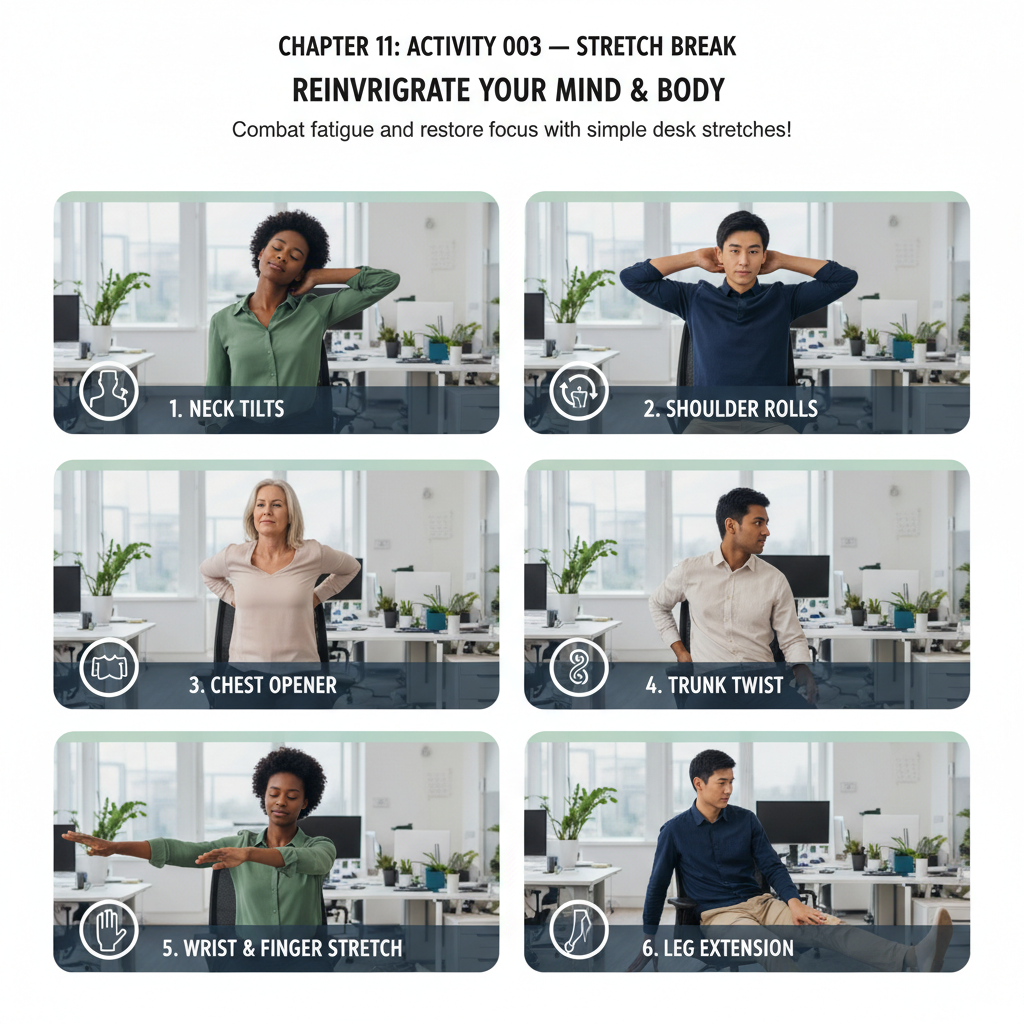
At a Glance
- Time: 1-2 minutes
- Prep: None
- Group: Whole class (individual stretching)
- Setting: Any classroom (at desks or standing)
- Subjects: Universal
- Energy: Low-Medium
Purpose
Combat physical fatigue and restore focus by having students perform simple stretches that increase blood flow and oxygen to the brain, releasing muscle tension accumulated during prolonged sitting while providing a brief cognitive break that allows working memory to consolidate, making students more alert and receptive when instruction resumes.
How It Works
- Cue stretch break (5 sec) - "Everyone stand. Stretch time."
- Guide stretches (60-90 sec) - Lead 4-6 simple stretches, holding each for 10-15 seconds
- Reach arms overhead
- Side bends (left, then right)
- Shoulder rolls (forward, then back)
- Neck rolls (gentle circles)
- Touch toes or reach for floor
- Big inhale, exhale, shake it out
- Resume (5 sec) - "Seated and ready. Let's continue."
What to Say
Opening: "We've been sitting for 20 minutes. Stand up. Stretch time. You don't need to move your desk."
During (guide each stretch): "Arms up high, reach for the ceiling... hold it... breathe... Now bend to the left, feel that side stretch... hold... Other side, bend right... good. Roll your shoulders back three times... forward three times... Gently roll your neck, slow circles... Now reach down toward your toes, let your head hang, relax... Big breath in... and out... Shake your arms, shake your legs, shake it all out!"
Closing: "Sit down. Brains awake? Bodies awake? Good. Back to work."
Why It Works
Prolonged sitting reduces blood flow to the brain and increases muscle tension, both of which impair cognitive function (Hillman et al., 2008). Even brief movement breaks increase cerebral blood flow, delivering oxygen and glucose that fuel attention and memory. Stretching also activates the parasympathetic nervous system, reducing stress hormones. The mental break allows cognitive consolidation—students process what they've learned rather than continuing to pile on information without pausing. One minute of stretching can restore 15-20 minutes of focused attention.
Research Citation: Physical activity and cognition (Hillman et al., 2008)
Teacher Tip
Don't skip stretches because you "don't have time." That one minute SAVES time by preventing the attention fade and off-task behavior that happens when students are physically uncomfortable. Do stretches preemptively (after 15-20 min of sitting) rather than reactively (when students are already restless).
Variations
Different Stretch Types
- Desk stretches: Can be done seated (neck, shoulders, wrists, ankles)
- Standing stretches: Full body reaching, bending, twisting
- Yoga-inspired: Simple poses (mountain, tree, forward fold)
- Partner stretches: Safe partner-assisted stretches (back-to-back presses)
Different Timing
- Quick (30 sec): Just arms up, side bends, shake out
- Standard (1-2 min): 5-6 different stretches
- Extended (3-5 min): Full stretch routine with breathing
Different Ages
- Elementary (K-5): Make it playful: "Grow tall like a tree! Sway like branches in the wind!"
- Middle/High School (6-12): Standard stretch routine; can let students lead
- College/Adult: Optional but encouraged; model it yourself to normalize
Online Adaptation
Tools Needed: Camera on (optional but helpful for modeling)
Setup: Clear space around your workspace
Instructions:
- "Everyone stand up and step back from your screen"
- Teacher demonstrates stretches on camera
- Students follow along at home
- Optional: Turn cameras on so teacher can see participation
- Return to learning after stretches
Pro Tip: Create a "stretch break" slide with stick figures demonstrating stretches—display while students stretch so they have visual guide.
Troubleshooting
Challenge: Students refuse to participate, stay seated, act "too cool" for stretching Solution: Model it yourself WITHOUT making it optional. "This isn't a choice—it's part of class. Stand up." Make it routine, not negotiable. Once it's habit (week 2-3), resistance disappears.
Challenge: Students get too silly, start roughhousing during stretches Solution: Set clear boundaries: "Stretching is INDIVIDUAL. You're in your own space. No touching others." If silliness continues, shorten to 30-second seated stretch only until behavior improves.
Challenge: Not enough space in classroom for everyone to stretch safely Solution: Do seated stretches only (neck, shoulders, arms, wrists, ankles) or have half class stretch while half stays seated, then switch.
Extension Ideas
- Deepen: Teach students WHY stretching helps learning (blood flow, oxygen to brain)—build their understanding of their own physiology
- Connect: Student stretch leaders—rotate who leads the class in stretches each day
- Follow-up: "Energy check" after stretches: "Rate your focus 1-10 now vs. before stretching"—track improvement
Related Activities: Breathing Break, Desk Push-Ups, Shake It Off