
Quiz & Exam Wrappers
At a Glance
- Time: 5-7 minutes
- Prep: Minimal (wrapper template with reflection questions)
- Group: Individual reflection
- Setting: Any classroom
- Subjects: Universal
- Energy: Low
Purpose
Transform assessments from terminal evaluation points into learning opportunities by having students systematically reflect on their preparation strategies, error patterns, and performance immediately after receiving graded work, helping students develop metacognitive awareness about what study approaches actually work for them and what types of errors they habitually make, enabling strategic improvement on future assessments.
How It Works
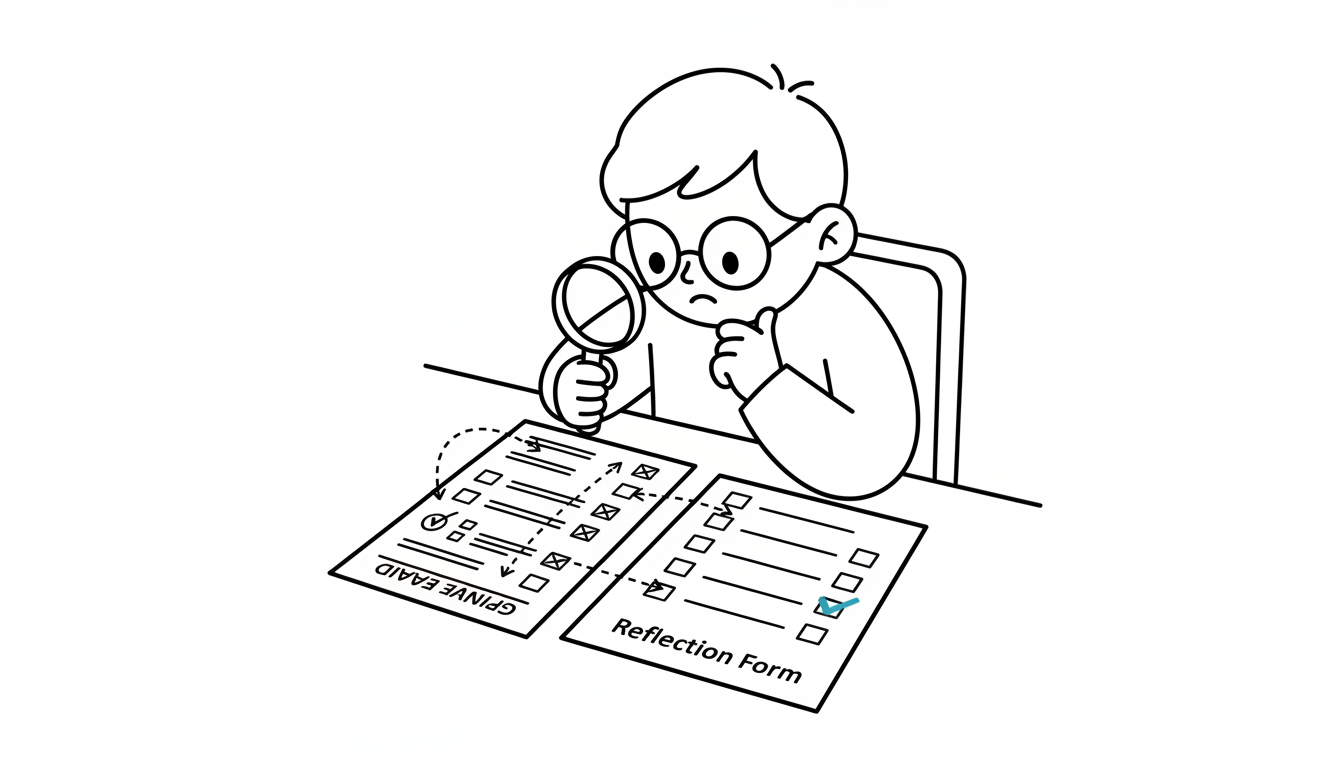
- Distribute graded assessment + wrapper (30 sec) - Students receive graded quiz/exam along with 5-7 question reflection form
- Pre-analysis questions (2 min) - Students answer questions about preparation: "How many hours did you study? What methods did you use? How confident did you feel?"
- Error analysis (2-3 min) - Students categorize their errors: careless mistakes, conceptual misunderstandings, problem-solving errors, time management issues
- Strategy planning (90 sec) - "Based on this analysis, what will you do differently for the next assessment?"
- Optional discussion (2 min) - Pair-share insights about effective vs. ineffective study strategies
What to Say
Opening: "You're getting your quiz back. Before you look at the grade or ask me questions, you're going to investigate YOUR OWN learning. This wrapper will help you figure out what worked in your preparation, what didn't, and what to change for next time. The goal isn't to feel bad about mistakes—it's to learn from them."
During: "Look at each error. Don't just see it as 'wrong'—ask WHY it's wrong. Did you not study that material? Did you misunderstand the concept? Did you know it but make a careless error? Did you run out of time? Different causes require different fixes."
Closing: "This analysis is more valuable than the grade. The grade tells you what happened. THIS reflection tells you why and what to do about it. File this wrapper—review it before the next assessment."
Why It Works
Research on exam wrappers (Lovett, 2013) shows that structured post-assessment reflection significantly improves student performance on subsequent assessments. Most students lack accurate insight into which study strategies actually work—they often rely on ineffective methods (e.g., passive rereading) because they FEEL productive, even though they don't boost performance. Exam wrappers make students confront the relationship between preparation choices and outcomes, fostering evidence-based strategy adjustment. Error categorization also reveals patterns students wouldn't notice otherwise, enabling targeted remediation.
Research Citation: Exam wrappers and metacognition (Lovett, 2013)
Teacher Tip
Grade the wrapper itself for completion (not content) to ensure students take it seriously, or make it a required step before you'll discuss their grade with them. The wrapper is most effective when completed IMMEDIATELY upon receiving grades, before emotions override reflection and before students file the test away and forget about it.
Variations
For Different Subjects
- Math/Science: Focus error analysis on problem types: "Which types of problems did you miss? Calculation errors, conceptual errors, or setup errors?"
- Humanities: Analyze essay feedback by category: "Did you lose points on thesis, evidence, analysis, organization, or mechanics?"
- Universal: Include time management analysis: "Did you finish on time? Which sections took longer than expected?"
For Different Settings
- Large Class (30+): Use digital wrapper (Google Form) that auto-aggregates data, allowing you to identify class-wide patterns
- Small Group (5-15): After individual reflection, facilitate brief whole-class discussion of effective strategies students discovered
For Different Ages
- Elementary (K-5): Simplify to 3 emoji questions: "How did you prepare? " "What was hardest? " "What will you try next time?"
- Middle/High School (6-12): Standard detailed wrapper with error categorization and strategy planning
- College/Adult: Add prospective component: "Before the NEXT exam, what specific strategies will you use, and how will you track whether they're working?"
Online Adaptation
Tools Needed: Google Forms or digital assessment platform with built-in reflection tools
Setup: Create auto-grading wrapper form linked to graded assessment return
Instructions:
- Upon releasing grades, simultaneously release wrapper form (required completion)
- Students review graded assessment (digital or scanned copy)
- Complete wrapper questions about preparation and error analysis
- Submit wrapper; teacher reviews aggregate data for class trends
- Optional: Follow-up video or document addressing common preparation misconceptions revealed by wrappers
Pro Tip: Build wrapper into your LMS workflow—graded assessment doesn't unlock until wrapper is submitted.
Troubleshooting
Challenge: Students blame external factors ("the test was unfair," "I'm bad at tests") rather than analyzing controllable preparation choices Solution: Reframe questions to focus on what they controlled: "Given the actual test content, what preparation WOULD have helped you? What CAN you control next time?"
Challenge: Students rate their preparation as "good" despite poor performance, showing lack of calibration Solution: Ask evidence-based questions: "How many hours SPECIFICALLY did you study? List the EXACT methods. Now look at your grade—does the result match the effort? If not, what does that tell you about your methods?"
Challenge: Students complete wrapper superficially just to turn it in Solution: Provide models of deep vs. shallow reflection. Shallow: "I'll study more." Deep: "I'll switch from rereading notes to self-quizzing because rereading didn't help me recall under test conditions."
Extension Ideas
- Deepen: "Wrapper Comparison"—students complete wrappers for multiple assessments over a term, then analyze their OWN pattern: "How have my strategies evolved? What consistently works or doesn't work for me?"
- Connect: Pre-Assessment Wrapper: Before the next test, have students review their previous wrapper and write a preparation PLAN based on what they learned
- Follow-up: Midterm meta-reflection: "Look at all your wrappers this semester. What have you learned about how YOU learn? What's your biggest area of growth in study strategies?"
Related Activities: Progress Tracking, Mistake Celebration, Learning Strategy Sharing