
Mindful Moment
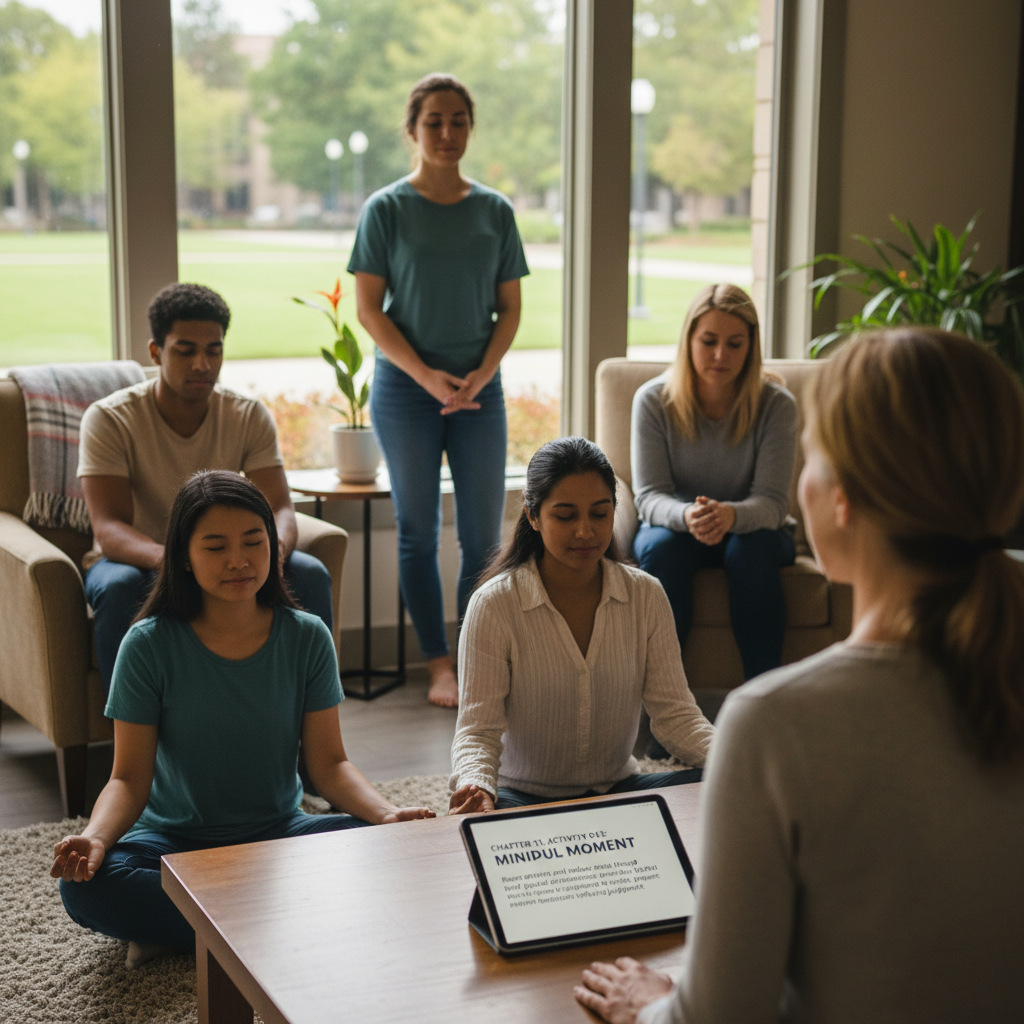
At a Glance
- Time: 1-3 minutes
- Prep: None
- Group: Whole class (individual practice)
- Setting: Any classroom
- Subjects: Universal
- Energy: Low (calming)
Purpose
Reset attention and reduce stress through brief guided mindfulness practice, teaching students to notice present-moment sensations without judgment, building metacognitive awareness of their own mental state while providing a calming interlude that transitions the brain from scattered or anxious to focused and ready.
How It Works
- Cue stillness (10 sec) - "Close your eyes or find a spot to focus on. We're taking a mindful moment."
- Guide attention (60-120 sec) - Teacher provides calm verbal prompts directing attention to present moment (breath, sounds, body sensations)
- Return to room (10-20 sec) - "Slowly open your eyes. Notice how you feel. Let's continue with fresh focus."
Mindfulness Prompts:
- Breath awareness: "Notice your breath moving in and out. Don't change it—just observe."
- Sound awareness: "Listen to all the sounds around you—near and far. Just notice them."
- Body scan: "Notice sensations in your body—feet on floor, back against chair. No judgment, just awareness."
- Thought observation: "Notice thoughts passing through your mind like clouds. Let them drift by."
What to Say
Opening: "We're going to pause for a mindful moment. This isn't nap time—it's attention training. Close your eyes or find a spot on the floor to look at softly. Sit comfortably. Let's begin."
During (calm, slow voice): "Bring your attention to your breath. Notice the air moving in through your nose... and out through your mouth. You don't have to change anything about your breathing—just observe it. In... and out... If your mind wanders, that's okay—just bring it back to your breath. In... and out... Notice the rise and fall of your chest or belly. Just breathing. Just noticing."
Closing: "Take one more deep breath in... and let it out slowly. When you're ready, open your eyes. Notice how you feel right now. Let's carry that calm focus into our next activity."
Why It Works
Mindfulness practices activate the prefrontal cortex (executive function) while deactivating the amygdala (stress response), shifting the brain from reactive to reflective mode (Tang et al., 2015). Brief mindfulness exercises improve attentional control, emotional regulation, and working memory—all critical for learning. By directing attention to neutral present-moment stimuli (breath, sounds), students practice the foundational skill of attention regulation: noticing when the mind wanders and redirecting it. This meta-awareness transfers to academic tasks. Regular mindfulness practice also reduces cortisol and anxiety, creating a more receptive learning state.
Research Citation: Mindfulness and brain changes (Tang et al., 2015)
Teacher Tip
Keep your voice calm, slow, and steady during guidance—your tone models the state you want students to achieve. Avoid rushing through the script or using your normal teaching voice. Pauses between phrases are crucial; silence isn't dead air, it's practice time. Aim for 3-5 second pauses between prompts.
Variations
Different Mindfulness Focuses
- Breath: Simplest; focus on breathing sensations
- Sound: Notice all sounds without labeling or judging
- Body scan: Systematic attention to physical sensations from feet to head
- Visualization: Imagine peaceful scene (beach, forest) with sensory details
- Gratitude: Notice one thing you're grateful for right now
Different Durations
- Micro (30-60 sec): "Three deep breaths, eyes closed, just breathing"
- Standard (1-2 min): Guided breath or sound awareness
- Extended (3-5 min): Full body scan or visualization
Different Ages
- Elementary (K-5): Shorter duration (30-90 sec); use concrete prompts ("Imagine your belly is a balloon filling with air")
- Middle/High School (6-12): Standard guided practice; can introduce terminology (mindfulness, metacognition)
- College/Adult: Longer practice (3-5 min); can include philosophical framing (stress management, cognitive benefits)
Online Adaptation
Tools Needed: None (audio connection only)
Setup: Students at home workspaces
Instructions:
- "Get comfortable. Close your eyes or find a soft focus point."
- Guide mindfulness practice through microphone (students muted)
- Speak slowly with intentional pauses
- "Open your eyes, we're continuing"
Pro Tip: Share calming visual (nature image, slowly changing colors) on screen during practice—gives students who prefer eyes-open option a neutral focal point.
Troubleshooting
Challenge: Students giggle, make jokes, or refuse to participate seriously Solution: Acknowledge: "This might feel weird at first. That's normal. Mindfulness is a skill—it takes practice. Try it for one minute. You might be surprised." Make it low-stakes experiment rather than demand. Most resistance fades after first genuine attempt.
Challenge: Students fall asleep during mindfulness practice Solution: Reframe: "This isn't sleep time—it's focus training. If you notice yourself drifting toward sleep, open your eyes and focus on sounds instead of breath." Use body scan or sound awareness instead of breath for drowsy students (more alerting).
Challenge: Some students have trauma or anxiety; closing eyes feels unsafe Solution: Always offer option: "You can close your eyes OR find a soft spot to focus on—whatever feels comfortable." Never force eye closure. Some students need to maintain visual awareness for safety; respect that.
Extension Ideas
- Deepen: Daily practice—same time each day (beginning or end of class) to build habit and deepen skill
- Connect: Mindfulness before assessments—use as test anxiety management strategy
- Follow-up: Metacognitive reflection: "What did you notice about your mind during practice? Where did it wander? How did you bring it back?"
Related Activities: Breathing Break, Processing Pause, Gratitude Pause