
Carousel Brainstorming
At a Glance
- Time: 12-15 minutes
- Prep: Moderate - set up 4-6 stations with different prompts
- Group: Small groups (3-5 students)
- Setting: Requires space for multiple stations
- Subjects: Universal - brainstorming in any discipline
- Energy: High
Purpose
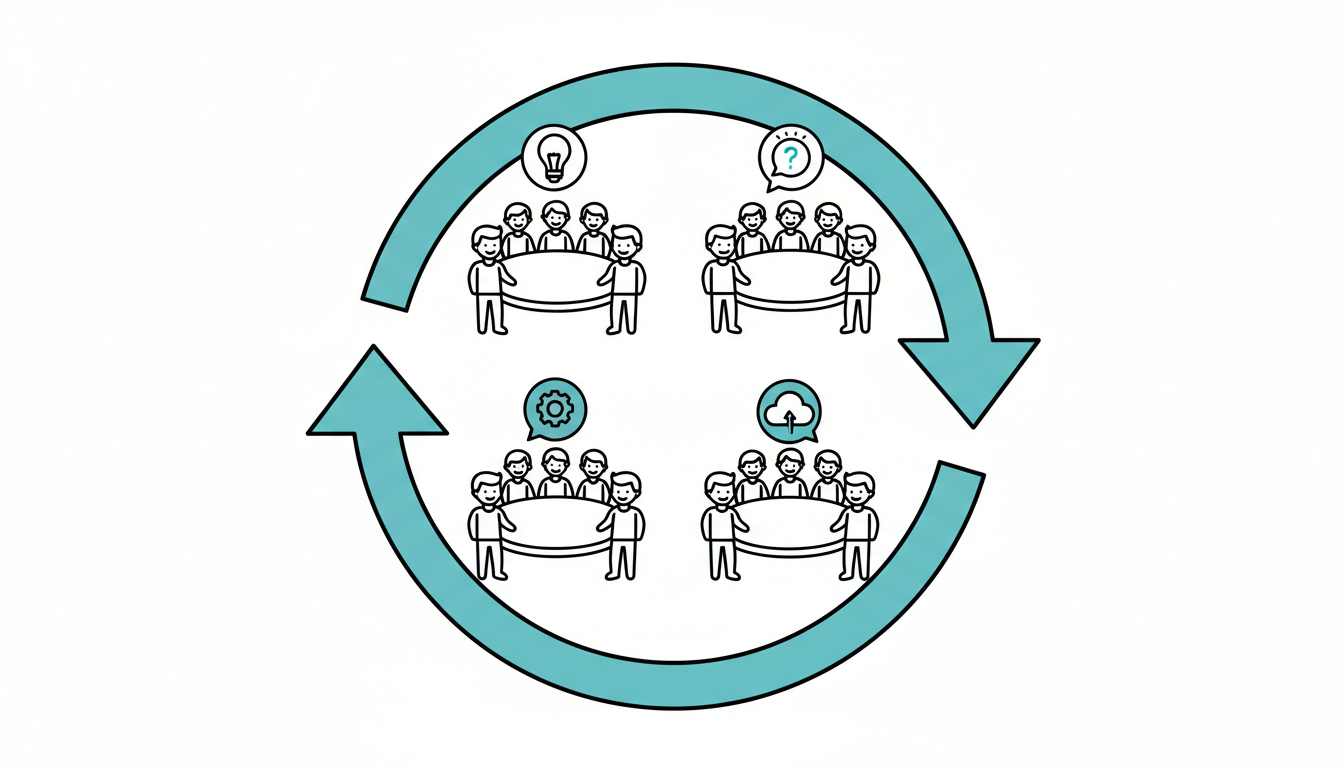
Carousel Brainstorming (similar to Board Rotation) has groups rotate through multiple stations, each with a different aspect of a topic to explore. Groups brainstorm at each station, read previous groups' ideas, and add new contributions. The "carousel" metaphor captures the circular movement and the idea that each station offers a different view of the central topic.
How It Works
Step-by-step instructions:
-
SET UP STATIONS (Before class: 10 min) - Create 4-6 stations with different prompts related to one central topic. Each station should explore a different dimension.
-
FORM GROUPS & ASSIGN STARTING STATIONS (1 minute) - Groups start at different stations.
-
FIRST ROTATION: Generate (2-3 minutes) - Groups brainstorm and write ideas at their first station.
-
ROTATE (15 seconds) - Groups rotate clockwise.
-
SUBSEQUENT ROTATIONS: Read & Add (90 seconds each) - Read previous ideas, add new ones that haven't been mentioned.
-
CONTINUE - Rotate through all stations.
-
SYNTHESIS (3 minutes) - Each group returns to their starting station and synthesizes all ideas added by all groups.
-
SHARE (2 minutes) - Groups present their station's synthesized themes.
What to Say
Setup: "We have 5 stations exploring different aspects of [TOPIC]. Count off 1-5 to form groups. Ones start at Station 1, twos at Station 2, etc."
First Station: "At your first station, brainstorm as many ideas as you can for 2 minutes. Write them all down. Go for quantity."
Rotations: "Rotate clockwise. Read what previous groups wrote, then add NEW ideas. Don't repeat—build on what's there."
Synthesis: "Return to your starting station. Read everything that was added. Your job: summarize the key themes or patterns in 2-3 sentences."
Sharing: "Each group, share your station's synthesis."
Why It Works
Carousel Brainstorming combines movement, collaboration, and iterative thinking to generate comprehensive idea lists while keeping energy high through kinesthetic engagement.
Teacher Tip
Color-code each group's marker. This lets you track which group contributed which ideas—useful for accountability and for showing students how ideas built across groups.
Variations
For Different Subjects
- Any Subject: Stations can explore: causes, effects, solutions, examples, misconceptions, applications, etc.
For Different Settings
- Online: Use multiple digital whiteboards or Padlet boards as "stations." Groups rotate through links.
Online Adaptation
Tools: Multiple Jamboard frames or Padlet boards Process: Groups rotate through digital stations every 2 minutes
Troubleshooting
Challenge: Groups finish early at later stations because ideas are exhausted. Solution: Add task: "Star the three most important ideas or ask a question about one idea."
Extension Ideas
- Deepen: After synthesis, groups present and class votes on most actionable/important ideas from each station.
Related Activities: Board Rotation, Gallery Walk, World Cafe