
What Do You Know About...?
At a Glance
- Time: 2-3 minutes
- Prep: None
- Group: Whole class
- Setting: Any
- Subjects: Universal
- Energy: Medium
Purpose
The simplest prior knowledge activator: directly ask students what they already know about the topic. This straightforward approach quickly surfaces existing knowledge, reveals misconceptions, and creates a shared starting point for learning.
How It Works
- ASK (10 seconds) - "What do you already know about [topic]?"
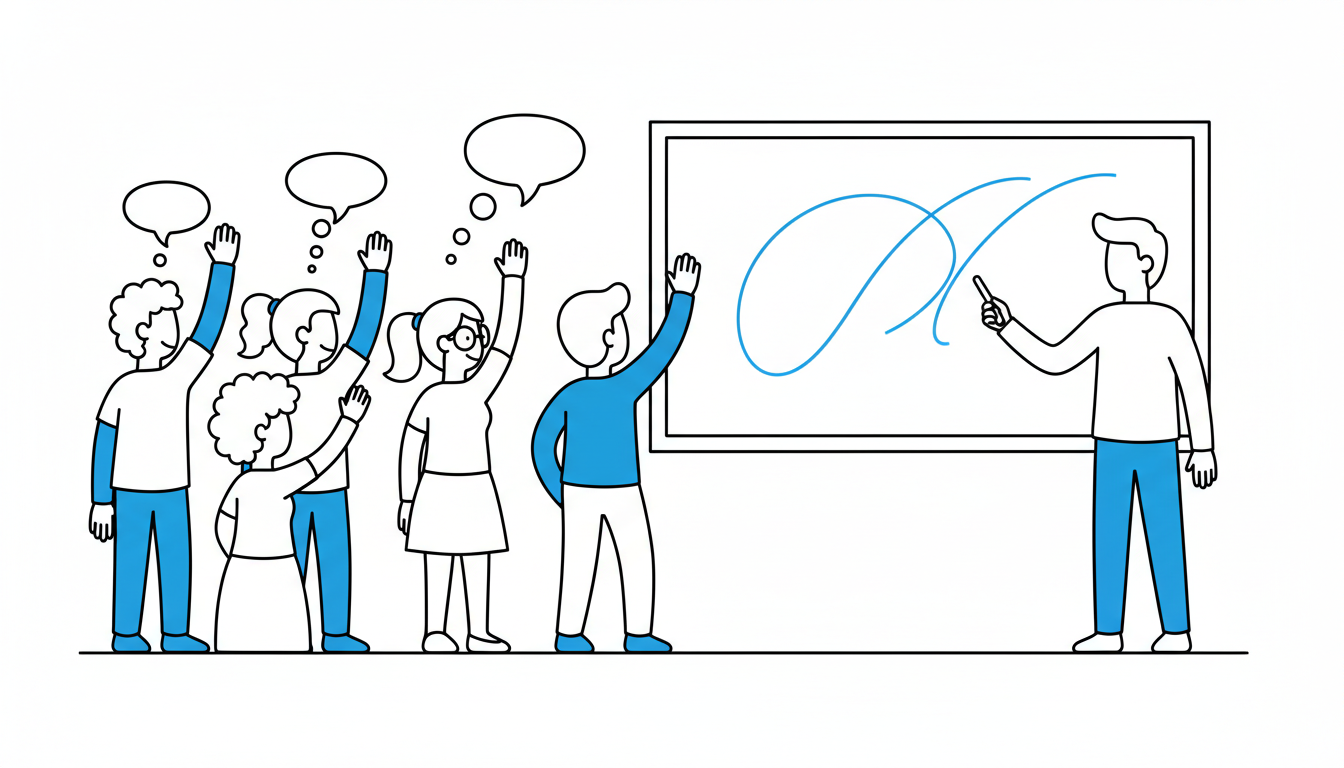
- RESPOND (2-3 minutes) - Students raise hands and share; teacher records responses on board
- ACKNOWLEDGE (15 seconds) - Validate contributions and transition to lesson
What to Say
"We're starting our lesson on [topic]. Before I teach, I want to know: What do you ALREADY know about [topic]? Raise your hand and share a fact, idea, or anything you've heard."
(Call on students; record responses on board)
"You said [recap 2-3 responses]. Great! You already have background knowledge. Today we'll build on what you know and correct any misconceptions."
Example:
"What do you already know about the Civil War?"
- "It was about slavery."
- "North vs. South."
- "Abraham Lincoln was president."
- "It lasted 4 years."
"Excellent! You know quite a bit. Today we'll dive deeper into these ideas."
Why It Works
The direct question creates immediate cognitive activation—students begin retrieving relevant information. Sharing aloud benefits everyone; one student's response triggers recall in others. Recording responses validates contributions and creates a visual reference. The simplicity makes it accessible and quick to implement. This approach explicitly communicates: "Your existing knowledge matters and is the foundation for new learning."
Research Citation: Direct elicitation of prior knowledge improves comprehension and retention (Pressley et al., 1992).
Teacher Tip
Don't correct misconceptions during brainstorming! Write them down along with accurate responses. After the lesson, revisit the list: "Let's check our initial ideas. Which were accurate? Which do we need to revise?" This teaches that learning involves testing and refining beliefs.
Variations
Question Frames
Direct: "What do you know about [topic]?" Experience-Based: "What have you heard about [topic]?" Confidence Check: "What are you confident you know about [topic]?" Question Generation: "What do you NOT know about [topic]? What questions do you have?"
Response Methods
Popcorn: Students raise hands; teacher calls on volunteers Round Robin: Go around room; everyone shares one thing (or passes) Written First: Students write responses, then share verbally Pair-Share: Partners share with each other first, then with class
Recording Strategies
Board List: Simple list on whiteboard Two Columns: "Facts" and "Questions" Categories: Group responses into themes as you go Chart Paper: Keep for reference throughout the unit
Content Examples
- Science: "What do you know about photosynthesis? About the solar system? About chemical reactions?"
- Math: "What do you know about fractions? About solving equations?"
- Literature: "What do you know about Shakespeare? About poetry?"
- History: "What do you know about the Revolutionary War? About ancient Egypt?"
For Different Settings
- Large Class: Take 5-7 responses to keep it brief
- Small Class: Everyone can share
- Online: Chat responses or verbal shares
- Silent Version: Students write responses on sticky notes; post on board
For Different Ages
- Elementary (K-5): Accept all responses enthusiastically; no wrong answers
- Middle/High School (6-12): Can probe for details: "Tell me more about that."
- College/Adult: May generate sophisticated prior knowledge
Online Adaptation
Excellent for Online:
- Ask question verbally
- Students type in chat simultaneously
- Or call on students to unmute and share
- Teacher compiles responses in shared doc
- Works seamlessly virtually
Troubleshooting
Challenge: No one raises their hand; silence. Solution: Lower stakes: "Even if you're not sure, share what the topic makes you think of." Or use think-pair-share first.
Challenge: Same students always volunteer; others remain passive. Solution: "I want to hear from someone who hasn't shared yet." Or use equity sticks (random selection).
Challenge: Students share incorrect information confidently. Solution: Write it down without correcting: "Interesting! Let's check that as we learn." Address during/after instruction.
Challenge: Responses are too general ("It's about plants"). Solution: Follow up: "Yes! What specifically do you know about plants and [topic]?"
Challenge: Activity drags; too many responses. Solution: Set a limit: "Let's hear 5 things we know, then we'll dive into learning."
Extension Ideas
- Confidence Rating: After sharing, students rate confidence (1-5) in their knowledge
- Source Tracking: "How do you know that? Where did you learn it?"
- Compare Before/After: Keep the list visible; revisit after learning to add/revise
- Categorize: After brainstorming, group responses into categories
- Student-Led: Student volunteers facilitate the brainstorm instead of teacher
Related Activities: Think-Pair-Share, Brainstorm Web, KWL Chart