
Crowd-Crumple
At a Glance
- Time: 3-4 minutes
- Prep: None
- Group: Whole class
- Setting: Spacious classroom
- Subjects: Universal
- Energy: High
Purpose
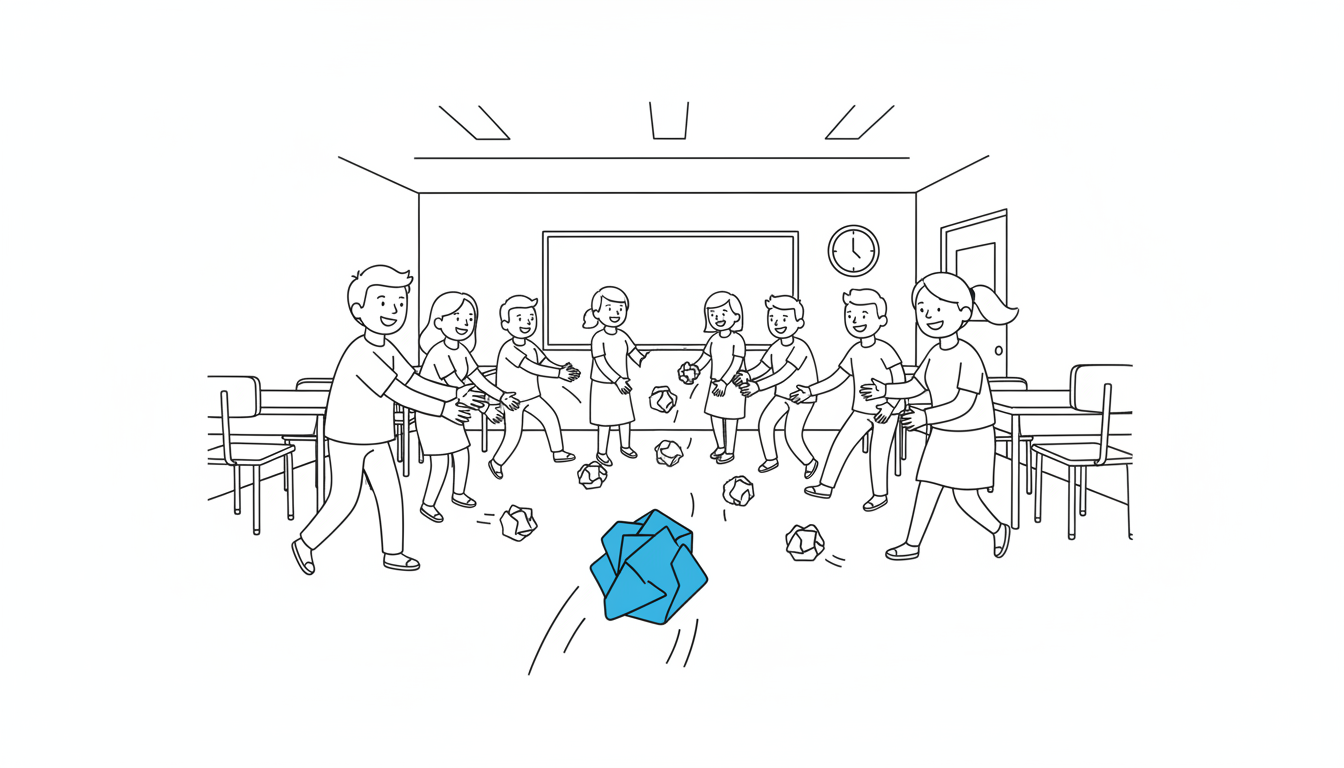
Surface questions anonymously through a kinesthetic, playful activity where students write questions, crumple them into "snowballs," throw them, then answer questions they catch—removing embarrassment from asking.
How It Works
- Write questions (1 min) - Each student writes one question about the lesson on paper
- Crumple and throw (30 sec) - Crumple into ball, throw into center of room on signal
- Catch and answer (2 min) - Each student grabs different snowball, reads question, attempts to answer it
What to Say
Opening: "Write ONE question you have about today's lesson. Could be big or small. No names on the paper! Then crumple it into a snowball."
During: "Aim for the center, not at people!... Grab a different snowball... Read it... Can you answer this question? Write your answer on the same paper."
Closing: "Let's address the questions that came up most. Who got a question about X? Read it aloud."
Why It Works
Anonymity allows students to ask questions they'd be embarrassed to ask publicly. The kinesthetic element adds energy, and peer-answering distributes teaching responsibility while building community.
Teacher Tip
Collect snowballs after answers are written. Review them to identify which questions were answered well and which need teacher clarification tomorrow.
Variations
Subjects: Any content with questions • Format: Digital version (anonymous Google Form responses shuffled and redistributed) • Ages: K-5: simpler questions; 6-12: standard; College: conceptual/applied questions
Online
Use anonymous polling tool. Shuffle responses. Students assigned random question to answer in breakout rooms.
Troubleshooting
Chaos: "Gentle tosses into the center! This is a snowball fight, not dodgeball."
Extension
After peer answers, have students rate answer quality (1-5). Teacher addresses questions with lowest-rated answers.
Related: Muddiest Point, Question Formulation