
I Used to Think... Now I Think
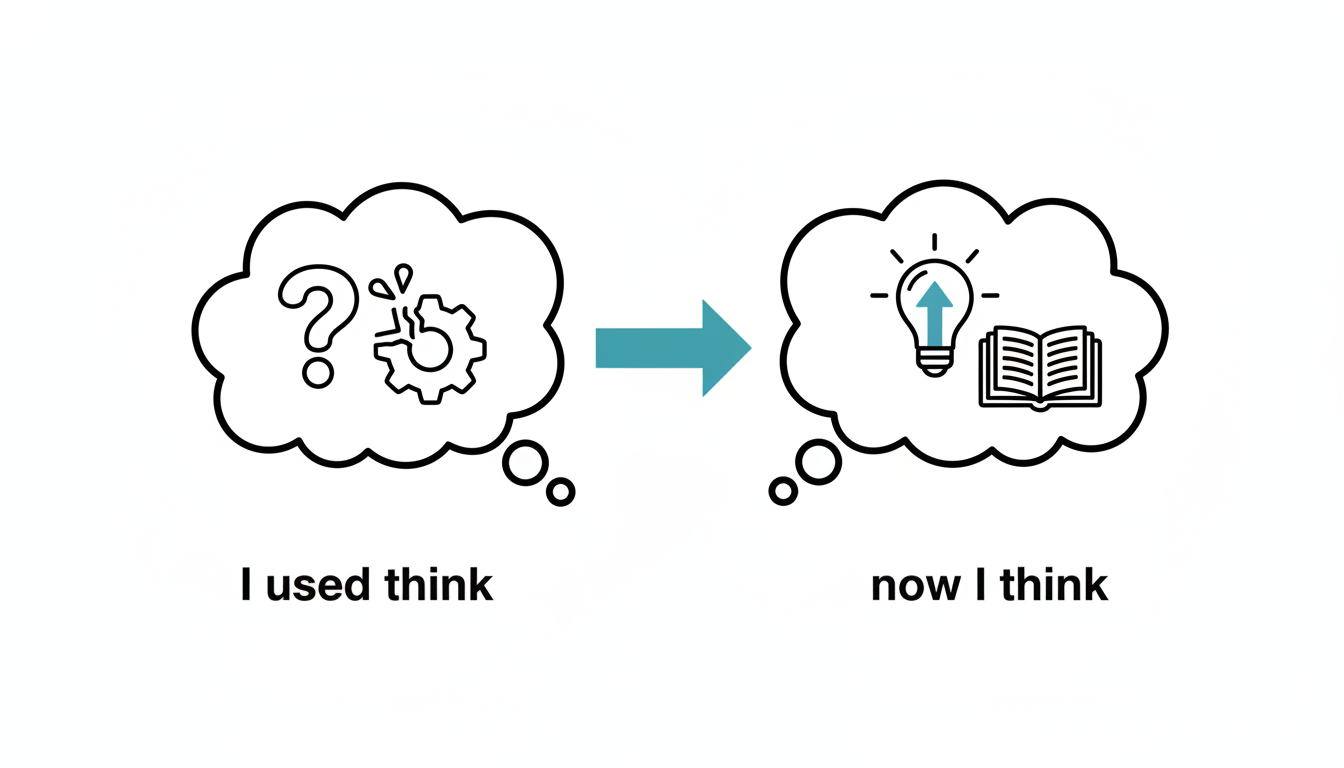
At a Glance
- Time: 2-3 minutes
- Prep: None
- Group: Individual
- Setting: Any
- Subjects: Universal
- Energy: Low
Purpose
Make conceptual change explicit by having students articulate how their thinking has evolved from initial beliefs to current understanding, developing metacognitive awareness.
How It Works
- Present stems (30 sec) - Display: "I used to think..." and "Now I think..."
- Complete stems (2 min) - Students write both sentences about lesson topic
- Share examples (1 min) - Read 2-3 aloud to celebrate learning progress
What to Say
Opening: "Complete these two stems about photosynthesis: 'I used to think...' and 'Now I think...'. Show me how your understanding changed."
During: "What did you believe before today?... What do you understand now?... What changed your thinking?"
Closing: "Listen to this shift: 'I used to think plants ate soil. Now I think plants make their own food using sunlight.' That's learning made visible."
Why It Works
Explicitly recognizing conceptual change helps students understand that learning often means revising prior beliefs, not just adding information. This metacognitive awareness strengthens retention and transfer.
Research Connection: Making thinking visible improves learning and metacognition (Ritchhart et al., 2011; Tishman & Palmer, 2005).
Teacher Tip
Use at unit end, not lesson end. Conceptual change takes time. This works best after students have had multiple encounters with an idea.
Variations
Subjects: Any conceptually complex topic where students enter with misconceptions • Format: Written, verbal pairs, full-class share • Ages: K-5: simple concepts; 6-12: standard; College: disciplinary paradigm shifts
Online
Students type in chat or shared doc. Display evolving thinking patterns. Celebrate intellectual growth.
Troubleshooting
"I always thought this": "What did you think before this unit? What would you have said last week?"
Extension
Keep "evolution of thinking" journals tracking conceptual changes across entire semester.
Related: Reflection Rapid-Fire, Metacognition Moments