
Body Scan Break
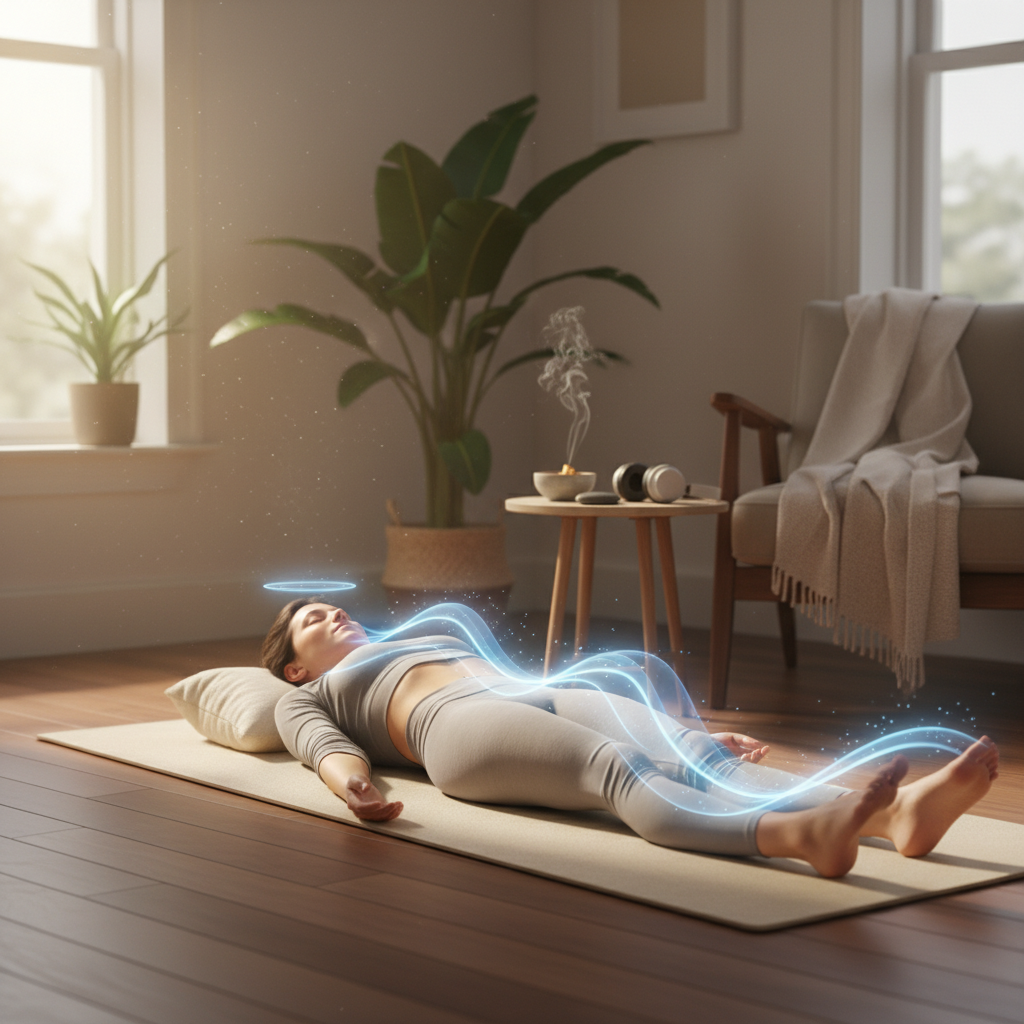
At a Glance
- Time: 1-3 minutes
- Prep: None
- Group: Individual (guided practice)
- Setting: Any classroom
- Subjects: Universal
- Energy: Low (calming)
Purpose
Reduce physical tension and mental stress by guiding students through systematic attention to bodily sensations from head to toe, building interoceptive awareness—consciousness of internal physical state—while creating a calming break that grounds students in present-moment experience and releases accumulated stress.
How It Works
- Cue stillness (10 sec) - "Close your eyes or soften your gaze. Get comfortable. We're doing a body scan."
- Guide attention systematically (1-2.5 min) - Teacher slowly directs attention through body regions (feet → legs → torso → arms → neck → head)
- Notice sensations (throughout) - Students observe sensations without judgment (tension, warmth, pressure, tingling, etc.)
- Return to room (10-20 sec) - "Slowly open your eyes. Notice how your body feels now. Let's continue."
Body Scan Sequence (abbreviated):
- Feet: "Notice your feet on the floor. Any pressure? Warmth? Tingling?"
- Legs: "Bring attention to your legs. Heavy or light? Tense or relaxed?"
- Torso: "Notice your belly, chest, back. Feel your breath moving."
- Arms/Hands: "Attention to arms and hands. Any sensation?"
- Neck/Shoulders: "Notice neck and shoulders—common tension spots."
- Face/Head: "Attention to face and scalp. Any tightness? Softness?"
What to Say
Opening: "We're going to take a body scan break. This is like a tour of your body using only your attention. No judgment—just notice what you feel. Get comfortable. Close your eyes or find a soft focus point. Let's begin."
During (calm, slow voice with 5-second pauses between prompts): "Bring your attention to your feet... Notice them resting on the floor... Any pressure? Temperature? Just observe...
Now your legs... Notice any sensations... Heaviness? Lightness? Tension? Just notice...
Attention to your belly and chest... Feel your breath moving in and out... The rise and fall...
Now your arms and hands... Resting on the desk or in your lap... Any tingling? Warmth?...
Bring attention to your shoulders and neck... This is where we hold a lot of tension... Just notice what's there... Don't try to change anything...
Finally, your face and head... Jaw... Eyes... Forehead... Scalp... Notice any tightness or softness...
Now take one deep breath and let it all go... Wiggle your fingers and toes... When you're ready, open your eyes."
Closing: "What did you notice? How does your body feel now compared to three minutes ago? Let's carry that awareness forward."
Why It Works
Body scans activate interoceptive networks in the brain—regions responsible for sensing internal bodily states (Craig, 2009). This awareness allows recognition of physical stress signals (muscle tension, shallow breathing) that often go unnoticed. By systematically attending to body regions, students practice directing attention intentionally—a core mindfulness skill. Body scans also trigger parasympathetic nervous system activation (rest-and-digest response), reducing heart rate, blood pressure, and cortisol. Regular practice improves emotion regulation because students learn to notice emotional states manifesting physically before they escalate.
Research Citation: Interoception and emotion (Craig, 2009)
Teacher Tip
Speak SLOWLY with long pauses. The pace should feel almost uncomfortably slow—that's correct. Silence between prompts is essential; it's the practice time. If you rush, students can't actually bring attention to each body part. Aim for 5-10 second pauses between sentences.
Variations
Different Scan Directions
- Bottom-up: Feet → head (standard; grounding)
- Top-down: Head → feet (reverse direction)
- Random: Teacher names body parts in non-sequential order (increases attention demands)
Different Durations
- Micro (1 min): Hit 3-4 major body regions quickly
- Standard (2-3 min): Systematic scan of all regions
- Extended (5-10 min): Very detailed, slow scan with long pauses
Different Instructions
- Pure observation: "Notice sensations without changing anything"
- Release tension: "Notice tension, then consciously relax that area"
- Gratitude: "Notice each body part and thank it for supporting you"
- Energy awareness: "Notice which parts feel energized vs. tired"
Different Ages
- Elementary (K-5): Shorter (1 min); use concrete language ("your tummy," "your toes"); optional playful framing
- Middle/High School (6-12): Standard practice; straightforward language
- College/Adult: Longer, more detailed; can include philosophical framing (mind-body connection)
Online Adaptation
Tools Needed: Audio connection only
Setup: Students at home workspaces
Instructions:
- "Get comfortable. Close your eyes or soften your gaze."
- Guide body scan through microphone (students muted)
- Speak slowly with intentional pauses
- "When you're ready, open your eyes and return your attention here"
Pro Tip: Record a body scan audio file; students can use it independently during asynchronous work or homework sessions.
Troubleshooting
Challenge: Students giggle, make jokes, or don't take it seriously Solution: Acknowledge normalcy: "This might feel odd at first. That's normal. Your brain isn't used to paying attention to your body. Give it a genuine try—you might be surprised how it feels." Frame as experiment, not demand.
Challenge: Students report feeling "nothing" or "I can't feel anything" Solution: Validate: "That's okay. Sometimes sensations are subtle. Even 'nothing' is something to notice. Keep practicing—awareness builds over time." Emphasize no right/wrong experience.
Challenge: Some students feel anxious or uncomfortable focusing on bodily sensations (trauma response) Solution: Always give opt-out: "If at any time this feels uncomfortable, open your eyes and just sit quietly—you don't have to participate." Never force. For trauma-informed alternative, offer object-focus (hold an object, notice its texture) instead of body focus.
Extension Ideas
- Deepen: Body scan before assessments—use as test anxiety management tool (releases physical tension)
- Connect: Personal practice—teach students to use abbreviated body scan independently (before homework, before bed, when stressed)
- Follow-up: Emotion-body connection discussion: "Where do you feel anxiety in your body? Excitement? Anger? Let's map emotions physically."
Related Activities: Mindful Moment, Breathing Break, Stretch Break