
Sidewalk Chalk Learning
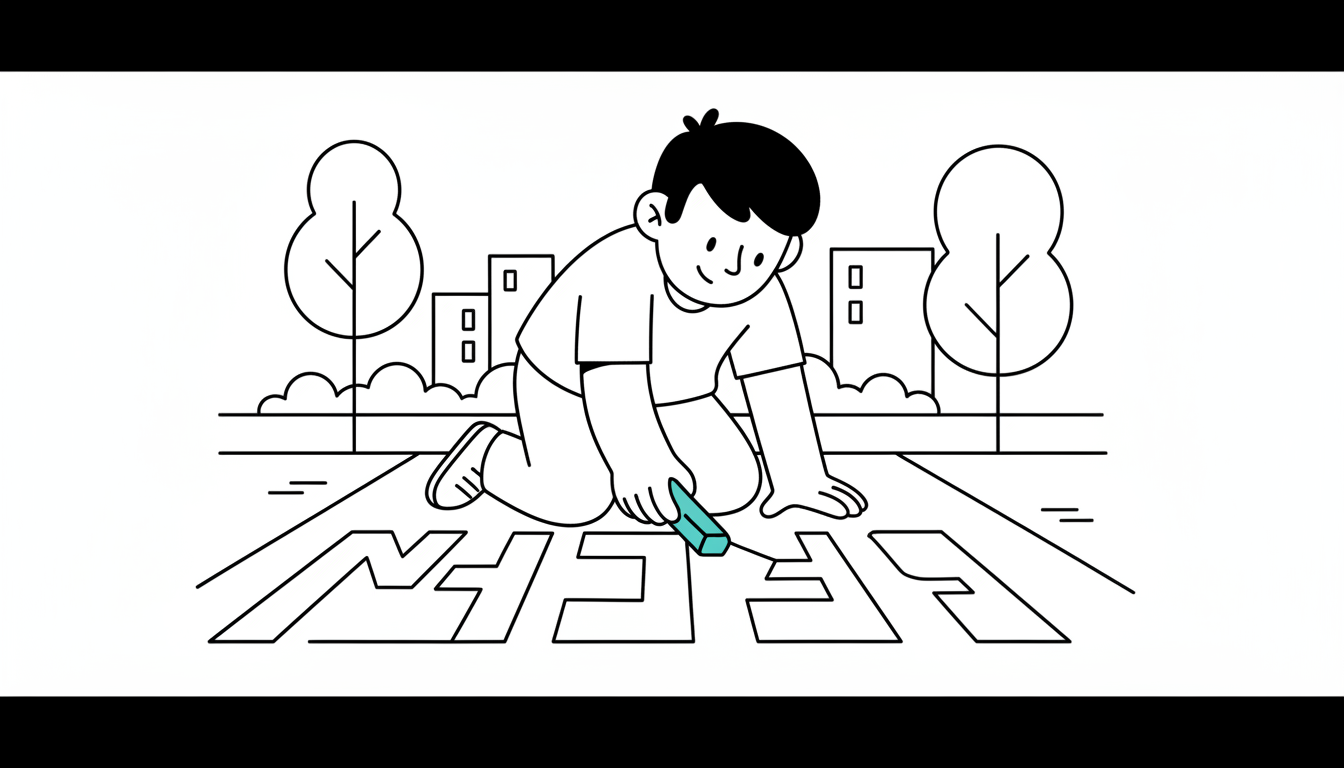
At a Glance
- Time: 5 minutes (outdoor)
- Prep: Minimal (sidewalk chalk)
- Group: Individual or pairs
- Setting: Outdoor
- Subjects: Math, Language, Science, Universal
- Energy: Medium
Purpose
Combine fresh air, large-motor movement, and academic practice by taking learning outside and using sidewalk chalk for large-scale writing, drawing, or problem-solving—providing environmental change that refreshes attention.
How It Works
- Move outside (1 min) - Take chalk and head to playground, sidewalk, or parking lot
- Chalk practice (3-4 min) - Students work on assigned tasks using large-scale chalk writing/drawing
- Gallery walk (1 min) - Students walk around viewing each other's work
What to Say
Opening: "Grab chalk, head outside. Each person gets a 3-foot section of sidewalk. Your task: Draw and label a plant cell with ALL organelles. Make it HUGE. Go!"
During: "Use the whole space... make it big enough to walk around... add labels and arrows..."
Closing: "Gallery walk—see everyone's diagrams. Notice the size difference from drawing in notebooks? That large motor movement helps your brain encode information differently."
Why It Works
Environmental change (outdoor vs. indoor) resets attention. Large motor movements engage different neural pathways than fine motor writing. Novelty increases dopamine, enhancing learning. Fresh air improves cognitive function.
Research Connection: Environmental enrichment and gross motor activity enhance neuroplasticity (Diamond, 2001).
Teacher Tip
Assign collaborative challenges: "Each pair draws one stage of the water cycle. Together we'll have the complete cycle across the sidewalk." Creates massive visual resource.
Variations
Content: Spelling words, math problems (solve 3x + 5 = 20), timelines (draw historical eras), vocabulary illustrations, chemical equations, geometry constructions • Format: Individual practice, partner challenges, whole-class mural • Ages: K-5: Large letters/numbers; 6-12: Complex diagrams; College: Detailed models/theories
Online
Digital whiteboard apps with drawing tools simulate large-canvas work. Or mail students chalk to do outside, photograph work, share via class feed.
Troubleshooting
Weather doesn't cooperate: Use hallway and masking tape instead. Or large poster paper on walls. The large-scale movement matters more than outdoors.
Extension
Permanent learning: Take photos of chalk work. Compile into digital reference guide for studying. Students can revisit their own large-scale creations later.
Related: Body Letters, Air Writing