
Devil's Advocate
At a Glance
- Time: 4-5 minutes
- Prep: None
- Group: Small groups (4-5 students)
- Setting: Any classroom
- Subjects: Universal (any discussion-based activity)
- Energy: Medium-High
Purpose
Prevent groupthink and strengthen arguments by assigning one student the role of challenging the group's emerging consensus, questioning assumptions, and proposing alternative viewpoints—regardless of their personal opinion. Use this during group problem-solving, planning, or discussion to ensure robust thinking.
How It Works
Step-by-step instructions:
-
Assign the role (30 seconds) - One student in each group is designated "Devil's Advocate." Their job is to challenge ideas, question assumptions, and propose alternatives for the next few minutes, even if they personally agree with the group
-
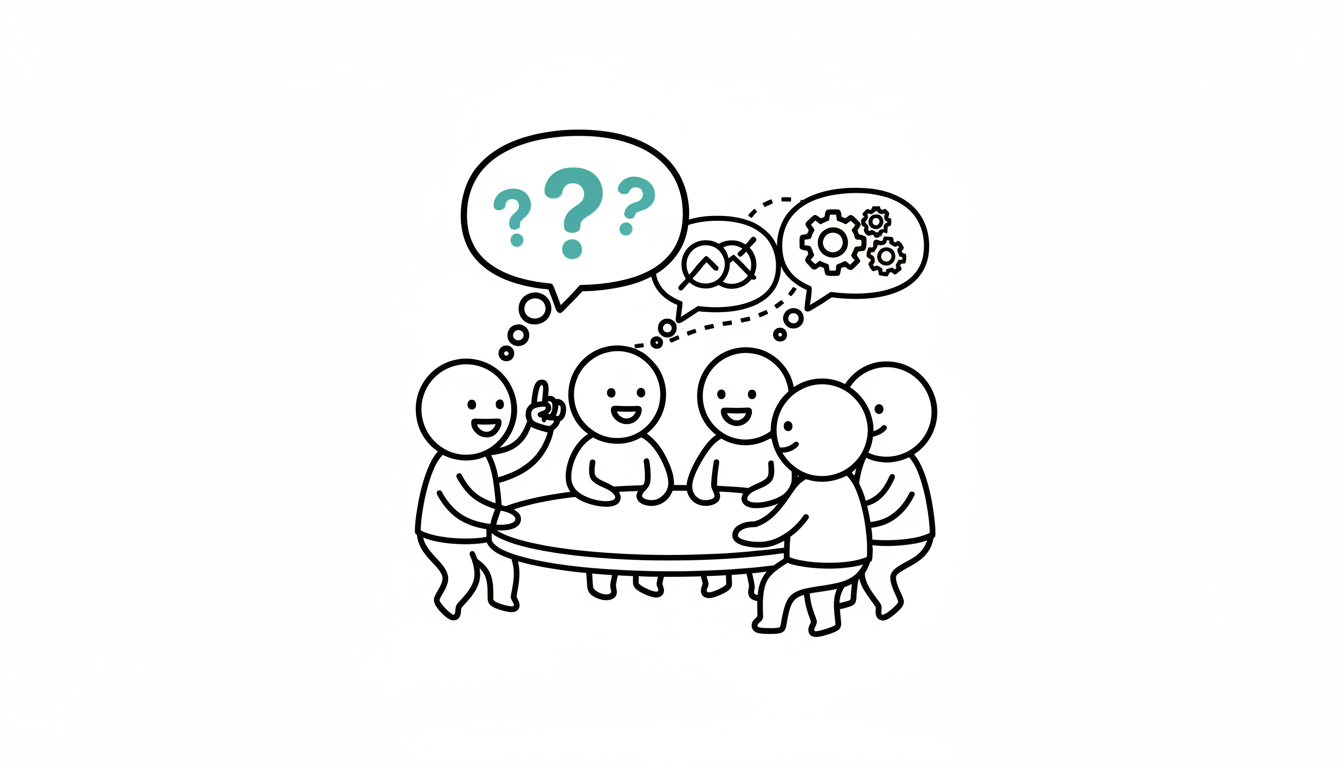
Conduct discussion with challenges (3-4 minutes) - Groups discuss the topic or problem. The Devil's Advocate actively questions: "But what if...?" "Have we considered...?" "What's the counterargument?" They push the group to defend and refine their thinking
-
Debrief and reflect (1 minute) - How did the Devil's Advocate change the discussion? Did they reveal any blind spots or weak reasoning? Was the final conclusion stronger because of the challenge?
What to Say
Opening: "We're planning our group presentation approach. But first, I'm assigning one person in each group as Devil's Advocate. Your job, for the next 4 minutes, is to challenge every assumption, question every decision, and propose alternatives—even if you secretly agree. Your goal is to make the group's thinking stronger by forcing them to defend their ideas. Everyone else: welcome the challenge. Ready? Go!"
During: "Devil's Advocates, I want to hear skepticism... Question that assumption... What could go wrong?... Everyone else, don't get defensive—answer the challenge with evidence and reasoning... This discomfort is productive!"
Closing: "Devil's Advocates, how did it feel to challenge ideas you might agree with? Everyone else, was your final plan stronger because someone pushed back? This is exactly what good teams do—they build in mechanisms to challenge their own thinking before committing."
Why It Works
Groupthink—the tendency for groups to converge on consensus prematurely and suppress dissent—leads to poor decisions. Assigning a Devil's Advocate creates legitimate space for disagreement without social risk. Because it's a role, not a personal position, students can challenge ideas without appearing contrary or difficult. This forces groups to articulate reasoning, consider alternatives, and identify weaknesses before they become problems. The practice builds intellectual humility and recognition that first ideas aren't always best ideas.
Research Connection: Devil's Advocate interventions reduce groupthink and improve decision quality by ensuring consideration of alternatives and rigorous evaluation of proposals (Janis, 1982; Nemeth et al., 2001).
Teacher Tip
Explicitly frame this as a valuable intellectual role, not a negative one. Say: "Being Devil's Advocate is a sign of strong thinking—it shows you can separate personal opinion from rigorous analysis. Good organizations PAY people to do this professionally." Students need permission to disagree constructively.
Variations
For Different Subjects
- Any Planning Activity: "Group project planning, presentation design, experiment setup—assign Devil's Advocate to challenge approach"
- Debate Prep: "Before finalizing your debate position, have Devil's Advocate argue the opposite side to prepare counterarguments"
- Problem-Solving: "Solving a math problem or designing a solution? Devil's Advocate questions: 'Could we solve this differently? Is this the most efficient approach?'"
For Different Settings
- Large Class (30+): Each small group has one Devil's Advocate; teacher circulates to ensure they're actively challenging
- Small Group (5-15): Rotate Devil's Advocate role every 2 minutes so multiple people practice the skill
For Different Ages
- Elementary (K-5): Use friendlier language: "Your job is to be a 'Friendly Questioner'—ask 'What if?' and 'How do we know?' to help the group think harder"
- Middle/High School (6-12): Standard format with emphasis on constructive challenge
- College/Adult: Add meta-reflection: "What biases or assumptions did the Devil's Advocate reveal? How does this compare to confirmation bias?"
Online Adaptation
Tools Needed: Breakout rooms with video
Setup: Assign Devil's Advocate role before sending groups to breakout rooms
Instructions:
- Designate one student per breakout room as Devil's Advocate via private chat
- Give them a 30-second head start in the room to see their assignment
- Monitor rooms; listen for whether Devil's Advocates are actively challenging
- Debrief in main room about how challenges strengthened thinking
Pro Tip: Use annotation tools or virtual hand-raising so Devil's Advocates can signal when they want to challenge—helps in larger online groups
Troubleshooting
Challenge: Devil's Advocate doesn't challenge enough—just agrees with everything Solution: "I haven't heard your challenge yet! Your job is to find problems, even if you have to invent them. Say: 'What's the worst-case scenario? What assumption are we making that could be wrong?'"
Challenge: Group gets frustrated or defensive with Devil's Advocate Solution: Pause and reset: "Remember, this is a role designed to strengthen your thinking. Don't defend your ego—welcome the challenge and respond with evidence. If you can't defend an idea when a friend challenges it, it won't hold up in the real world."
Extension Ideas
- Deepen: After using Devil's Advocate, have groups write: "The most valuable challenge we received was... It improved our final decision by..."
- Connect: Discuss real-world applications: "Companies hire 'red teams' to attack their own security... Scientists peer-review to find flaws... Why is challenging your own ideas valuable?"
- Follow-up: Make it a routine: "Every group discussion for the rest of the semester will have a rotating Devil's Advocate role"
Related Activities: Philosophical Chairs, Reverse Brainstorming, Forced Debate