
Human Spectrum
At a Glance
- Time: 2-3 minutes
- Prep: None
- Group: Whole class
- Setting: Classroom with space
- Subjects: Universal
- Energy: Medium-High
Purpose
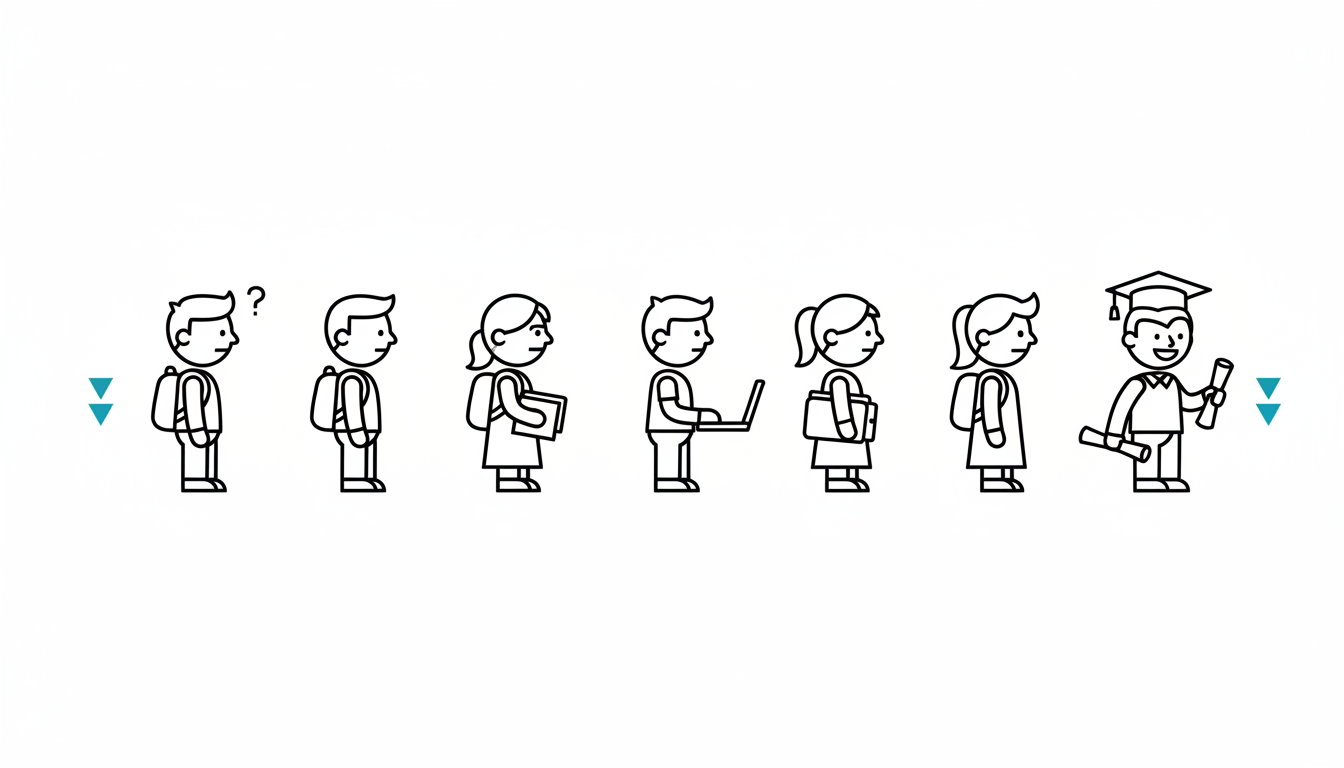
Create physical representation of opinions, rankings, or understanding levels by having students arrange themselves along a continuum from one extreme to another, making abstract positions spatially concrete.
How It Works
- Define spectrum endpoints (15 sec) - "This wall = 'Strongly Agree,' opposite wall = 'Strongly Disagree'"
- Students position themselves (1-2 min) - Students physically move to position on continuum that matches their stance
- Optional discussion (1 min) - Ask students at different points to explain their positioning
What to Say
Opening: "This wall is 'Technology improves education,' this wall is 'Technology harms education.' Place yourself anywhere on that line based on your opinion. Middle = neutral. Silent line-up—go!"
During: "Notice where you're standing relative to others... Anyone want to explain why they're at that position?"
Closing: "Looking at our human spectrum shows the range of perspectives in this room. No single right answer—but looking at where YOU stand makes you articulate your thinking."
Why It Works
Physical positioning creates kinesthetic commitment to a stance. Seeing the distribution of classmates visually represents diversity of thought. Silent movement emphasizes nonverbal communication and spatial reasoning.
Research Connection: Embodied cognition shows physical positioning influences abstract thinking (Barsalou, 2008).
Teacher Tip
After initial positioning: "Talk to people near you about why you're there. Then you can move if someone's reasoning changes your mind." Makes persuasion visible through physical movement.
Variations
Uses: Opinion spectrum, understanding level (least to most confident), difficulty ranking, chronological sequencing (arrange by historical date), magnitude ordering (least to most important) • Constraints: Silent line-up (no talking), timed challenge • Ages: K-5: Simple two-endpoint spectrums; 6-12: Complex continua; College: Multi-dimensional spectrums
Online
Annotate shared screen with horizontal line labeled at endpoints. Students drag name/icon onto position. Poll with slider works similarly.
Troubleshooting
Everyone clusters in middle (avoiding commitment): "I need at least 3 people near each endpoint. Take a stance—even tentatively!"
Extension
Two-dimensional spectrum: Use floor space for TWO spectrums simultaneously (X-axis = agree/disagree, Y-axis = importance). Students navigate to their 2D position.
Related: Four Corners, Human Barometer