
Optimist/Pessimist
At a Glance
- Time: 3-5 minutes
- Prep: None
- Group: Pairs
- Setting: Any classroom context
- Subjects: Universal - especially effective for controversial topics
- Energy: Medium
Purpose
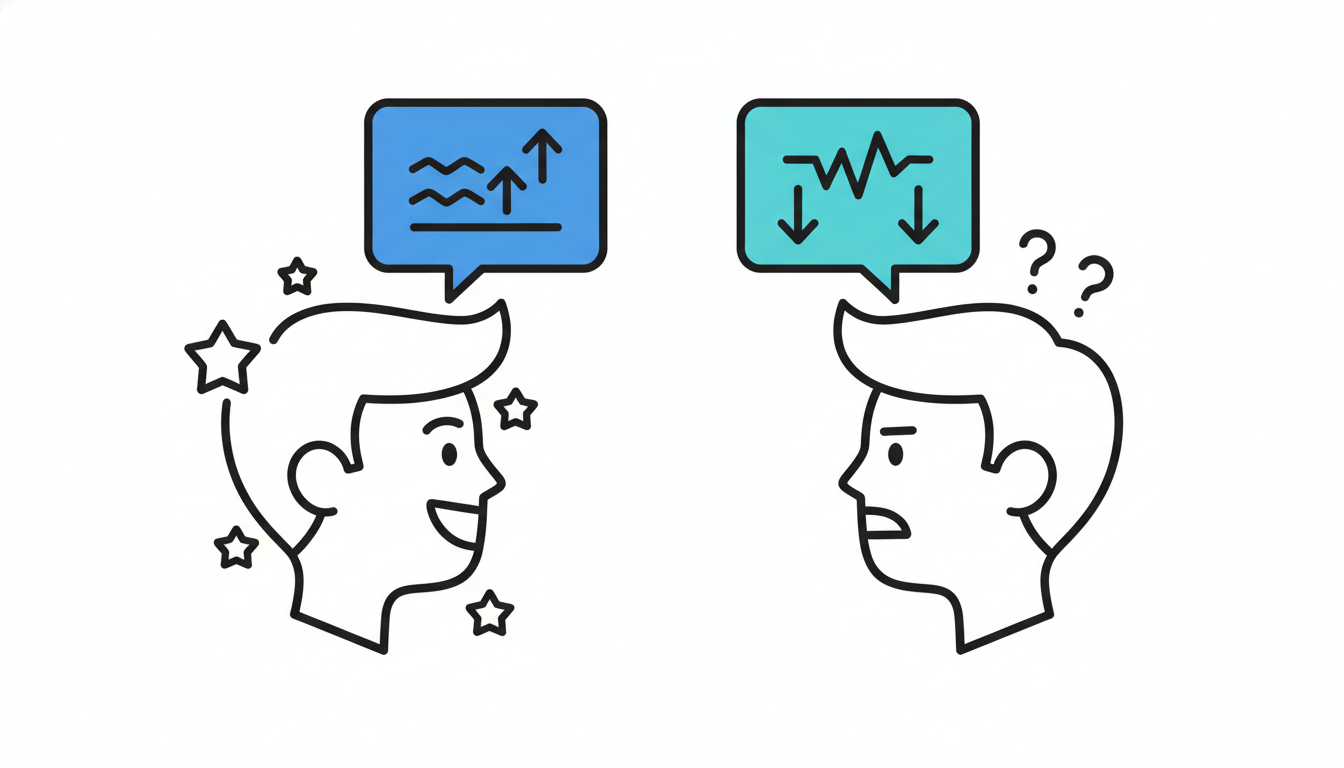
Optimist/Pessimist develops perspective-taking skills by having students argue for opposing viewpoints on the same topic. One partner defends the positive aspects (optimist), while the other argues the negative aspects (pessimist). Use this when you want students to see multiple sides of complex issues, move beyond black-and-white thinking, and practice constructing arguments they may not personally believe.
How It Works
Step-by-step instructions:
-
PRESENT THE TOPIC (15 seconds) - Introduce a topic, proposal, innovation, or decision that has both positive and negative aspects.
-
ASSIGN ROLES (15 seconds) - Within each pair, designate one person as the Optimist and one as the Pessimist. Quick method: "Person wearing more blue is the Optimist."
-
OPTIMIST ARGUES (60-90 seconds) - The Optimist presents all the positive aspects, benefits, opportunities, and reasons to support the topic.
-
PESSIMIST ARGUES (60-90 seconds) - The Pessimist presents all the negative aspects, risks, drawbacks, and reasons to oppose the topic.
-
DEBRIEF (1 minute) - Ask the whole class: "What did you learn by having to defend a position you might not personally hold?"
What to Say
Setup: "We're going to practice seeing both sides of an issue. The topic is: [STATE TOPIC]. In pairs, one of you will be the Optimist—you'll argue for all the positive aspects. The other will be the Pessimist—you'll argue against it or highlight the negatives. Person sitting closer to the window is the Optimist. Person closer to the door is the Pessimist."
For Optimist: "Optimists, you have 90 seconds. Argue why [TOPIC] is good, beneficial, necessary, or positive. Think about advantages, opportunities, benefits. Even if you don't personally believe it, make the strongest case you can. Begin."
For Pessimist: "Pessimists, your turn. You have 90 seconds to argue why [TOPIC] is bad, risky, unnecessary, or negative. Think about disadvantages, dangers, costs. Make the strongest case against it. Begin."
Debrief: "What was challenging about arguing for a position you might not hold? What did you learn about the complexity of this issue?"
Why It Works
Optimist/Pessimist leverages cognitive and social mechanisms that deepen understanding:
Forced Perspective-Taking: When students must defend a view they don't hold, they engage in effortful perspective-taking, which builds empathy and reduces cognitive bias.
Argument Construction: Building a case requires students to organize evidence, anticipate counterarguments, and structure reasoning—all critical thinking skills.
Complexity Recognition: Most issues aren't simple. This activity reveals nuance by showing that legitimate arguments exist on multiple sides.
Debate Preparation: Students who struggle with debate because they can't see the other side benefit from this structured practice.
Intellectual Humility: Arguing against your own position creates cognitive dissonance that can reduce overconfidence and dogmatism.
Research Citation: Research on "considering the opposite" shows that forcing people to generate arguments against their position improves judgment accuracy and reduces confirmation bias (Lord, Lepper, & Preston, 1984).
Teacher Tip
After the activity, explicitly name what just happened: "Notice that both the optimist and pessimist made valid points. Few issues are entirely good or entirely bad. Real wisdom comes from holding multiple perspectives simultaneously." This meta-commentary helps students transfer the skill beyond this single activity to their broader thinking patterns.
Variations
For Different Subjects
-
Science: Debate a new technology (e.g., gene editing, nuclear energy). Optimist argues benefits; Pessimist argues risks.
-
Literature: Optimist defends a character's controversial decision; Pessimist criticizes it.
-
History: Optimist argues for a historical policy; Pessimist argues against it (e.g., industrialization, expansion, revolution).
-
Social Studies: Debate current issues (e.g., social media, standardized testing, school uniforms).
For Different Settings
-
Large Class (30+): After pair debates, group several pairs together to form "Optimist Teams" and "Pessimist Teams" who collaborate to strengthen their arguments for a class-wide debate.
-
Small Class (8-15): Do this as a whole-group activity with half the class as optimists and half as pessimists, alternating speakers.
-
Online: Works perfectly in breakout room pairs. Timer keeps discussions focused.
For Different Ages
-
Elementary (K-5): Use concrete, age-appropriate topics: "Should we have homework?" or "Is it better to have recess before or after lunch?"
-
Middle/High School (6-12): Standard format works well with age-appropriate controversial topics.
-
College/Adult: Can tackle complex ethical, political, or philosophical issues.
Online Adaptation
Tools Needed: Video conferencing with breakout rooms (Zoom, Google Meet)
Setup: Pre-assign pairs or use auto-assign.
Instructions:
- Present topic in main room and assign roles (use Zoom reactions: Optimists give thumbs up, Pessimists give thumbs down)
- Send pairs to breakout rooms for 3 minutes
- In breakout rooms, Optimist argues first (90 sec), then Pessimist (90 sec)
- Return to main room for debrief
Pro Tip: In virtual settings, have students type their strongest argument in the chat before verbal discussion. This ensures everyone commits to a position before hearing others.
Troubleshooting
Challenge: Students argue halfheartedly or just say "I don't believe this, but..."
Solution: Frame it as a game or challenge: "Your job is to make the BEST case possible, whether you believe it or not. Pretend you're a lawyer who has to defend a client—you do your best regardless of personal opinion."
Challenge: One student dominates by interrupting their partner's argument.
Solution: Enforce strict turn-taking: "Optimist has the floor. Pessimist, your job right now is to listen and think about your rebuttal. You'll get your uninterrupted turn next."
Challenge: The issue is so polarizing that students get genuinely upset.
Solution: Choose topics with lower emotional stakes, or add a follow-up step where students drop their roles and share their actual views: "Now step out of your roles. What do YOU actually think?"
Extension Ideas
-
Deepen: Add a third round where partners collaborate to find middle ground or synthesis: "Now that you've heard both sides, can you identify a solution that addresses both the optimist's hopes and the pessimist's concerns?"
-
Connect: Use this before reading a historical document or text to pre-activate multiple perspectives students should watch for while reading.
-
Follow-up: Written reflection: "I was assigned to be the [Optimist/Pessimist]. One argument I made that I don't personally believe is... However, I can see why someone might believe it because..."
Related Activities: Forced Debate, Philosophical Chairs, Devil's Advocate