
Appointment Clock
At a Glance
- Time: 10-15 minutes (2 min setup + 4 appointments × 2 min each)
- Prep: Minimal - students draw a clock on paper
- Group: Pairs (rotating through 4 partners)
- Setting: Any classroom
- Subjects: Universal - discussions
- Energy: High
Purpose
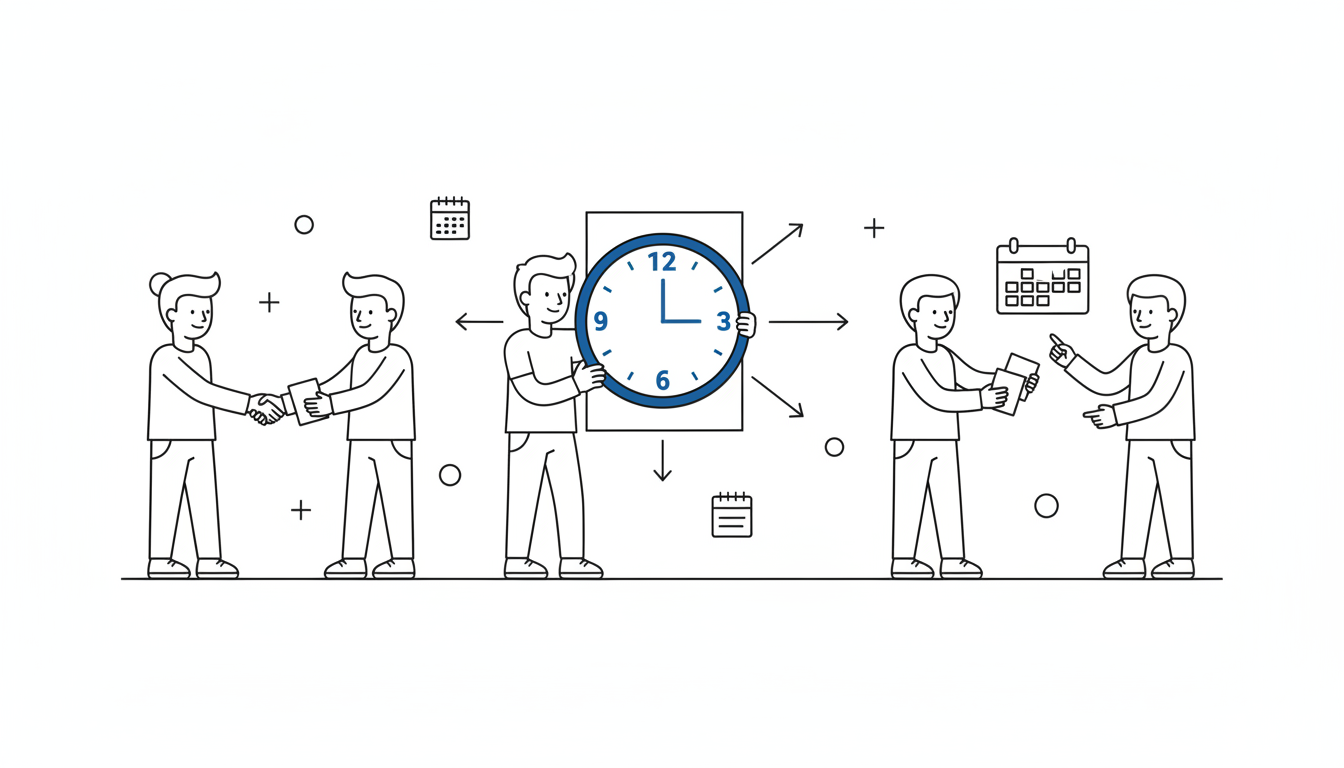
Appointment Clock is an organizational tool that facilitates multiple partner discussions. Students draw a clock face on paper and "make appointments" with 4 different classmates at 12, 3, 6, and 9 o'clock. Throughout a lesson or unit, the teacher can call "3 o'clock appointments!" and students immediately know who to partner with—no time wasted on "find a partner."
How It Works
Step-by-step instructions:
-
DRAW CLOCKS (30 seconds) - Each student draws a clock face with 12, 3, 6, and 9 marked.
-
MAKE APPOINTMENTS (2 minutes) - Students circulate and "make appointments" by finding 4 different partners. When two students agree to meet at a time, both write each other's name at that hour on their clock.
-
USE APPOINTMENTS (Throughout lesson) - When you need partner discussions, call out a time: "Meet with your 3 o'clock appointment!" Students find that partner and discuss.
-
DISCUSS (2-3 minutes per appointment) - Partners discuss the prompt.
-
REPEAT - Use different clock times for different discussions throughout the lesson.
What to Say
Setup: "Draw a clock on your paper. Mark 12, 3, 6, and 9 o'clock. Now, circulate and make appointments with 4 DIFFERENT people. When you and another person agree to meet at a time, both write each other's name at that hour. You have 2 minutes—go make your appointments!"
Using Appointments: "It's time to meet with your 12 o'clock appointment! Find that person. Here's your discussion topic: [PROMPT]. You have 2 minutes."
Later in Lesson: "Now meet with your 6 o'clock appointment. New topic: [PROMPT]."
Why It Works
Appointment Clock eliminates the "find a partner" chaos that wastes time. It also ensures variety—students discuss with 4 different people, exposing them to diverse perspectives without the complexity of more elaborate rotation structures.
Teacher Tip
During the appointment-making phase, circulate and help students who haven't found all 4 partners. Pair up stranded students yourself: "Jamal and Sara, you're each other's 9 o'clock!"
Variations
For Different Subjects
- Any Topic: Use different clock times for different prompts throughout a lesson.
For Different Settings
- Online: Students keep their clock in front of them. Create breakout rooms by calling out times.
Online Adaptation
Tools: Students create clocks on paper at home + Zoom breakout rooms
Process: Manually create pairs based on appointments
Troubleshooting
Challenge: Two appointment partners are both absent on the day you call that time. Solution: Have backup: "If your appointment is absent, find someone else whose appointment is also absent."
Extension Ideas
- Deepen: Keep the same appointment clock for an entire unit. Use all 4 times across multiple days.
Related Activities: Speed Networking, Concentric Circles