
3-2-1 Bridge
At a Glance
- Time: 3-4 minutes (initially); revisit after learning
- Prep: None
- Group: Individual
- Setting: Any
- Subjects: Universal
- Energy: Low
Purpose
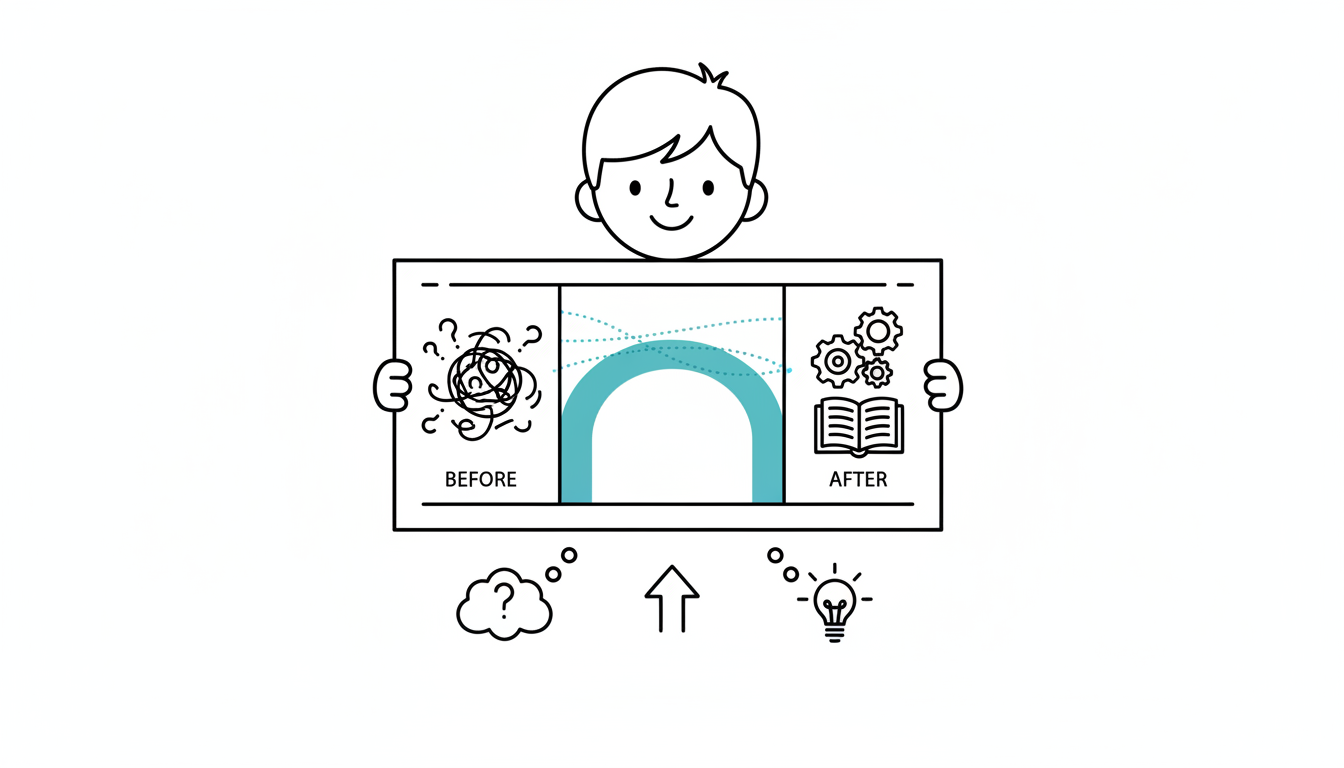
Activate prior knowledge and track learning evolution using Harvard's Project Zero thinking routine. Students generate "3 words, 2 questions, 1 metaphor/analogy" before learning, then repeat after learning to see how their thinking has changed. The "bridge" is the connection between initial and evolved understanding.
How It Works
- BEFORE LEARNING (2-3 minutes):
- 3 WORDS: "List 3 words connected to [topic]"
- 2 QUESTIONS: "Ask 2 questions about [topic]"
- 1 METAPHOR: "Create 1 metaphor or analogy: [Topic] is like _____ because _____"
-
TEACH - Proceed with lesson
-
AFTER LEARNING (2-3 minutes):
- Repeat the same prompts
- BRIDGE: "How has your thinking changed? What's the bridge between your initial and new understanding?"
What to Say
"Before we learn about [topic], I want to capture your initial thinking. On your paper, create three sections:
- 3 Words: Write 3 words you associate with [topic]
- 2 Questions: Write 2 questions you have about [topic]
- 1 Metaphor: Complete this: '[Topic] is like _____ because _____'
You have 2 minutes. Go!"
(Students complete)
"Hold onto this. After we learn, we'll do it again and see how your thinking has changed."
(After the lesson)
"Now, repeat the same activity. Write 3 new words, 2 new questions, and 1 new metaphor. Then look at your 'before' and 'after.' What changed? That change is your bridge—your learning journey."
Why It Works
The structured format provides scaffolding for activation while allowing creative expression. The metaphor/analogy prompt requires deep thinking about relationships. Completing the routine twice—before and after—makes learning visible and tangible. Students see their own cognitive growth, which builds metacognitive awareness. The "bridge" metaphor is powerful: learning connects where you were to where you are now.
Research Citation: Thinking routines improve metacognition and make thinking visible (Ritchhart et al., 2011 - Harvard Project Zero).
Teacher Tip
The metaphor is often the hardest part. If students struggle, provide examples: "Photosynthesis is like a factory because it takes raw materials and produces a product." Model your own metaphor first.
Variations
Alternative Formats
3-2-1 Original (simpler):
- 3 things you learned
- 2 things you found interesting
- 1 question you still have
3-2-1 Extended:
- 3 ideas or facts
- 2 questions or wonderings
- 1 metaphor or image
Abbreviated (2 min):
- Skip the metaphor; just do words and questions
Content Examples
Science - Ecosystems:
- Before: "3 Words: Animals, Plants, Food. Questions: How do they survive? What is a food chain? Metaphor: An ecosystem is like a community because everyone has a role."
- After: "3 Words: Interdependence, Energy, Balance. Questions: What happens when one species disappears? How does energy flow? Metaphor: An ecosystem is like a web because everything is connected."
Math - Fractions:
- Before: Words = Parts, Division, Pizza. After: Words = Numerator, Denominator, Equivalent
Literature - Symbolism:
- Before: "Symbolism is like a code because you have to figure out what it means."
- After: "Symbolism is like a layer cake because there are multiple meanings beneath the surface."
For Different Settings
- Large Class: Individual written responses; share a few
- Small Class: Everyone shares their metaphors
- Online: Type in shared doc or chat
- Pairs: Partners share and compare their 3-2-1s
For Different Ages
- Elementary (K-5): Simplify: "2 words, 1 question" or allow drawings
- Middle/High School (6-12): Full 3-2-1 Bridge works well
- College/Adult: Can add additional reflection prompts
Online Adaptation
Excellent for Online:
- Students type in personal document or shared doc
- Use breakout rooms for partner sharing
- Screenshot before/after for comparison
- Works well in virtual settings
Troubleshooting
Challenge: Students can't create a metaphor. Solution: Provide sentence stems: "[Topic] is like [object] because both [shared characteristic]." Or allow similes: "like a..."
Challenge: "After" responses are identical to "Before." Solution: Probe: "You must have learned SOMETHING new! Even a small change counts. What detail did you not know before?"
Challenge: Students lose their "Before" responses. Solution: Have them write on opposite sides of paper, or use two colors, or fold paper in half.
Challenge: Running out of time. Solution: Do "Before" at start of class (2 min), "After" as exit ticket or homework.
Challenge: Students see no change and feel discouraged. Solution: Celebrate any growth: "Your questions changed—that shows deeper curiosity! Your words became more technical—that's learning!"
Extension Ideas
- Gallery Walk: Post Before/After comparisons around room; students observe each other's growth
- Reflection Writing: "Write a paragraph explaining how your thinking changed."
- Class Compilation: Create a chart showing class's most common "Before" words vs. "After" words
- Portfolio Piece: Keep 3-2-1 Bridges throughout the year as evidence of learning
- Peer Discussion: Partners explain their bridges to each other
Related Activities: KWL Chart, Quick Write, Think-Pair-Share