
Visual Metaphors
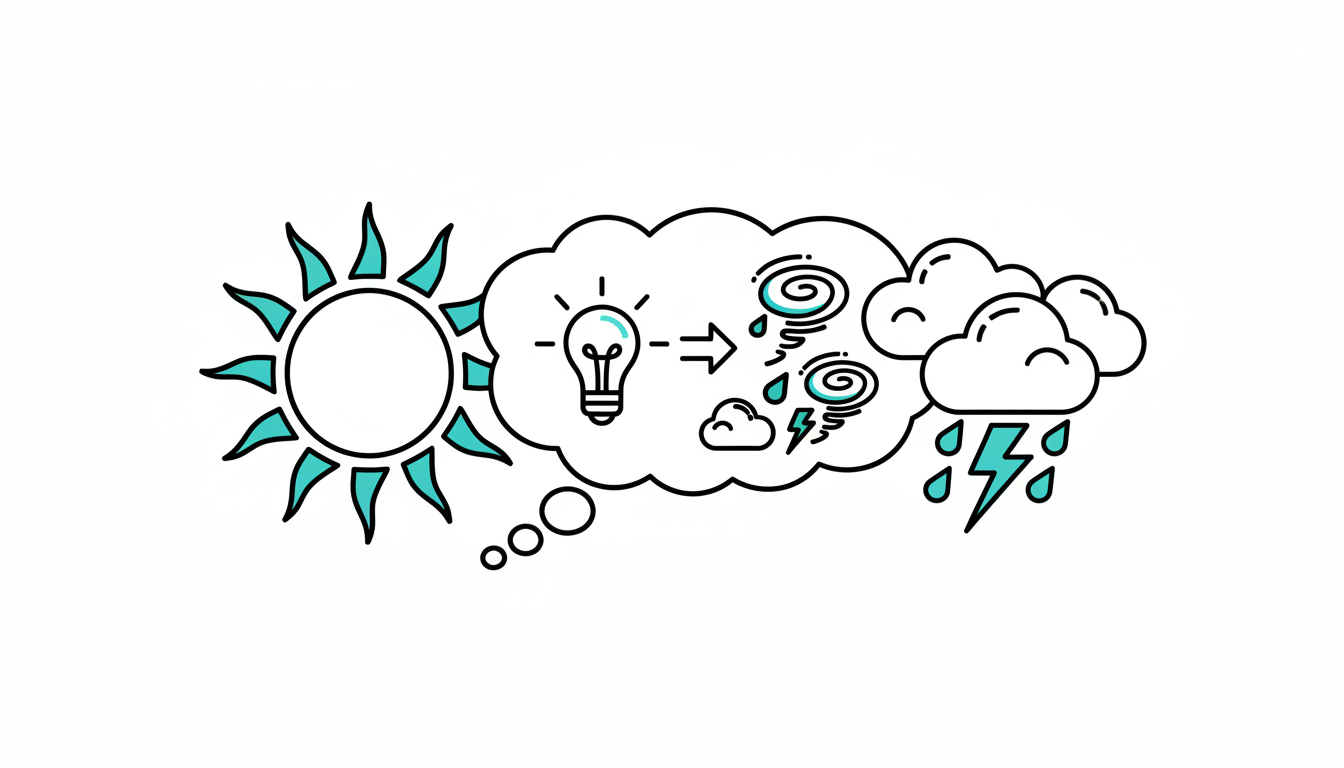
At a Glance
- Time: 2-3 minutes
- Prep: None
- Group: Individual
- Setting: Any
- Subjects: Universal
- Energy: Medium
Purpose
Deepen conceptual understanding by translating abstract ideas into visual metaphors (e.g., "Draw this concept as a weather pattern"), revealing how students perceive relationships and characteristics.
How It Works
- Present metaphor challenge (30 sec) - "Draw photosynthesis as a weather pattern"
- Sketch metaphors (90 sec) - Students create visual representations
- Share reasoning (1 min) - Explain why they chose specific metaphors
What to Say
Opening: "If photosynthesis were a weather pattern, what would it look like? Sunshine bringing energy? Rain providing water? Draw it and be ready to explain WHY."
During: "What aspects of the concept match weather elements?... What's the connection?... Make it visual!"
Closing: "I see sunshine for energy input, rain for water, and clouds representing glucose production. The metaphor reveals you understand the process as energy transformation."
Why It Works
Metaphorical thinking demonstrates deep understanding—students must identify essential characteristics, find parallel structures, and explain relationships, moving beyond surface knowledge.
Research Connection: Metaphor generation reveals conceptual understanding and supports transfer (Gentner, 1983; Lakoff & Johnson, 1980).
Teacher Tip
Vary the metaphor domain: weather patterns, machines, architecture, food, music, journeys. Different domains reveal different aspects of understanding.
Variations
Subjects: Any concept; Science: processes as machines; Literature: themes as weather; Math: functions as journeys • Ages: K-5: simple metaphors with prompts; 6-12: complex metaphors with explanation; College: multi-layered metaphor analysis
Online
Students sketch digitally (annotation tools) or describe metaphor in chat; share screens to present.
Troubleshooting
Superficial metaphors: "Explain the connection—WHY is this like that weather pattern?"
Extension
Swap metaphor domains: "Now draw it as a machine," then compare what each reveals.
Related: Speed Analogies, Mashup Ideation