
Would You Rather
At a Glance
- Time: 2-4 minutes
- Prep: None
- Group: Whole class or pairs
- Setting: Any
- Subjects: Universal
- Energy: Low
Purpose
Build community and spark conversations by revealing preferences and decision-making processes. Use this as an icebreaker, transition activity, or discussion starter. Students practice explaining reasoning, listening to different perspectives, and recognizing that people think differently. The activity creates low-stakes opportunities for participation and connection.
How It Works
- POSE (10 seconds) - Teacher presents a "Would you rather..." question with two options
- DECIDE (15 seconds) - Students individually decide which option they prefer
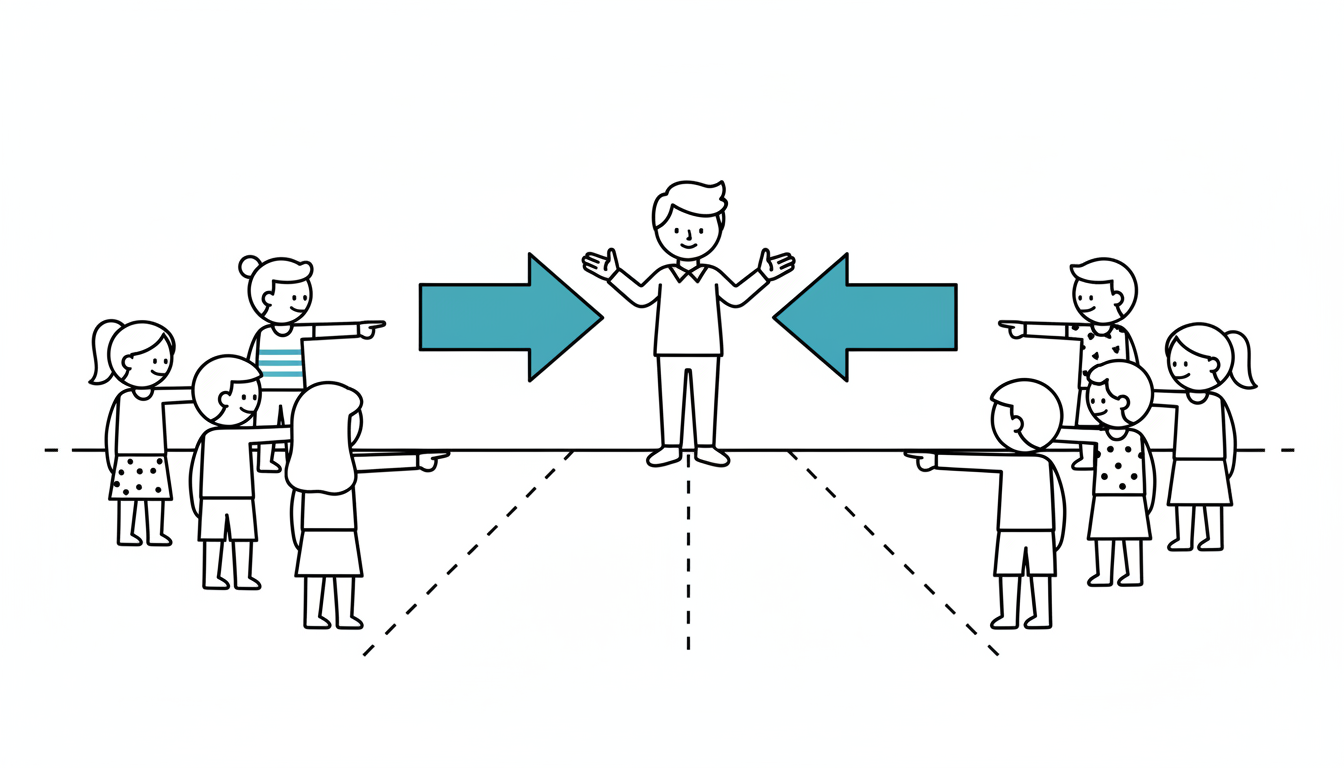
- MOVE or SIGNAL (30 seconds) - Students move to different sides of room (or raise hands/point) to show their choice
- SHARE (90-120 seconds) - A few volunteers from each side briefly explain their reasoning
- OPTIONAL: Repeat with 2-3 more questions
What to Say
"Would you rather have the ability to fly OR be invisible? Think about it for 10 seconds... Okay, if you'd rather FLY, move to this side. If you'd rather be INVISIBLE, move to that side. Go!"
(After students move) "Let's hear from this side. Why would you rather fly? Who has a reason?" (Take 2-3 responses)
"Now the invisible side. Why would you rather be invisible?" (Take 2-3 responses)
"Interesting! Different people value different things. Let's do another one..."
Why It Works
The binary choice format is cognitively simple—everyone can participate. The movement (even just raising hands) adds physical engagement. Hearing others' reasoning exposes students to different thinking processes and values, which builds empathy and community. The activity has no "right" answer, making it psychologically safe. Students practice articulating reasoning, which is a critical thinking skill applicable to academic content.
Research Citation: Low-stakes sharing activities increase participation equity and build classroom community (Kagan, 1994).
Teacher Tip
Start with fun, silly questions to establish safety and engagement. Once the routine is established, you can introduce content-related or deeper questions. The key is the pattern: choose, move/signal, explain reasoning.
Variations
For Different Subjects
- Math: "Would you rather always have to calculate mentally OR always use a calculator?"
- Science: "Would you rather live on Mars OR at the bottom of the ocean?"
- Literature: "Would you rather be able to read minds OR travel through time?"
- History: "Would you rather live in ancient Rome OR ancient Egypt?"
- Content Review: "Would you rather solve this problem using Method A or Method B? Why?"
For Different Settings
- Large Class: Move to different sides of room
- Small Class: Point to signs posted on walls, or raise hands
- Online: Use polling feature, or type choice in chat
- Seated Version: Thumbs up for option A, thumbs down for option B
For Different Ages
- Elementary (K-5): Use concrete, age-appropriate questions. "Would you rather have a pet dragon or a pet unicorn?"
- Middle/High School (6-12): Can handle more abstract or hypothetical scenarios. "Would you rather know the date of your death or the cause?"
- College/Adult: Can use sophisticated, field-specific scenarios
Depth Variations
- Quick Version: Just the choice and movement (1 minute)
- Standard Version: Choice, movement, brief explanations (2-4 minutes)
- Deep Version: Choice, movement, partner discussion, whole-class debrief (5-7 minutes)
Online Adaptation
Excellent for Online:
- Use polling feature in Zoom/Teams for instant visualization
- Students type choice in chat
- Breakout rooms: partners explain reasoning to each other
- Annotate feature: students write on screen over two option boxes
- Reaction emojis: assign different reactions to different choices
Troubleshooting
Challenge: Students choose based on what their friends choose, not their real preference. Solution: "Close your eyes while you decide. Be honest about what YOU prefer." Or switch to a written/typed response first.
Challenge: One side has only 1-2 students (social pressure/embarrassment). Solution: "This is interesting! Sometimes we have minority opinions. That's totally okay. Let's hear from the smaller group first—you might convince others!"
Challenge: Questions feel irrelevant or boring. Solution: Let students generate questions. "Turn to a partner and come up with a 'Would You Rather' question. I'll call on pairs to share."
Challenge: Discussions get too long or off-topic. Solution: Set strict time limits. "You have 30 seconds to share your reasoning." Use a timer.
Extension Ideas
- Student-Generated: Students write their own "Would You Rather" questions (great for bell-ringers or exit tickets)
- Content Connection: "We just practiced weighing tradeoffs and considering multiple perspectives. That's exactly what we do when [analyzing historical decisions / evaluating solutions / interpreting literature]."
- Journaling: "Write a paragraph defending your choice with evidence and reasoning."
- Debate Format: Two volunteers formally debate the options
- Create Content-Specific Question Bank: Build a collection of subject-specific questions for future use
Related Activities: Two Truths and a Lie, Human Barometer, Thumbs Compass