
Mirror Madness
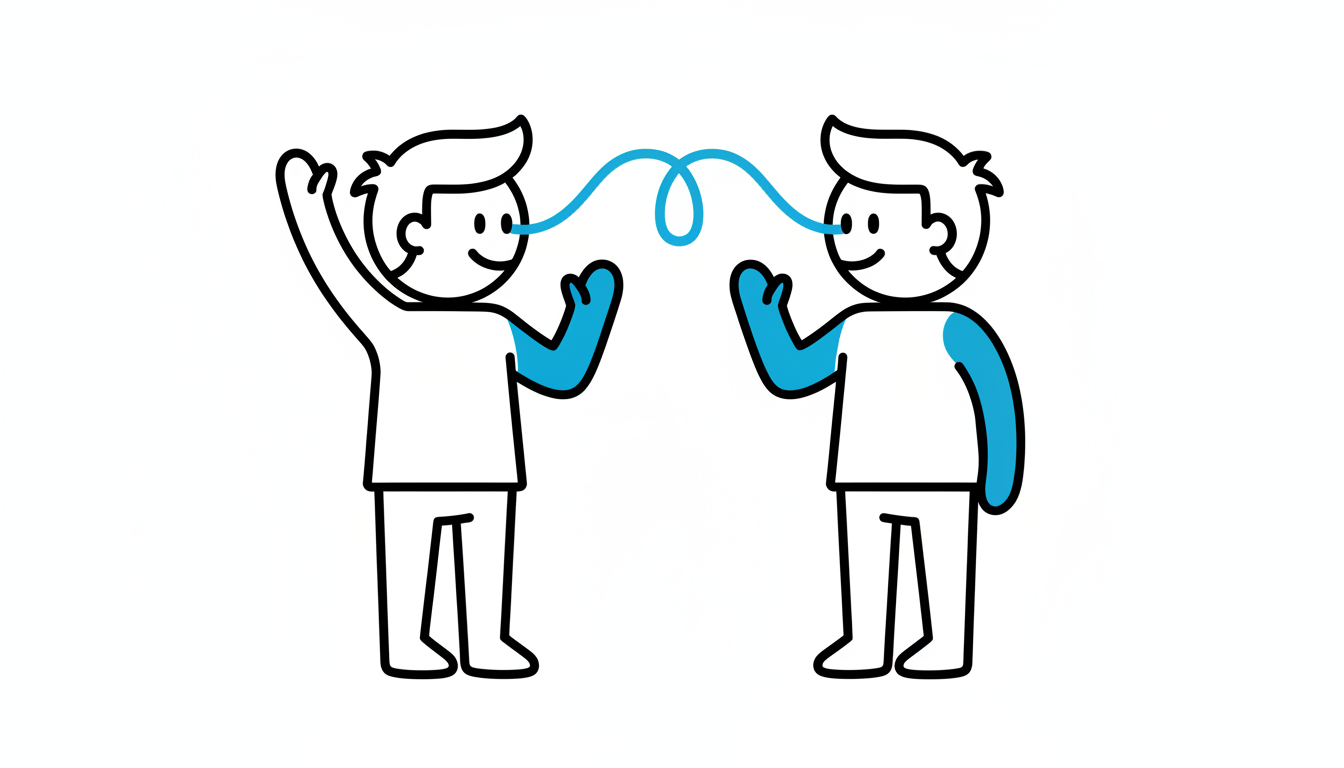
At a Glance
- Time: 60 seconds
- Prep: None
- Group: Pairs
- Setting: Any (works in-person or online)
- Subjects: Universal
- Energy: Medium-High
Purpose
Build focus, connection, and nonverbal communication between partners through synchronized movement. Use this before partner work to establish connection, or anytime you need students to practice sustained attention and coordination with a peer.
How It Works
Step-by-step instructions:
- PAIR UP (10 seconds) - "Find a partner. Stand facing each other at arm's length."
- ASSIGN ROLES (10 seconds) - "One person is the Leader, one is the Mirror. Leader makes slow movements; Mirror copies exactly like a mirror reflection."
- ROUND 1 (20 seconds) - Leader moves slowly (raise arm, tilt head, etc.), Mirror follows
- SWITCH (5 seconds) - "Switch! Mirrors are now Leaders."
- ROUND 2 (20 seconds) - New leader moves, new mirror follows
- DEBRIEF (5 seconds) - "Sit down. You just practiced focused attention with a partner."
What to Say
Opening: "Find a partner. Stand facing them, about an arm's length apart. One of you is the Leader, one is the Mirror. Leader: you're going to make slow, smooth movements—raise your hand, tilt your head, make a face—whatever you want, but slow. Mirror: your job is to copy their movements exactly, like you're their reflection. Ready? Leaders, start moving slowly. Mirrors, follow. Go!"
During: "Keep it slow, Leaders. Mirrors, stay with them. Eyes locked. Perfect."
Switch moment: "Freeze! Switch roles. Mirrors, you're now Leaders. New leaders, move slowly. Go!"
Closing: "And...freeze. Sit down. What did you just practice? Focus. Attention. Connection. Nonverbal communication. Now let's use those skills for our next activity."
Why It Works
Mirror activities require sustained visual attention, motor planning, and interpersonal synchrony. The leader must move thoughtfully (executive function), and the mirror must track and replicate movements precisely (attention and working memory). This builds neural pathways for focused attention and social connection. The eye contact and synchronized movement also trigger mirror neurons, which are involved in empathy and social bonding. This is excellent preparation for any collaborative work because it establishes connection without words.
Research Citation: Mirror neuron systems activate during imitation and observation, supporting social learning and empathy (Rizzolatti & Craighero, 2004).
Teacher Tip
Emphasize SLOW movements. If leaders move too fast, mirrors can't keep up and it becomes frustrating rather than focused. Say, "Leaders, move like you're underwater—slow and smooth." This keeps it meditative and focused rather than chaotic.
Variations
For Different Subjects
- Drama/Theater: Use as warm-up for performance or improvisation activities
- Physical Education: Practice body awareness and coordination
- Science: "Mirror the movement of molecules as they slow down (cooling) or speed up (heating)"
- Math/Geometry: "Make symmetrical shapes with your movements—your partner is your line of symmetry"
- Universal Prep: Use before any partner work to build trust and connection
For Different Settings
- Large Class (30+): Everyone pairs up simultaneously. Works great—lots of energy in the room.
- Small Class (5-15): Same approach. Can also do a fishbowl: one pair demonstrates while others watch, then all try.
- Odd Number: Teacher joins in as a partner, or create one trio where two people mirror one leader
- Limited Space: Can do seated mirror madness using only hands, arms, and facial expressions
For Different Ages
- Elementary (K-5): Love this! Can make it silly: "Mirror faces! Mirror dance moves!" Keep rounds to 15 seconds.
- Middle/High School (6-12): Keep it focused and purposeful. Frame as "coordination training" or "improv exercise."
- College/Adult: Explain it as "embodied attention practice" or "nonverbal communication exercise." Adults appreciate theatrical/drama contexts.
Online Adaptation
Tools Needed: Zoom, Teams, any video platform with breakout rooms
Setup: Use breakout rooms for pairs, or if small group, do it in main room.
Instructions:
- "You're going to mirror your partner through the screen."
- "One person moves slowly, the other mirrors. You have 20 seconds. Then switch."
- Send to breakout rooms or have them do it in gallery view if small class.
Pro Tip: This works EXCELLENTLY online because the screen naturally frames each person like a mirror. Students often find it easier online than in person. Use gallery view so partners can see each other clearly.
Troubleshooting
Challenge: Leader moves too fast; mirror can't keep up. Solution: Stop and reset. "Leaders, slower. Pretend you're moving through honey. Slow and smooth. Try again."
Challenge: Students giggle and break focus. Solution: That's okay at first! Say, "I know it's funny. Let's try one more time with serious focus. Eye contact. Slow movements. See if you can stay completely in sync." Make focus the challenge.
Challenge: Partners aren't engaged—just waving hands randomly. Solution: Add specificity: "Leaders, make one clear movement—raise your right hand slowly to your head. Hold it. Now lower it. Deliberate. Purposeful."
Extension Ideas
- Deepen: After the activity: "What made this hard? What made it easier? You just identified skills you need for any collaboration: watching carefully, adjusting, communicating without words."
- Connect: "We just mirrored movements. In science, we see mirroring in nature—bilateral symmetry. Let's explore that."
- Follow-up: "Tomorrow, we'll do this again but with more complex movements. Practice keeping sustained attention today in your other classes."
Related Activities: Statue Freeze, Robot Walk, Human Knot