
Argument Mapping
At a Glance
- Time: 5 minutes
- Prep: Minimal (short text containing an argument)
- Group: Individual or pairs
- Setting: Any classroom
- Subjects: Humanities, Social Sciences, Debate (adaptable to any persuasive content)
- Energy: Low-Medium
Purpose
Develop rigorous analytical skills by visually deconstructing complex arguments into their component parts: claims, reasons, evidence, and counter-arguments. Use this when teaching argumentation, evaluating persuasive texts, or preparing students to construct their own logical arguments.
How It Works
Step-by-step instructions:
-
Read and identify the main claim (1 minute) - Students read a short argumentative text (paragraph or excerpt) and identify the author's main claim or thesis
-
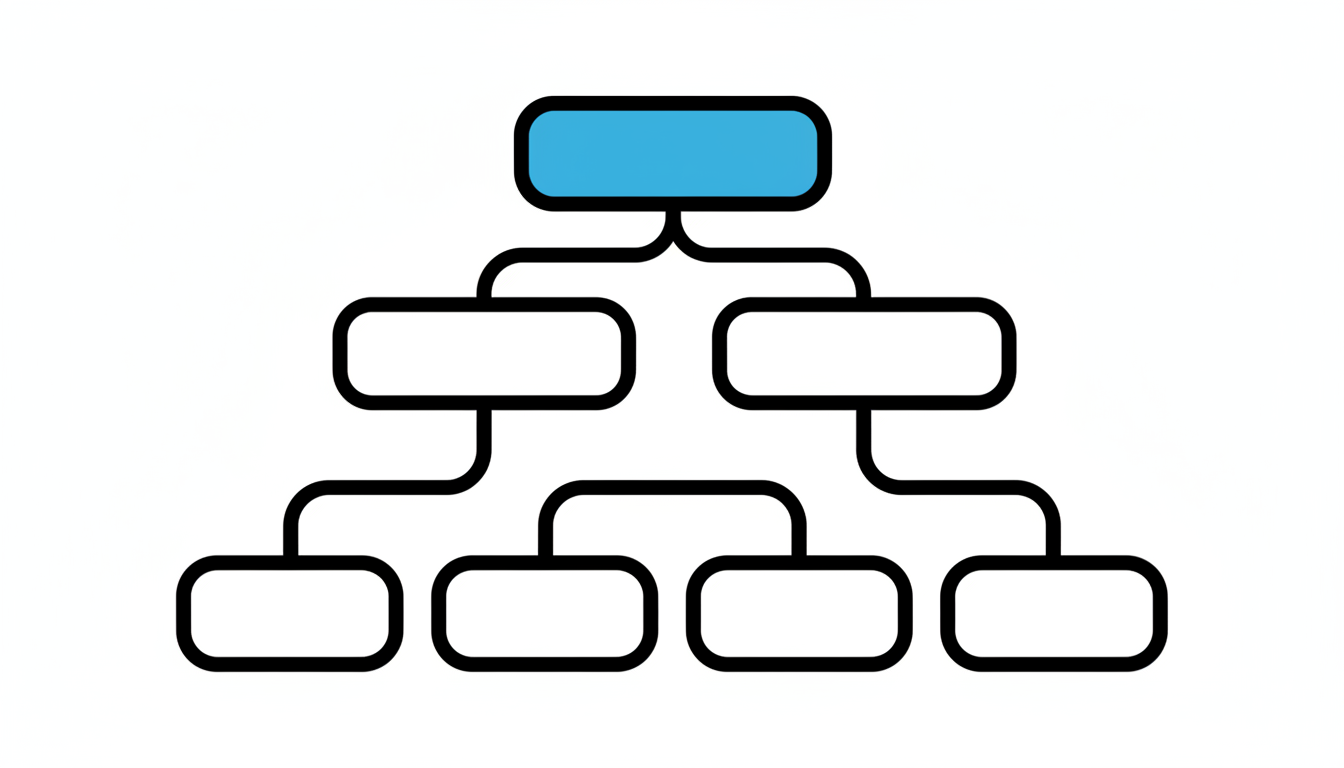
Map the argument structure (3 minutes) - Students create a visual diagram showing: the main claim at the top, supporting reasons branching below, evidence supporting each reason, and any counter-arguments or potential fallacies noted to the side
-
Evaluate argument strength (1 minute) - Students assess: Are the reasons logically connected to the claim? Is the evidence credible and relevant? Are there gaps or weak points in the logic?
What to Say
Opening: "We're going to X-ray this argument—break it apart to see how it's built. First, what's the author's main claim—what are they trying to convince you of? Write that at the top. Now, what reasons do they give to support that claim? Those branch below. What evidence supports each reason? Add those. Finally, can you spot any counter-arguments they address or logical weaknesses? Mark those."
During: "What's the MAIN claim, not just a supporting point?... What evidence backs up this reason—is it a fact, a statistic, an example, an expert opinion?... Do you see any gaps—places where the logic jumps?... Where's the argument strongest? Weakest?"
Closing: "Now that you can see the skeleton of this argument, how strong is it? Where would you challenge it? What additional evidence would make it stronger? This skill—seeing how arguments are constructed—helps you evaluate what you read and build better arguments of your own."
Why It Works
Argument mapping makes the invisible visible. Most people process arguments holistically and emotionally; mapping forces systematic, logical analysis of the argument's structure. By separating claims from reasons from evidence, students can evaluate each component independently, identifying gaps in logic or weak evidence that might be obscured by rhetorical flair. The visual format engages spatial reasoning and makes complex arguments more manageable.
Research Connection: Argument mapping has been shown to significantly improve critical thinking skills, particularly in identifying assumptions, evaluating evidence, and recognizing logical fallacies (van Gelder, 2005; Twardy, 2004).
Teacher Tip
Start with simple, short arguments (3-5 sentences) before progressing to complex texts. Students need to learn the components before they can manage intricate structures. Model one argument map fully before asking them to create their own—this activity has a learning curve but pays dividends once mastered.
Variations
For Different Subjects
- Humanities: "Map the argument in this persuasive essay... Analyze the structure of this political speech... Deconstruct this book review's evaluation"
- Science: "Map the reasoning behind this hypothesis... Analyze the argument structure of this research abstract... Evaluate the logic of this scientific explanation"
- Math: "Map the proof structure of this theorem... Show the logical steps from premises to conclusion"
For Different Settings
- Large Class (30+): Provide a partially completed map; students fill in missing elements (reasons, evidence, or counter-arguments)
- Small Group (5-15): Work together as a class to map an argument on the board, negotiating what goes where
For Different Ages
- Elementary (K-5): Simplify to three levels: "What does the author want you to believe? Why? What proof do they give?"
- Middle/High School (6-12): Standard format with full claim-reason-evidence-counterargument structure
- College/Adult: Add analysis of assumptions, warrants (why the evidence supports the reason), and evaluation of logical validity
Online Adaptation
Tools Needed: Digital whiteboard (Miro, Lucidchart) or specialized argument mapping software (Rationale, Argunet)
Setup: Share argument text via document or screen share; provide blank digital canvas
Instructions:
- Students create boxes/nodes for claim, reasons, and evidence
- Use arrows or lines to show logical connections
- Add color coding: claim in one color, reasons in another, evidence in a third
- Share maps via screen share or submit as images for feedback
Pro Tip: Use a hierarchical layout tool that auto-organizes—helps students focus on logic rather than visual layout
Troubleshooting
Challenge: Students confuse the claim with a supporting reason Solution: Ask: "What's the ONE thing the author most wants you to believe when you finish reading? That's the claim. Everything else is there to support that central belief."
Challenge: Students include irrelevant details or background information in the map Solution: "Only include elements that are part of the logical structure: claims, reasons that support those claims, and evidence that backs up the reasons. Background info doesn't go on the map."
Extension Ideas
- Deepen: After mapping, have students write a critique: "Which part of this argument is weakest? What evidence is missing? What counter-arguments aren't addressed?"
- Connect: Use maps to prepare for debate: "Map your opponent's likely argument, then prepare counter-evidence for each reason"
- Follow-up: Have students map their own draft arguments to check for logical coherence before finalizing persuasive essays
Related Activities: Concept Mapping, Philosophical Chairs, Devil's Advocate