
Shake It Off
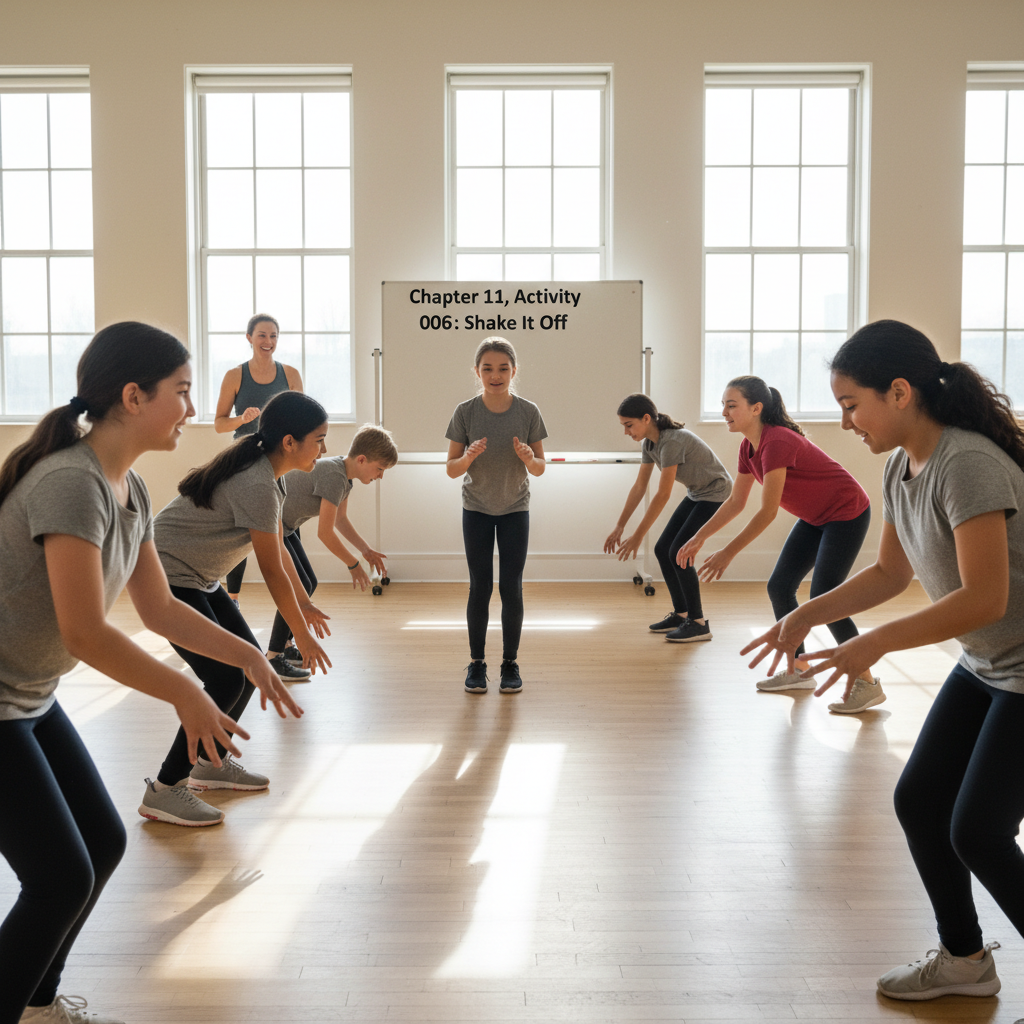
At a Glance
- Time: 30-60 seconds
- Prep: None
- Group: Whole class (individual movement)
- Setting: Any classroom (standing at desks)
- Subjects: Universal
- Energy: Medium-High (energizing)
Purpose
Release physical tension and reset energy by having students literally shake out their bodies, releasing muscle tension while activating the sympathetic nervous system for alertness, providing a quick physical and mental reset when energy is lagging or students seem stuck, tense, or unfocused.
How It Works
- Cue (5 sec) - "Stand up. We're going to shake it off."
- Progressive shaking (30-45 sec) - Guide students through body parts:
- Shake right hand (5 sec)
- Shake left hand (5 sec)
- Shake right foot (5 sec)
- Shake left foot (5 sec)
- Shake whole body (10-15 sec)
- Sit down (5 sec) - "Sit down, take a breath. Energy reset. Back to work."
What to Say
Opening: "Stand up. We're going to shake off the tension. Follow my lead."
During: "Shake your right hand... like you're shaking water off it... Now left hand... shake, shake, shake... Right foot, shake it out... Left foot... Now your whole body! Shake everything—arms, legs, shoulders, head! Wiggle it all out! Shake, shake, shake!"
Closing: "Stop. Sit down. Deep breath in... and out. Tension gone? Energy up? Let's keep going."
Why It Works
Physical shaking releases muscle tension through rhythmic movement, similar to how animals shake after stressful events to discharge nervous system activation. The movement increases heart rate and blood flow, delivering oxygen to the brain and boosting alertness. Shaking is also inherently silly, which triggers laughter and positive emotion—both of which reduce stress hormones. The brief burst of movement provides a state change from seated stillness, making the return to focused work feel fresh rather than stagnant.
Research Citation: Movement and emotional regulation (Koziol & Budding, 2009)
Teacher Tip
Model it enthusiastically yourself—don't just direct from the side. When students see you actually shaking your whole body, they'll join in without self-consciousness. Your willingness to look silly gives them permission to do the same. If you stand there stiffly telling them to shake, they'll feel awkward.
Variations
Different Shaking Patterns
- Progressive: One body part at a time (methodical)
- Free shake: "Just shake everything at once for 20 seconds!"
- Rhythm shake: Shake to a beat or music snippet
- Partner shake: Face partner, shake together (more playful)
Different Energy Levels
- Low energy: Gentle shaking, swaying
- Medium energy: Standard shake routine
- High energy: Vigorous shaking with sound effects, music
Different Ages
- Elementary (K-5): Make it a game: "Shake like a wet dog! Shake like jello! Shake like a washing machine!"
- Middle/High School (6-12): Quick, no-nonsense: "30 seconds, shake it out, done"
- College/Adult: Present as "tension release technique"—works for all ages if framed maturely
Online Adaptation
Tools Needed: None (just cameras)
Setup: Students standing at home workspaces
Instructions:
- "Stand up, step back from your screen"
- Teacher models shaking on camera
- Students follow along (cameras optional—on or off both work)
- "Sit back down, we're continuing"
Pro Tip: Play 20-30 seconds of upbeat music during shake—adds energy and makes the moment feel special.
Troubleshooting
Challenge: Students feel self-conscious, don't want to participate, stand still Solution: Make it non-optional but low-stakes: "You don't have to shake hard, but you DO have to stand and move your body." Start with just hand shaking—less vulnerable than full-body movement.
Challenge: Students get too wild, knock things over, become disruptive Solution: Set boundaries: "Shake your own body in your own space—no touching desks, chairs, or people. If I see unsafe movement, we stop immediately."
Challenge: Room is too crowded for everyone to shake safely Solution: Seated version: "Shake just your hands and shoulders while seated—that works too."
Extension Ideas
- Deepen: Pair with intention: "As you shake, imagine shaking off frustration, confusion, or tiredness. What are you releasing?"
- Connect: Music-based: Different music genres for different shake intensities (classical = gentle, rock = vigorous)
- Follow-up: Student choice: "Who wants to lead the shake break today?" Rotate leadership
Related Activities: Stretch Break, Dance Break, Desk Push-Ups