
Beach Ball Toss
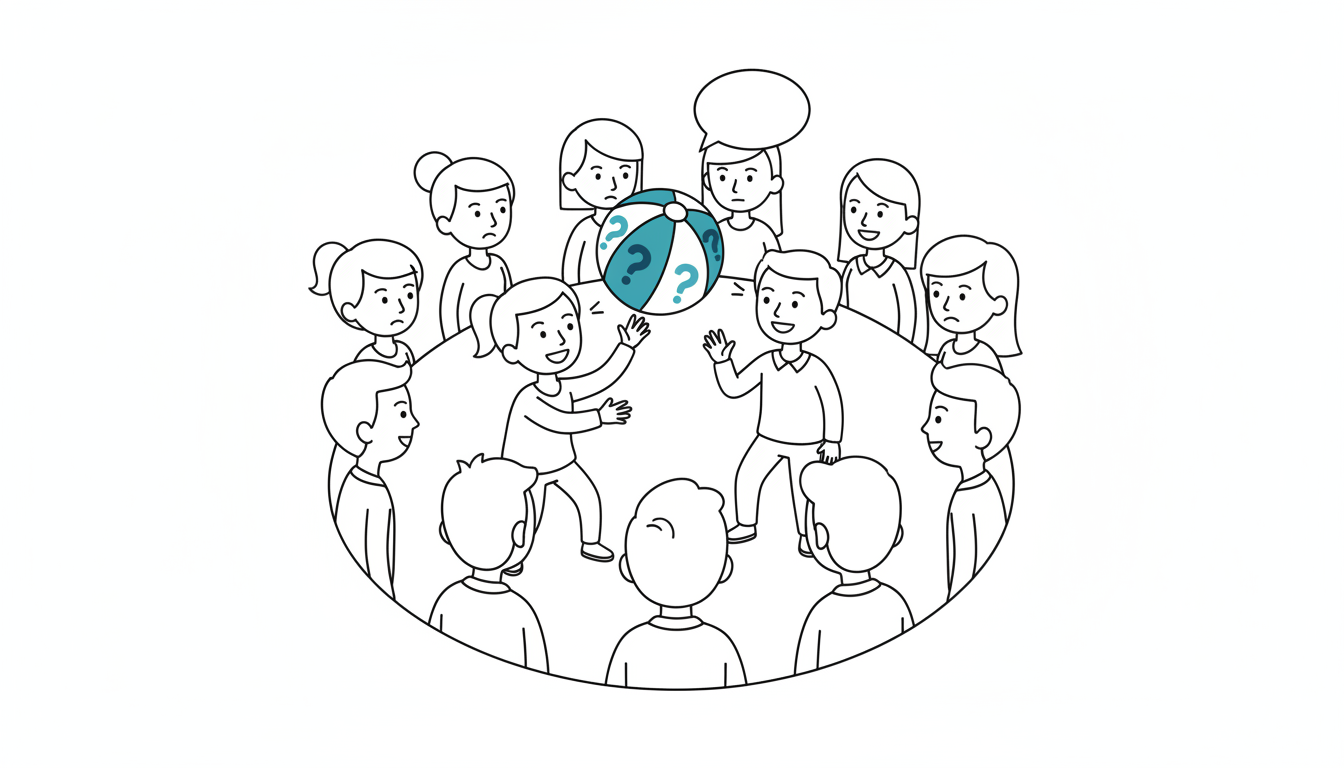
At a Glance
- Time: 3-5 minutes
- Prep: Beach ball with questions written on it
- Group: Whole class in circle
- Setting: Space to toss a ball
- Subjects: Universal
- Energy: High
Purpose
Build community and add playful energy through randomized sharing. Use this during the first weeks of class, before group work, or when energy is low. The element of chance (you don't know which question you'll get) makes the activity exciting and unpredictable. Students practice speaking in front of others, active listening, and quick thinking.
How It Works
- PREPARE (before class) - Write different questions all over a beach ball with permanent marker
- FORM CIRCLE (30 seconds) - Students stand or sit in a circle
- TOSS (15 seconds) - Toss the ball to a student
- ANSWER (30-45 seconds) - Student answers whichever question their right thumb is touching (or closest to)
- TOSS AGAIN (repeat) - That student tosses to someone else; continue for 3-5 minutes
What to Say
"We're going to play beach ball toss! This ball has questions written all over it. I'll toss it to someone. When you catch it, look at where your RIGHT THUMB is touching the ball. Answer that question out loud, then toss the ball to someone new. Ready?"
(Toss ball to first student) "Answer the question your right thumb is on!"
(After student answers) "Great! Now toss it to someone who hasn't gone yet."
(Continue until time runs out or everyone has had a turn)
Why It Works
The physical act of catching and tossing adds kinesthetic engagement. The randomness of which question you'll get adds excitement and removes the pressure of over-preparing. Standing in a circle creates community and visibility—everyone sees and hears everyone. The activity is playful and low-stakes, which builds psychological safety. Students practice impromptu speaking, which develops confidence.
Research Citation: Play-based learning activities increase engagement and positive affect (Panksepp, 2008).
Teacher Tip
Use a permanent marker so questions don't rub off. Write questions in different colors for visual appeal. Keep questions light and appropriate—this is meant to be fun, not stressful. Have 15-20 questions so there's variety and no question appears too often.
Variations
Sample Questions for the Ball
Personal/Getting to Know You:
- What's your favorite food?
- What's one place you'd love to visit?
- What's a hidden talent you have?
- What's your favorite subject and why?
- What do you like to do for fun?
- If you could have any superpower, what would it be?
- What's your favorite season?
- What's one goal you have this year?
- What's your favorite movie or book?
- What makes you laugh?
Content-Connected:
- Math: What's your favorite number and why?
- Science: What's one science question you've always wondered about?
- English: Who's your favorite character from a book or movie?
- History: If you could meet anyone from history, who?
Reflection:
- What's something you're proud of?
- What's one thing you're learning right now?
- What's a challenge you've overcome?
For Different Settings
- Large Class: Use multiple balls simultaneously in smaller circles
- Small Class: Perfect—one circle, one ball
- Online: Not ideal; use a different icebreaker
- Seated Version: Roll the ball instead of tossing
For Different Ages
- Elementary (K-5): Simple questions: "Favorite color? Favorite animal? Favorite game?"
- Middle/High School (6-12): Can include more reflective questions
- College/Adult: Professional questions: "What's your major? Career goal? Why are you here?"
Props Variations
- Cube Instead of Ball: Make a large foam cube with 6 questions (one per side)
- Flying Disc: Write questions on a frisbee
- Stuffed Animal: Write questions on tags attached to a plush toy
Online Adaptation
Not Ideal for Online:
- The physical tossing is central to the activity
- Alternative: Use a virtual spinner or random name generator + question list
Troubleshooting
Challenge: Ball is tossed poorly; student can't catch it. Solution: "It's okay! Grab the ball wherever it lands and answer whichever question is closest to you." Or practice gentle underhand tosses.
Challenge: Student's thumb lands between two questions. Solution: "Your choice! Pick whichever one you want to answer."
Challenge: Same questions keep getting picked. Solution: "If you've already heard that question answered, pick a different one nearby!"
Challenge: Student doesn't know the answer or refuses to share. Solution: "That's okay! You can pass and pick a different question on the ball, or toss it to someone else."
Challenge: Activity drags; students lose interest. Solution: Set a time limit or target number. "We'll do this for 3 minutes" or "until everyone's had one turn."
Extension Ideas
- Create Your Own: Students write questions they'd like to answer; teacher adds them to a new ball
- Content Ball: Create a subject-specific ball (math review, vocabulary, historical facts)
- Deeper Discussion: After answering, student calls on someone to ask a follow-up question
- Memory Challenge: At the end, see if students can remember facts about each other
- Journaling: "Write about something interesting you learned about a classmate today."
Related Activities: Two Truths and a Lie, Speed Meeting, Group Juggle