
Forced Debate
At a Glance
- Time: 5-8 minutes
- Prep: Minimal - prepare a debatable statement
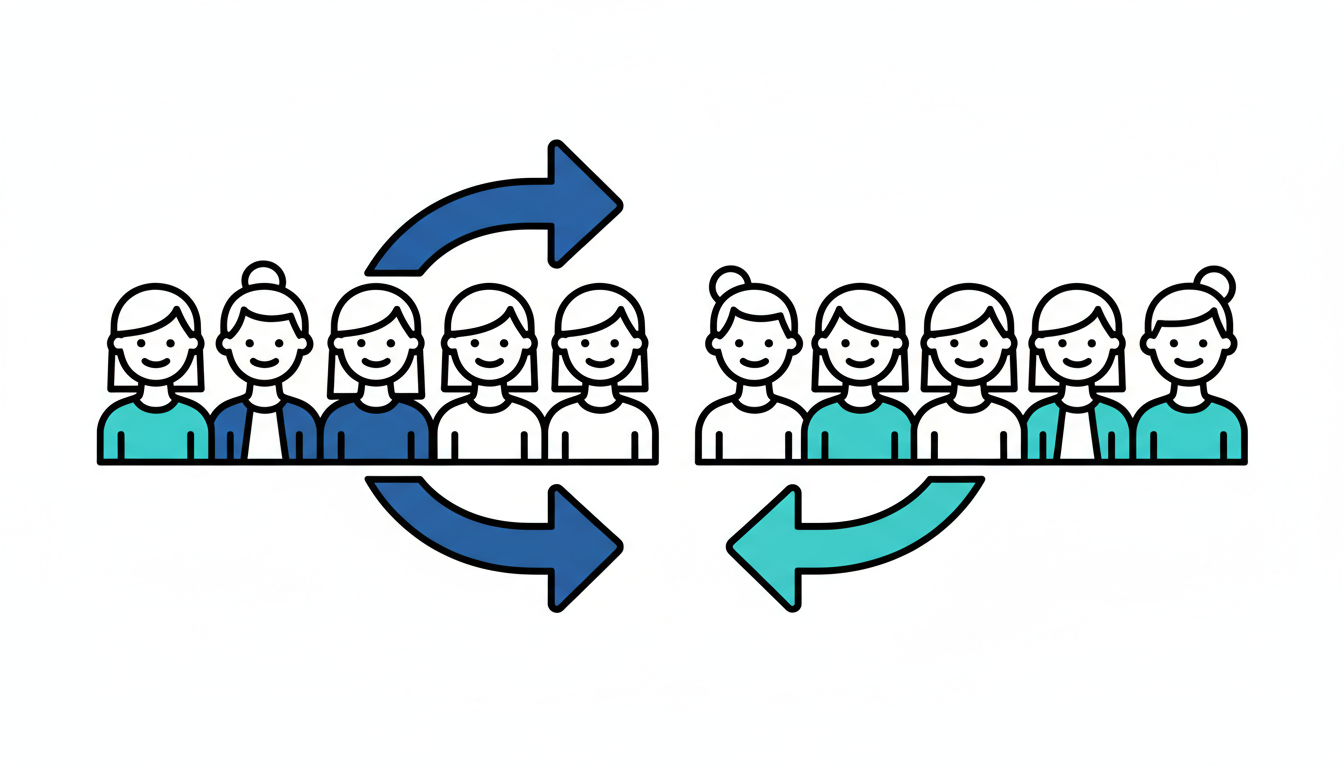
- Group: Pairs or two lines facing each other
- Setting: Any classroom context
- Subjects: Universal - especially effective for controversial topics
- Energy: High
Purpose
Forced Debate requires students to argue for an assigned position—often one opposite to their personal belief. This perspective-taking exercise develops critical thinking by forcing students to construct arguments for views they don't hold, revealing the complexity of issues and reducing dogmatism. Use this when you want students to understand multiple sides of a controversy, practice constructing evidence-based arguments, or develop intellectual empathy.
How It Works
Step-by-step instructions:
-
PRESENT A DEBATABLE STATEMENT (30 seconds) - Share a statement that has legitimate arguments on both sides.
-
ASSIGN POSITIONS (30 seconds) - Randomly assign students to argue FOR or AGAINST the statement. Use arbitrary criteria: "Left side of room argues FOR, right side AGAINST" or assign opposite of what you know their personal belief is.
-
PREPARATION TIME (2 minutes) - Students (individually or in pairs) prepare their arguments. They should develop 2-3 strong points supporting their assigned position.
-
DEBATE ROUND 1 (2-3 minutes) - Students in pairs or lines take turns presenting their arguments. Each person gets 30-60 seconds uninterrupted.
-
OPTIONAL: SWITCH SIDES (If time allows) - Have students argue the opposite position from what they just defended.
-
DEBRIEF (2 minutes) - Discuss what they learned by arguing against their beliefs, what strong arguments they discovered on the "other side," and how this changes their understanding.
What to Say
Setup: "Here's your debate statement: [READ STATEMENT]. This is a topic reasonable people disagree about. Here's what makes this interesting: I'm assigning you a position to argue, and it might not be what you personally believe. Everyone on the left half of the room will argue FOR this statement. Everyone on the right will argue AGAINST it."
Preparation: "Take 2 minutes to prepare your argument. Even if this isn't what you believe, make the strongest case you can. Think about evidence, logic, examples, and counter-arguments. Go."
Debate Format: "Find a partner from the opposite side and sit facing each other. Person arguing FOR goes first—you have 60 seconds to present your strongest arguments. Person arguing AGAINST, listen carefully. Then you'll have 60 seconds to present your case. This is not a conversation yet—just two presentations. Begin."
Debrief: "How many of you argued for a position you don't personally hold? What was that like? Did you discover any arguments that made you think differently about the issue? What does this teach us about complex issues?"
Why It Works
Forced Debate operates through several cognitive mechanisms:
Cognitive Flexibility: Constructing arguments counter to one's beliefs requires mental flexibility and perspective-taking—high-level cognitive skills.
Bias Reduction: When forced to argue the "other side," students often discover that opposing views are more reasonable than they initially thought, reducing polarization.
Argument Construction: Students learn that strong arguments require evidence, logic, and anticipation of counter-arguments—skills that transfer across domains.
Intellectual Humility: Realizing that intelligent people can defend views opposite to yours builds epistemic humility and reduces overconfidence.
Safe Disagreement: Because positions are assigned, students can voice controversial views without personal stakes or social risk.
Research Citation: Research on "consider the opposite" interventions shows that actively generating arguments against one's position reduces confirmation bias and improves judgment (Lord, Lepper, & Preston, 1984).
Teacher Tip
Some students will resist: "I can't argue for this—I don't believe it." Reframe it as intellectual exercise: "Lawyers defend clients they may not agree with. Debaters argue assigned sides. Your goal isn't to change your mind—it's to understand the issue deeply enough to see why intelligent people might disagree. That's sophisticated thinking." Most students appreciate this framing.
Variations
For Different Subjects
-
Science: Debate controversial scientific topics: "Nuclear energy is a safe solution to climate change" or "Genetic engineering of humans should be permitted."
-
Literature: Debate character decisions: "Hamlet was justified in his hesitation" or "Romeo and Juliet's love was genuine, not infatuation."
-
History: Debate historical decisions: "The atomic bomb should have been dropped" or "The New Deal was economically sound policy."
-
Math/Logic: Debate approaches: "Calculators should be banned from math class" or "Memorizing formulas is essential."
For Different Settings
-
Large Class (30+): Form two lines facing each other—all FOR on one side, all AGAINST on the other. Each person debates the person across from them simultaneously (controlled chaos!).
-
Small Class (8-15): Do as whole-group structured debate with alternating speakers from each side.
-
Online: Works perfectly in breakout room pairs. Assign positions before sending to rooms.
For Different Ages
-
Elementary (K-5): Use low-stakes topics: "Pizza is better than tacos" or "Summer is better than winter." Teach argument structure without emotional weight.
-
Middle School (6-8): Standard format works. Choose age-appropriate controversial topics (school uniforms, homework policies).
-
High School (9-12): Can handle mature, complex issues. Good preparation for academic debate or argumentative writing.
-
College/Adult: Use sophisticated topics from current events, philosophy, or discipline-specific controversies.
Online Adaptation
Tools Needed: Video conferencing with breakout rooms
Setup: Pre-assign or randomly assign debate positions.
Instructions:
- Present debate statement in main room
- Assign positions (FOR/AGAINST)
- Give 2 minutes prep time (can use private breakout rooms for same-side strategizing if desired)
- Create breakout rooms pairing FOR students with AGAINST students
- In rooms, each person presents argument for 60 seconds
- Return to main room for debrief
Pro Tip: Use Zoom's "non-verbal feedback" icons to have students indicate which side they personally believe before assigning opposite positions. This transparency makes the perspective-taking explicit.
Troubleshooting
Challenge: Students argue halfheartedly because they don't believe their assigned position.
Solution: Frame as a challenge: "See if you can make your argument so compelling that you almost convince yourself. That's masterful argumentation." Or make it competitive: "Which side presents the strongest case, regardless of what you believe?"
Challenge: Debates get heated and personal attacks emerge.
Solution: Stop the debate. Remind students: "You're playing a role. Debate the idea, not the person. Say 'This position argues...' not 'You think...'" Enforce professional debate norms.
Challenge: One side has an obviously stronger case, making the debate feel rigged.
Solution: Choose genuinely debatable statements where reasonable arguments exist on both sides. Or use this as a learning opportunity: "Why was one side harder to argue? Does that tell us something about the issue?"
Extension Ideas
-
Deepen: After the debate, have students write a reflection: "Three arguments from the opposite side that I hadn't considered are... This changes my thinking by..."
-
Connect: Use Forced Debate as pre-writing for persuasive essays. Arguing both sides helps students anticipate counter-arguments and write more balanced essays.
-
Follow-up: Switch sides midway: After arguing FOR for 2 minutes, have students immediately switch and argue AGAINST for 2 minutes. The cognitive whiplash creates memorable learning.
Related Activities: Optimist/Pessimist, Philosophical Chairs, Devil's Advocate