
Lifeboat Game
At a Glance
- Time: 10-15 minutes
- Prep: Minimal - prepare scenario description and character list
- Group: Small groups (4-6 students)
- Setting: Any classroom context
- Subjects: Ethics, social studies, leadership, humanities
- Energy: High
Purpose
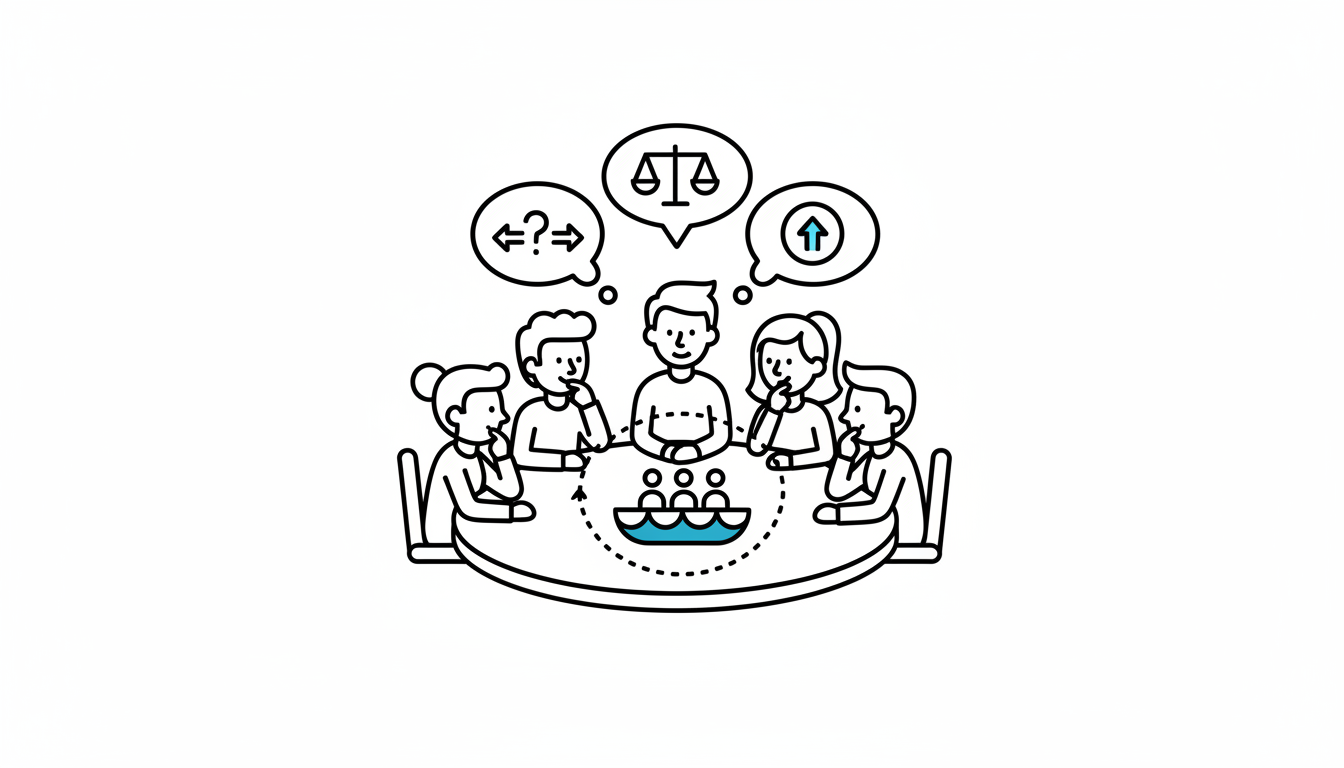
The Lifeboat Game is a classic ethical decision-making exercise that surfaces values, biases, and group dynamics. Students receive a scenario: a yacht is sinking, and there are 15 people but the lifeboat only holds 9. Groups must decide which 9 people survive. Each person on the list has a brief description (e.g., "pregnant teacher," "elderly scientist," "convicted criminal"). Use this activity to explore ethics, facilitate difficult discussions about value judgments, and reveal how groups negotiate when there's no "right" answer.
How It Works
Step-by-step instructions:
-
PRESENT THE SCENARIO (1 minute) - Read or display the lifeboat scenario and the list of 15 people.
-
FORM GROUPS (30 seconds) - Create small groups of 4-6 students.
-
INDIVIDUAL SELECTION (2 minutes) - Each student independently selects which 9 people they would save.
-
GROUP NEGOTIATION (8-10 minutes) - Groups must reach consensus on 9 people to save. They cannot vote or average—they must discuss until they agree.
-
SHARE DECISIONS (2-3 minutes) - Groups share their final list and briefly explain their reasoning.
-
DEBRIEF (3-5 minutes) - Discuss: What criteria did you use? What values emerged? What was hardest about reaching consensus? Were there biases in your thinking?
What to Say
Scenario Introduction: "Here's your scenario: A yacht is sinking. There are 15 people on board, but the lifeboat only holds 9 people. Your group must decide which 9 survive. Here's the list of passengers..." [Read or distribute the list with brief descriptions of each person.]
Individual Phase: "First, working alone, select the 9 people you would save. You have 2 minutes."
Group Phase: "Now, in your group, you must reach unanimous consensus on 9 people. You cannot vote. You cannot compromise by saying 'you pick 5, I pick 4.' You must discuss your reasoning, listen to each other, and agree as a group. This will be difficult—that's intentional. Begin."
During Negotiation: [Circulate and listen. You'll hear fascinating debates about age, productivity, moral worth, randomness, pregnant women, children, skills, etc. Let the struggle happen.]
Debrief: "What criteria did your group use to make decisions? Were you making choices based on age? Skills? Family status? Moral character? Did anyone feel uncomfortable with the choices? What values do our decisions reveal about us?"
Why It Works
The Lifeboat Game creates powerful learning through ethical complexity:
No Right Answer: The ambiguity forces students to grapple with their values rather than searching for a correct solution.
Reveals Implicit Biases: Students discover unconscious biases they hold about age, gender, occupation, disability, or morality.
Negotiation Practice: Reaching consensus without voting requires persuasion, listening, compromise, and dealing with conflict—essential collaboration skills.
Emotional Engagement: The life-or-death stakes (even though hypothetical) create genuine emotional investment that drives deep thinking.
Meta-Cognitive Awareness: The debrief helps students reflect on their own decision-making processes and criteria.
Research Citation: Research on moral reasoning shows that discussing ethical dilemmas with peers advances moral development more than individual reflection alone (Kohlberg, 1984; Blatt & Kohlberg, 1975).
Teacher Tip
This activity can get heated. Some students will advocate strongly for certain choices, and emotions may run high. That's productive—let the struggle happen. However, set ground rules first: "Disagree with ideas, not people. Say 'I think we should prioritize...' not 'You're wrong.'" Also, be prepared for the debrief to reveal biases students didn't know they had. Handle these revelations with care and curiosity, not judgment.
Variations
For Different Subjects
-
Ethics/Philosophy: After the standard game, introduce ethical frameworks (utilitarian, deontological, virtue ethics) and have groups redo their selection using each framework explicitly.
-
History: Use a historical scenario instead: "It's 1940 London during the Blitz. There are 15 people but only 9 spots in the bomb shelter..."
-
Science: Modify to a Mars colony scenario: "Limited life support, 15 colonists, only 9 can survive the journey home."
-
Literature: After reading a novel with complex characters, do a lifeboat game with those characters.
For Different Settings
-
Large Class (30+): Multiple groups work simultaneously. During share-out, compare how different groups made radically different choices with the same information.
-
Small Class (10-15): Can do as a whole-group negotiation, which intensifies the debate.
-
Online: Works perfectly in breakout rooms. Groups can type their final list in a shared doc.
For Different Ages
-
Elementary (K-5): Use a gentler scenario: "Your group is planning a camping trip but can only bring 9 of the 15 suggested items. Which do you choose?" Teaches prioritization without life-death weight.
-
Middle School (6-8): Standard lifeboat works, but prepare for emotional reactions. Debrief thoroughly.
-
High School (9-12): Standard format. Students can handle the ethical complexity.
-
College/Adult: Can add additional complexity: "You have 10 minutes to decide, representing real-time crisis conditions."
Online Adaptation
Tools Needed: Video conferencing with breakout rooms + shared document with the character list
Setup: Create a Google Doc or slide with the 15 character descriptions.
Instructions:
- Present scenario in main room
- Send students to breakout rooms for 10 minutes
- Each breakout room creates their list in a shared doc or chat
- Return to main room to share and debrief
Pro Tip: In virtual settings, use a polling tool to quickly see which characters were most/least frequently saved across all groups. This data enriches the debrief.
Troubleshooting
Challenge: One student dominates the decision and others passively agree to avoid conflict.
Solution: Enforce a protocol: "Before you finalize your list, each person must explain their reasoning for at least one person they want to save and one they think shouldn't be saved. Everyone speaks."
Challenge: Groups reach an impasse and cannot agree.
Solution: That's real life. Let them sit with the discomfort. After time runs out, ask: "What prevented you from reaching consensus? What does that teach you about group decision-making?"
Challenge: Students make offensive comments about certain groups (e.g., elderly, disabled, criminals).
Solution: In the debrief, name it: "I heard some groups suggesting that [group] has less value. Let's unpack that. Where does that assumption come from? Is it ethically defensible?" Turn it into a teaching moment.
Extension Ideas
-
Deepen: After groups finalize their list, reveal additional information about each character that might change decisions (e.g., "The convicted criminal was wrongly convicted" or "The doctor has a terminal illness"). Discuss how incomplete information affects moral judgments.
-
Connect: Follow up with a writing assignment: "If you were one of the 6 people not chosen, write a persuasive letter arguing why you should have been saved."
-
Follow-up: Research assignment: Have students investigate real lifeboat or survival situations (e.g., Donner Party, Chilean miners) and compare the ethical decisions made.
Related Activities: Optimist/Pessimist, Philosophical Chairs, Forced Debate