
Category Game
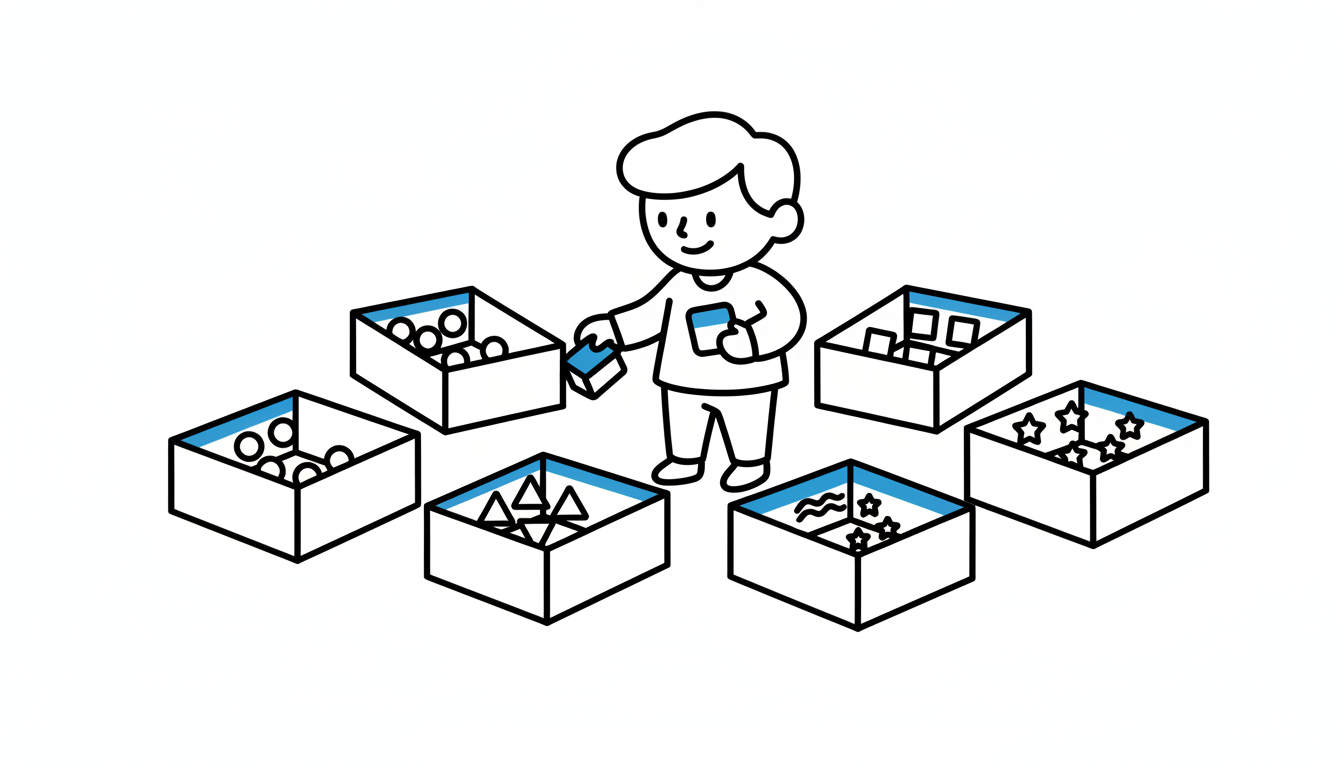
At a Glance
- Time: 2-4 minutes
- Prep: None
- Group: Whole class
- Setting: Any
- Subjects: Universal
- Energy: Medium
Purpose
Activate vocabulary, semantic knowledge, and quick recall. Use this at the start of class, during transitions, or to energize students. Students practice categorical thinking, mental retrieval, and fluency. The rapid-fire format keeps attention high and creates a playful challenge. The activity strengthens mental flexibility and deepens understanding of how concepts group together.
How It Works
- NAME CATEGORY (10 seconds) - Teacher announces a category
- RAPID RESPONSES (2-3 minutes) - Students take turns quickly naming items in that category
- NO REPEATS - Once an item is named, it can't be used again
- KEEP PACE - Each student has 3-5 seconds to respond
- NEW CATEGORY (optional) - Start again with a different category
What to Say
"We're playing the Category Game! I'll name a category, and you'll take turns naming things that fit in that category. No repeats! You have 5 seconds to answer. If you can't think of one, say 'pass' and we move on. Ready?
Category: Types of Weather. Go!"
Student 1: "Sunny!" Student 2: "Rainy!" Student 3: "Snowy!" Student 4: "Cloudy!" Student 5: "Foggy!" Student 6: "Windy!"
"Great! Let's do another: Category: Countries in Europe. Go!"
Why It Works
Categorical thinking is fundamental to how humans organize knowledge. Rapid retrieval practice strengthens memory pathways and fluency. The time pressure activates focused attention. Hearing others' responses exposes students to vocabulary and concepts they may not have considered. The competitive-but-collaborative nature maintains engagement. This activity explicitly builds semantic networks, which improves reading comprehension and content retention.
Research Citation: Categorical organization enhances memory and learning (Bower et al., 1969).
Teacher Tip
Start with broad, accessible categories everyone can contribute to. As students get comfortable with the format, introduce narrower or more challenging categories. If someone gets stuck, it's okay to pass—keep the momentum going!
Variations
Sample Categories
Universal/Easy:
- Animals
- Colors
- Foods
- Sports
- Emotions
- Months of the year
Medium:
- Things that are round
- Items in a kitchen
- Jobs/Occupations
- Types of transportation
- Musical instruments
- Things you find in nature
Challenging:
- Verbs that start with 'S'
- Adjectives to describe weather
- Things that are symmetrical
- Renewable resources
- Words with silent letters
Content-Specific Categories
- Math: Types of shapes, even numbers, geometric terms, measurement units
- Science: Parts of a cell, types of energy, elements on the periodic table, parts of a plant
- Literature: Types of conflict, literary devices, genres, parts of speech, types of characters
- History: U.S. presidents, ancient civilizations, wars, inventions, historical documents
- Geography: Capital cities, bodies of water, mountain ranges, continents, natural disasters
Challenge Variations
- Letter Constraint: "Animals that start with 'B'"
- Number Constraint: "Name exactly 10 items in 30 seconds"
- Opposite Game: "Name things that are NOT in the category"
- Speed Round: Each person has only 2 seconds
- Silent Version: Write answers on paper instead of saying aloud
For Different Settings
- Large Class: Popcorn style or go row by row
- Small Class: Multiple rounds; everyone gets many turns
- Online: Go in alphabetical order or by gallery view
- Pairs: Partners take turns; see how many they can name together in 1 minute
For Different Ages
- Elementary (K-5): Concrete, familiar categories with visual supports
- Middle/High School (6-12): Abstract categories, vocabulary-rich
- College/Adult: Discipline-specific, technical vocabulary
Online Adaptation
Excellent for Online:
- Call on students by name in order
- Students unmute to say their answer
- Type answers in chat (slightly slower but works)
- Works well virtually with clear turn management
Troubleshooting
Challenge: Student can't think of anything; awkward pause. Solution: "Pass! Next person." Keep the momentum going. Or: "Class, give them a hint!"
Challenge: Students repeat items already said. Solution: "Already said! Think of a new one." Or keep a visible list on the board.
Challenge: Answer doesn't fit the category. Solution: "Hmm, does that really fit? Let's keep thinking." Or debate it briefly if unclear: "Can anyone explain why that does or doesn't fit?"
Challenge: Category is exhausted; no one can think of new items. Solution: "Great! We exhausted that category. Let's try a new one!"
Challenge: Energy drops; students disengage. Solution: Change categories or add a twist: "Now only things that start with 'P'!"
Extension Ideas
- Count Them: Track how many items the class generates total. "We came up with 23 animals!"
- Venn Diagram: "What if it has to fit TWO categories? Name something that's both a food AND red."
- Create Categories: Students suggest categories for the class to try
- Writing Extension: "Pick a category and write as many examples as you can in 2 minutes."
- Connect to Lesson: "We just practiced categorizing. Today we'll categorize [concepts/data/literary elements]."
- Sub-Categories: "Let's take 'animals' and break it into sub-categories: mammals, reptiles, birds..."
Related Activities: Word Association Chain, Odd One Out, Speed Sort