
Learning Autopsy
At a Glance
- Time: 5-7 minutes
- Prep: None (done after graded work is returned)
- Group: Individual or small group discussion
- Setting: Any classroom
- Subjects: Universal
- Energy: Low
Purpose
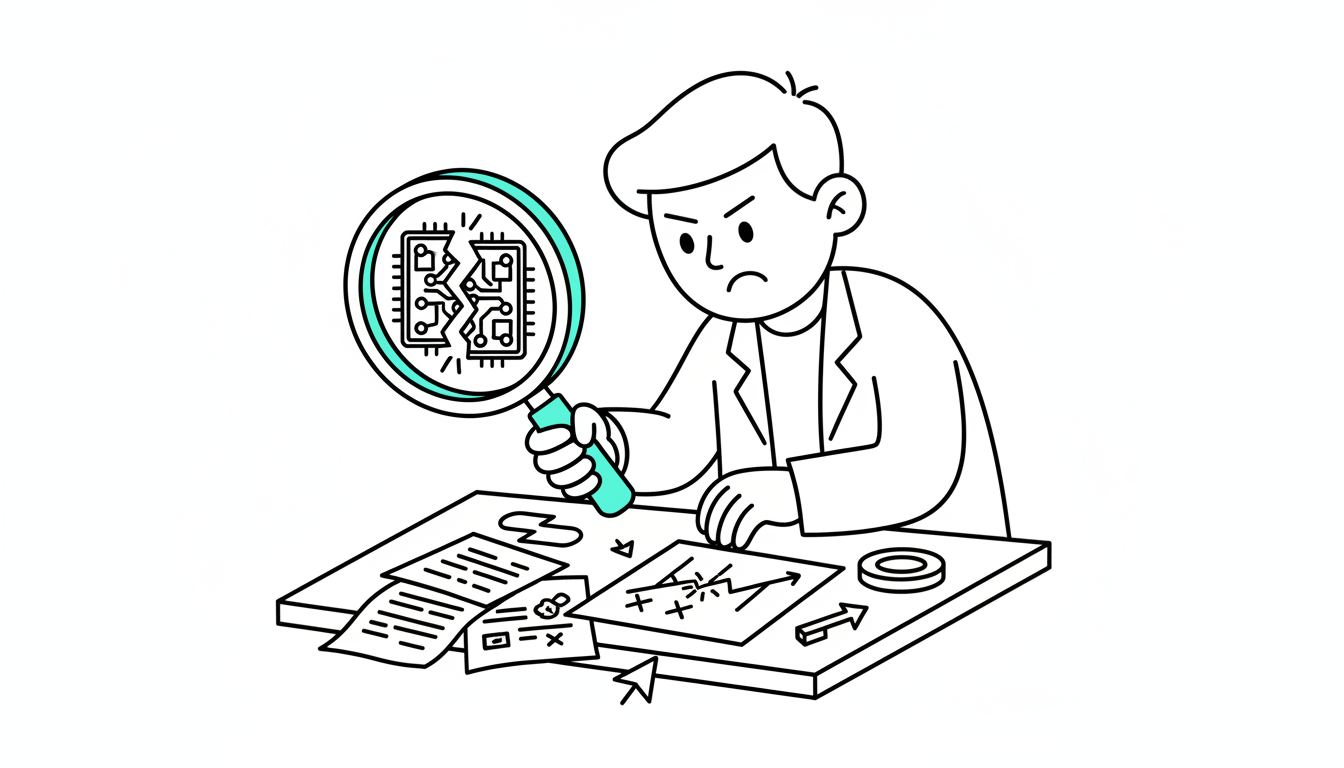
Transform failure or struggle into actionable learning by having students systematically analyze a completed assignment, project, or assessment that didn't meet expectations, conducting a detailed "autopsy" to identify root causes of errors, ineffective strategies, and gaps in preparation, thereby developing the critical metacognitive skill of learning from mistakes through structured reflection rather than emotional reaction or avoidance.
How It Works
- Frame the autopsy (30 sec) - "Doctors do autopsies to understand what went wrong so they can prevent it in the future. We're going to do a learning autopsy on this assignment."
- Diagnostic questions (4-5 min) - Students answer structured reflection questions:
- What was the cause of death (main reason for poor performance)?
- What were contributing factors (secondary reasons)?
- What symptoms did you ignore (warning signs you knew but didn't act on)?
- What treatment will prevent recurrence (specific strategies for improvement)?
- Action planning (60-90 sec) - "Based on your autopsy, write ONE specific change you'll make for the next assessment."
- Optional discussion (2 min) - Small groups share autopsy findings and improvement strategies
What to Say
Opening: "You're getting back your [assignment/test]. Before you react emotionally—before you celebrate or despair—we're doing a learning autopsy. Autopsies are medical examinations to determine cause of death. We're going to examine this work to determine the cause of any errors or struggles. The point isn't blame. It's diagnosis. What went wrong, and what can we learn from it?"
During: "Be a detective. Look at each error. Ask: WHY did this happen? Not 'I'm bad at this'—that's not useful. Was it a knowledge gap? A strategy problem? Careless error? Time management? Misreading directions? Name the specific cause."
Autopsy questions to answer:
- Cause of death: What was the PRIMARY reason this work wasn't perfect? Be specific.
- Contributing factors: What else played a role? List 2-3 secondary causes.
- Ignored symptoms: What warning signs did you know about but didn't address? (e.g., "I knew I didn't understand X but didn't ask for help")
- Treatment plan: What SPECIFIC action will you take differently next time?
Closing: "Your autopsy report is more valuable than your grade. The grade tells you what happened. The autopsy tells you WHY and what to do about it. Use this diagnosis."
Why It Works
Effective learning from failure requires cognitive and emotional processing (Clifford, 1984). Many students respond to poor performance with shame, blame, or avoidance—none of which promote learning. The "autopsy" metaphor reframes failure as a neutral diagnostic opportunity, reducing emotional reactivity. The structured reflection questions guide students toward accurate causal attribution (identifying controllable factors like preparation strategies rather than fixed traits like "I'm not smart"). Research on error analysis shows that students who systematically examine mistakes make significantly fewer similar errors in the future compared to students who simply see corrections.
Research Citation: Learning from failure (Clifford, 1984)
Teacher Tip
The metaphor matters. "Autopsy" feels scientific and objective, not emotional. It creates psychological distance from the work, allowing students to analyze it clinically. If "autopsy" feels too dark for your context, alternative frames include "Case Study Analysis" or "Performance Review."
Variations
For Different Subjects
- Math/Science: Focus on problem-solving errors: conceptual vs. calculation vs. setup mistakes
- Humanities: Analyze writing or argumentation: thesis clarity, evidence quality, organization, analysis depth
- Universal: Can apply to any graded work, project, or performance task
For Different Settings
- Large Class (30+): Individual written autopsies; teacher reviews for patterns to address whole-class
- Small Group (5-15): After individual autopsy, small group discussions where students share findings and strategies
For Different Ages
- Elementary (K-5): Simplify to "What happened? Why did it happen? What will you do next time?" (3 questions instead of 4)
- Middle/High School (6-12): Full autopsy protocol with detailed reflection questions
- College/Adult: Extend to professional contexts: "Career Autopsy" analyzing unsuccessful job application, presentation, or project
Online Adaptation
Tools Needed: Digital autopsy template (Google Form or Doc), video conferencing for optional discussion
Setup: Create form with four autopsy questions
Instructions:
- Return graded work digitally with feedback
- Share autopsy form link; students complete individually
- Optional breakout groups (3-4 students) to discuss findings
- Whole-class debrief: "What did your autopsies reveal? What will our class focus on improving?"
- Students save autopsy report to reference before next major assignment
Pro Tip: Require submission of autopsy report before students can schedule re-take or corrections on the assignment—ensures reflection happens.
Troubleshooting
Challenge: Students blame external factors ("the test was unfair," "I was tired," "I didn't have time") Solution: Redirect to controllable factors: "Given that those conditions existed, what COULD you have controlled? Your preparation time? Your study methods? Your sleep schedule the week before? Focus on what's in your power."
Challenge: Students are too harsh on themselves ("I'm just dumb," "I'll never get this") Solution: Reframe to growth mindset: "Replace 'I'm bad at this' with 'I haven't mastered this YET.' What's your plan to GET better? That's the treatment plan."
Challenge: Autopsies reveal genuine conceptual gaps that students can't fix alone Solution: This is valuable diagnostic data for YOU. Group students by common "causes of death" and provide targeted re-teaching mini-lessons.
Extension Ideas
- Deepen: "Autopsy + Re-test Plan"—after completing autopsy, students create detailed study plan for re-assessment, informed by their diagnosis
- Connect: Longitudinal autopsy review: Keep all autopsies in a folder; at end of semester, analyze patterns: "What errors keep recurring? What have you successfully fixed?"
- Follow-up: Success autopsy: When students DO well, conduct an autopsy on SUCCESS: "What was the cause of LIFE this time? What strategies worked? How can you replicate this?"
Related Activities: Quiz & Exam Wrappers, Mistake Celebration, Progress Tracking