
Ask the Winner
At a Glance
- Time: 3-4 minutes
- Prep: Minimal (prepare problem)
- Group: Whole class
- Setting: Any
- Subjects: Math, Science, Problem-Solving
- Energy: Medium-High
Purpose
Leverage peer instruction by having students who solved problems correctly explain their process to those who didn't, solidifying understanding for both explainer and learner.
How It Works
- Silent problem solve (1-2 min) - Students work problem individually without talking
- Reveal answer (15 sec) - Teacher shows correct answer; those correct raise hands
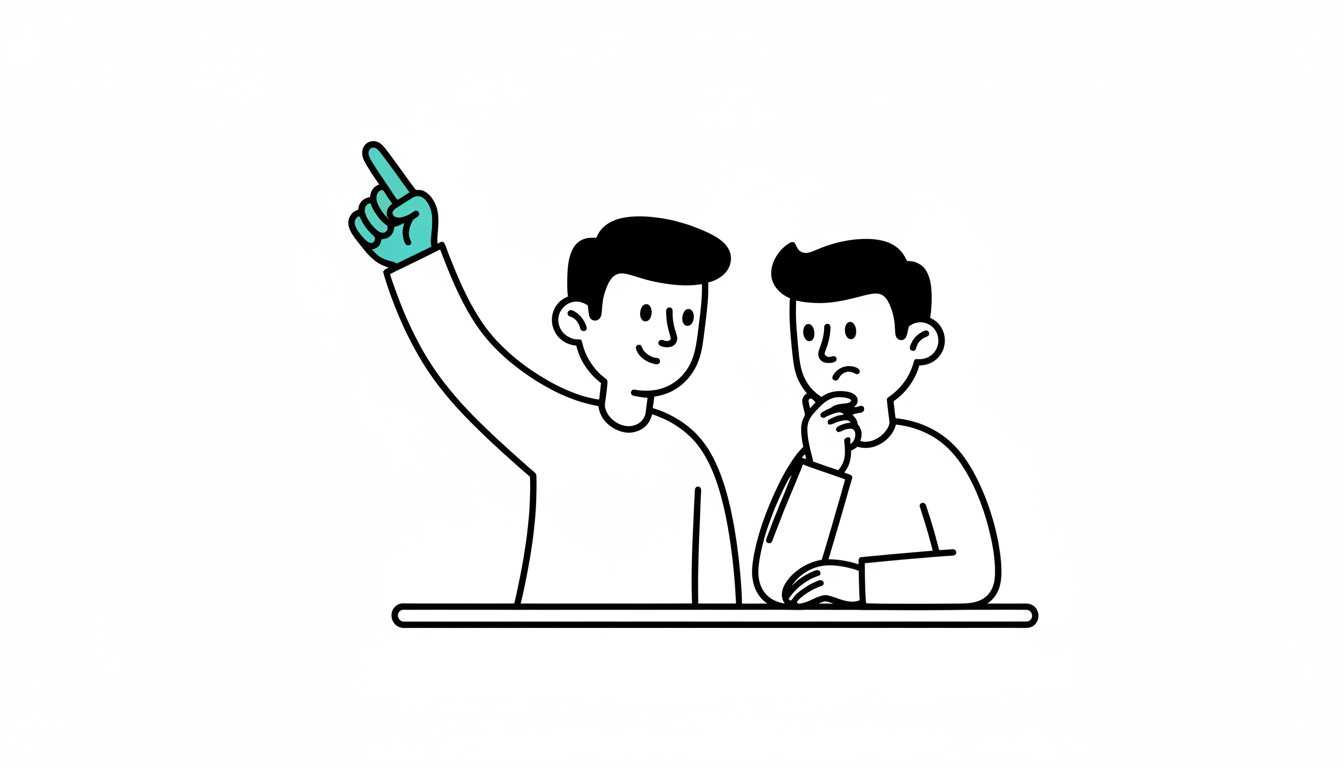
- Find and learn (2 min) - Those incorrect find a "winner" to explain the solution process
What to Say
Opening: "Solve this problem silently: [displays problem]. When I reveal the answer in 90 seconds, if you got it right, raise your hand. If not, find someone with their hand up to explain it to you."
During: [After reveal] "Hands up if you got 42!... Everyone else, find a raised hand and ask: 'How did you get that?' Winners, explain your process step-by-step."
Closing: "Winners solidified their understanding by teaching. Learners got personalized help from a peer who just solved it. That's how knowledge spreads."
Why It Works
Peer instruction is highly effective—students who just solved a problem can often explain it more accessibly than the teacher. Explaining deepens the winner's understanding; receiving peer help reduces stigma.
Research Connection: Peer teaching improves achievement for both tutor and tutee (Topping, 2005; Roscoe & Chi, 2007).
Teacher Tip
Circulate during explanation phase. Listen to explanations—they reveal whether "winners" truly understand or just got lucky with the right answer.
Variations
Subjects: Math problems, science calculations, logic puzzles, coding challenges • Complexity: Single-step problems (quick) to multi-step (longer pairs) • Ages: K-5: simple problems; 6-12: standard; College: complex proofs/derivations
Online
Use breakout rooms. Winners auto-assigned to rooms with 2-3 learners. Screen-share work while explaining.
Troubleshooting
Not enough winners: "If few got it right, I'll explain first, then you practice a similar problem with this method"
Extension
After peer explanation, give a similar problem. Check if learners can now solve independently.
Related: Peer Teaching Pairs, Think-Pair-Share